India-Afghanistan ties: 5 decades of diplomacy through war and Taliban rule
Synopsis
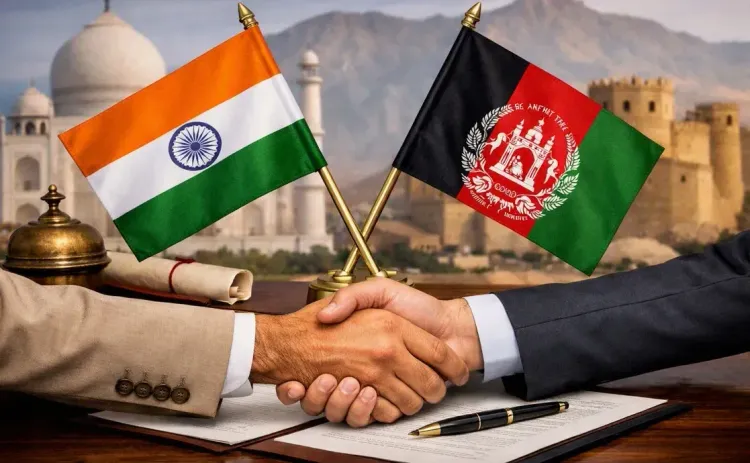
India's embassy in Kabul has survived Soviet withdrawal, civil war, a deadly 2008 bombing, and two Taliban takeovers — and reopened again in 2025. As the Taliban marks five years in power, New Delhi's quietly expanding engagement with Kabul is reshaping South Asia's diplomatic map, driven partly by the Taliban's own estrangement from Pakistan.
Key Takeaways
India's Ministry of External Affairs has signalled increased pragmatic engagement with the Taliban as the regime marks five years in Kabul .
The Indian embassy in Kabul closed in September 1996 during the first Taliban takeover and again in 2021 , reopening in 2025 .
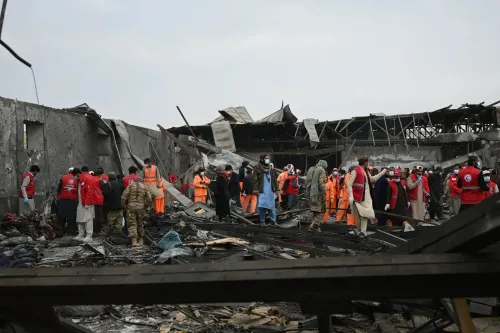
The 7 July 2008 suicide bombing at the Indian embassy killed 59 people , including four Indian officials, and injured more than 150 .
Pakistan-backed mujahideen commanders were historically hostile to India, while Tajik and Uzbek leaders like Ahmad Shah Masood welcomed Indian assistance.
Taliban 2.0's cooling toward Islamabad — rooted in the Durand Line dispute drawn in 1893 — has created diplomatic space that India is reportedly utilising.
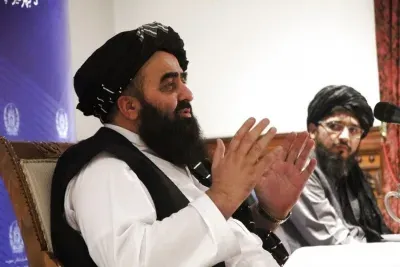
As the Taliban marks five years of rule in Kabul this month, India's Ministry of External Affairs has signalled a notable increase in pragmatic engagement with the Taliban authorities — a shift that reflects both strategic necessity and a long, turbulent history between New Delhi and Kabul. India's diplomatic footprint in Afghanistan has survived Soviet withdrawal, civil war, two Taliban regimes, and a deadly embassy bombing, making it one of South Asia's most resilient bilateral relationships.
The Soviet Era and India's Steadfast Presence
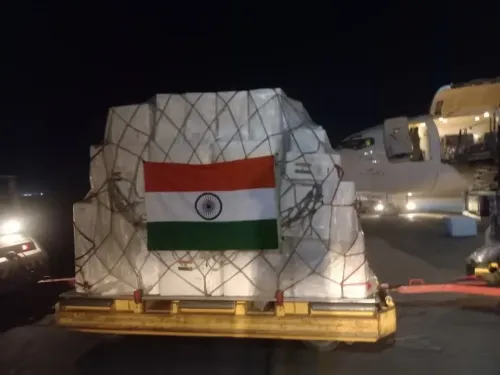
India's commitment to Afghanistan predates the current geopolitical chessboard by decades. The Indian embassy in Kabul kept the Tricolour flying even through the chaos that followed the withdrawal of Soviet troops, which began in mid-1988 and stretched over a year. The Soviet intervention — launched to prop up a Communist-led government in Kabul — was ultimately broken by mujahideen resistance, a coalition of guerrilla groups trained and armed by Pakistan with covert backing from the United States.
The mechanics of that covert operation, involving America's Central Intelligence Agency (CIA) and Pakistan Army's Inter-Services Intelligence (ISI), were documented by Brigadier Mohammad Yousaf, then head of the ISI's Afghan Bureau, in the book Afghanistan: The Bear Trap: The Defeat of a Superpower, co-written with British soldier-author Mark Adkin. The decade-long conflict bled the Soviet economy dry, earning it the grim sobriquet of the 'Soviet Union's Vietnam'.
The First Taliban Takeover and Embassy Closure
The post-Soviet collapse of order in Afghanistan forced India into a difficult position. Deposed President Mohammad Najibullah took refuge in a United Nations compound housing the Office of the Secretary-General in Afghanistan and Pakistan (OSGAP), where he remained for four years after a failed escape attempt. When the Taliban seized Kabul for the first time in 1996, they executed Najibullah. Shortly before that episode, India shuttered its embassy in September 1996, acting on the advice of Afghan ministers and officials who were themselves retreating to the relative safety of the northern mountains.
Following the fall of the first Taliban regime, India re-established diplomatic relations with the successor government, provided substantial aid, and participated actively in Afghanistan's reconstruction — a period of deep engagement that shaped New Delhi's enduring strategic interest in the country.
The 2008 Embassy Bombing
That engagement came at a steep human cost. On 7 July 2008, a suicide bomber detonated an IED-laden vehicle at the entrance of the Indian embassy in Kabul, killing 59 people, including four Indian officials and a local driver. More than 150 people, among them five Indo-Tibetan Border Police (ITBP) personnel, sustained serious injuries. Despite the severity of the attack, the mission continued its operations — a testament, officials have noted, to India's long-term commitment to Afghanistan.
Taliban 2.0 and India's Return to Kabul
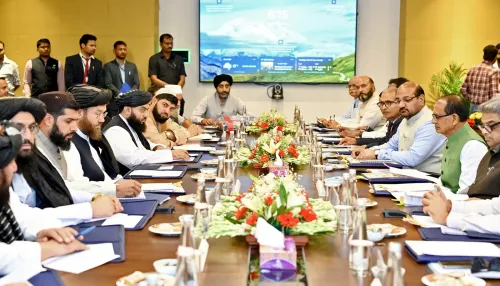
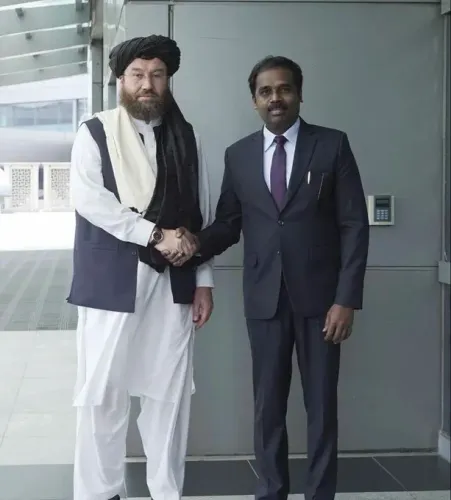
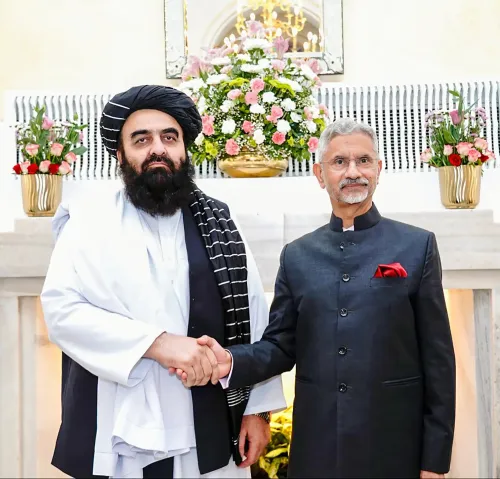
History repeated itself in 2021, when the Taliban's swift return to power — coinciding with the withdrawal of US-led forces after two decades — forced India to close its embassy once again. The mission reopened in 2025, marking the first high-level engagement between India and Afghanistan since Taliban 2.0 consolidated power. The reopening is widely seen as a significant recalibration, reflecting New Delhi's recognition that ignoring Kabul carries its own strategic risks.
The Pashtun Factor and Pakistan's Waning Influence
India's relationship with Afghan factions has never been uniform. Pakistan-backed Pashtun commanders of the mujahideen era — including Gulbuddin Hekmatyar and Abdul Rasul Sayyaf — were openly hostile to New Delhi, with many of their fighters reportedly invoking the 'Kashmir war'. Some Afghan fighters were, according to reports, among terrorists apprehended or killed in Jammu and Kashmir. By contrast, Tajik and Uzbek commanders such as Ahmad Shah Masood and Abdul Rashid Dostum welcomed Indian humanitarian assistance.
Notably, even within the current Taliban leadership, there has been a discernible cooling toward Islamabad. Analysts attribute this largely to the long-standing Pashtun grievance over the Durand Line, drawn by British diplomat Sir Henry Mortimer Durand in 1893, which Pashtuns argue divided their communities arbitrarily. The ongoing turmoil in Khyber Pakhtunkhwa — formerly the North-West Frontier Province — has deepened those fault lines. For Taliban 2.0, Pakistan's overbearing posture has reportedly proved more of an obstacle to governance than a source of support, creating an opening that India appears to be carefully exploiting.
As the Taliban's fifth year in power draws attention to Kabul's evolving foreign policy alignments, India's incremental re-engagement stands as both a pragmatic hedge and a continuation of a diplomatic tradition that has outlasted empires, superpowers, and multiple changes of regime.
Point of View
Regardless of who holds it. What is underreported is the degree to which Pakistan's deteriorating relationship with the Taliban has handed India an unexpected diplomatic opening. The Durand Line grievance is not new, but its operational weight on Taliban foreign policy is growing. New Delhi's challenge is to deepen ties without legitimising a regime whose human rights record remains deeply contested — a balancing act that will define Indian diplomacy in the region for the next decade.
NationPress
29 Sept 2026
Frequently Asked Questions
Why has India increased engagement with the Taliban in Afghanistan?
India has stepped up pragmatic engagement with the Taliban as the regime marks five years in power in Kabul, driven by strategic interests and the Taliban's own estrangement from Pakistan. New Delhi's Ministry of External Affairs has signalled this shift as part of a recalibrated regional policy.
When did India reopen its embassy in Kabul?
India reopened its embassy in Kabul in 2025, marking the first high-level engagement between the two countries since the Taliban returned to power in 2021. The embassy had previously been closed when the Taliban swept back into Kabul as US-led forces withdrew.
What happened in the 2008 Indian embassy bombing in Kabul?
On 7 July 2008, a suicide bomber detonated an IED-laden vehicle at the entrance of the Indian embassy in Kabul, killing 59 people — including four Indian officials and a local driver — and injuring more than 150, among them five ITBP personnel. Despite the attack, the mission continued its operations.
Why is the Durand Line significant to India-Afghanistan-Pakistan relations?
The Durand Line, drawn by British diplomat Sir Henry Mortimer Durand in 1893, divided Pashtun-majority areas between what is now Afghanistan and Pakistan. Pashtuns — including the Taliban's core constituency — contest its legitimacy, fuelling long-standing tensions with Islamabad that have indirectly created diplomatic space for India.
How has India's relationship with Afghan factions differed historically?
India's ties with Afghan factions have varied sharply by ethnicity and Pakistani influence. Pakistan-backed Pashtun mujahideen commanders like Gulbuddin Hekmatyar were openly hostile to India, while Tajik and Uzbek leaders such as Ahmad Shah Masood welcomed Indian humanitarian assistance. This ethnic fault line continues to shape New Delhi's Afghan strategy.