Pakistan's pressure on Afghanistan is pushing Kabul toward Russia, India
Synopsis
Pakistan's strategy of pressuring Afghanistan is producing the opposite of its intended effect. The Taliban have signed a military cooperation deal with Russia, warned Islamabad against future strikes, and are deepening ties with India, Iran, and Central Asia. Islamabad's coercive playbook is teaching Kabul to live — and arm — without it.
Key Takeaways
Taliban Defence Minister Mohammad Yaqoob Mujahid signed a military-technical cooperation agreement with Russia in late May 2025 , outside Moscow.
Russia's signatory was Security Council Secretary Sergei Shoigu ; the deal covers repair of Russian-made military equipment in Afghanistan.
FSB Director Alexander Bortnikov warned at the CIS security summit that ISKP is actively recruiting across Tajikistan, Uzbekistan, Kyrgyzstan, and Kazakhstan.
Yaqoob Mujahid publicly warned that Pakistan 's repeated cross-border strikes would not go unanswered, without naming Islamabad directly.
According to The Diplomat, Pakistan's economic and military pressure is accelerating Kabul 's pivot toward Russia , India , Iran , and Central Asia .
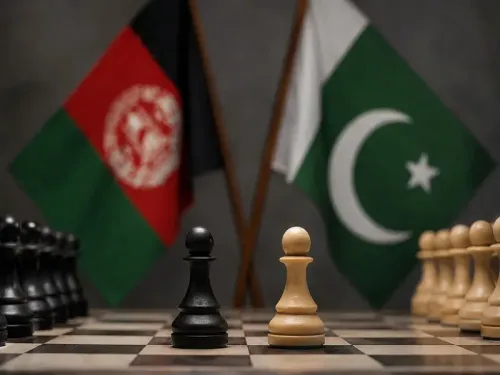
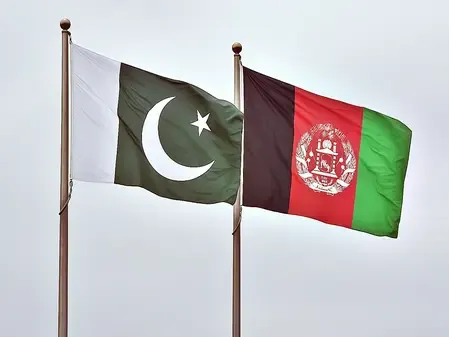
Pakistan's sustained military and economic pressure on Afghanistan is backfiring, according to a report by The Diplomat, with Kabul increasingly pivoting toward Russia, India, Iran, and Central Asia — eroding the very leverage Islamabad once held over its western neighbour. The shift marks a dramatic reversal of Pakistan's decades-old doctrine of strategic depth.
The Russia-Taliban Military Agreement
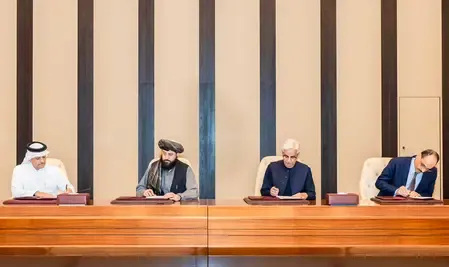
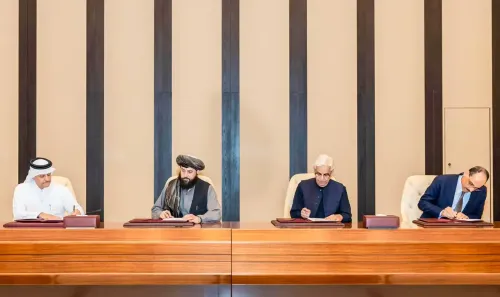
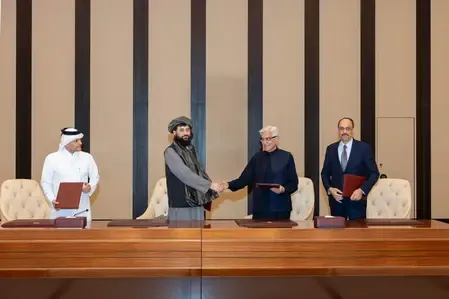
In a development that underscores the realignment, Taliban Defence Minister Mohammad Yaqoob Mujahid signed a military-technical cooperation agreement with Russia on the sidelines of the International Security Forum held outside Moscow in late May 2025. Russia's signatory was Security Council Secretary Sergei Shoigu. According to Russia's Special Envoy for Afghanistan, Zamir Kabulov, the agreement will focus on the repair and restoration of Russian-made military equipment in Afghanistan.
Just two days before the signing, Yaqoob had attended a Commonwealth of Independent States (CIS) security chiefs' meeting in Moscow, where Russia's Federal Security Service (FSB) Director Alexander Bortnikov warned that the Islamic State Khorasan Province (ISKP) is actively recruiting citizens of Tajikistan, Uzbekistan, Kyrgyzstan, and Kazakhstan, as well as labour migrants inside Russia.
Kabul's Message to Islamabad
Addressing journalists after returning to Kabul, Yaqoob Mujahid stated that Pakistan had been repeatedly carrying out strikes inside Afghan territory in recent months. He asserted that Afghanistan would ensure no neighbouring country felt similarly emboldened in the future — a pointed, if unnamed, warning directed at Islamabad.
'He acknowledged that Islamabad might have objections to the Moscow agreement, insisting that Afghanistan threatens no one. The shift in tone, delivered immediately after the signing with Russia, signals to Islamabad that Kabul now sees its own leverage,' The Diplomat noted.
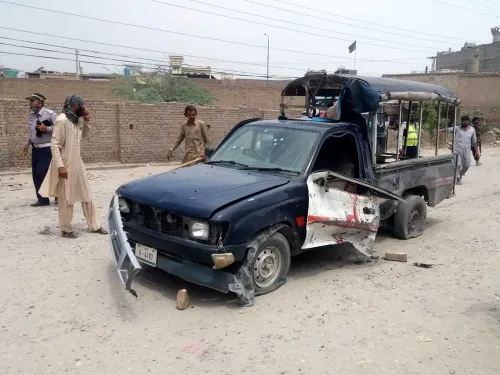
Notably, this comes after a series of cross-border air strikes earlier in 2025 — described as among the most serious confrontations between the two countries in recent years.
Pakistan's Strategic Depth Doctrine in Reverse
For decades, Pakistan cultivated influence in Afghanistan through proxy networks, seeking strategic depth along its western frontier. That calculus has now inverted. According to The Diplomat's analysis, Pakistani military action against Afghanistan has simultaneously worsened Afghanistan's economic crisis while enabling Moscow to deepen its footprint in the country.
Critics argue that Islamabad's coercive approach — intended to discipline the Taliban — has instead accelerated Kabul's search for alternative partners. 'Each disruption pushes Kabul further toward Iran, India, and Central Asia, and each shift erodes the one form of leverage Pakistan reliably held over Afghanistan,' the report observed.
Regional Implications
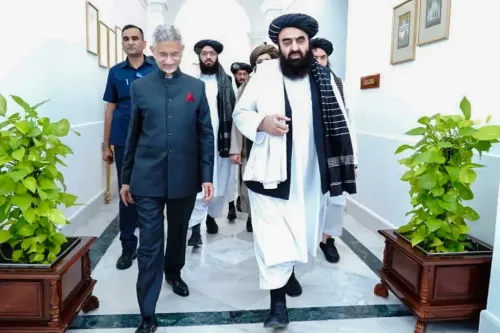
The Taliban's growing engagement with Russia carries significant consequences for the broader region. Moscow's interest in stabilising Afghanistan — partly to contain ISKP's northward spread into Central Asia — aligns, at least tactically, with the Taliban's need for external legitimacy and military support. For India, which has maintained cautious but expanding engagement with Kabul, a Taliban-Russia axis creates both opportunities and complications. How New Delhi navigates this shifting geometry will be closely watched.
As Islamabad's influence contracts, the strategic map of South and Central Asia is being quietly redrawn — one border clash and one bilateral agreement at a time.
Point of View
Islamabad has handed the Taliban a pretext to internationalise their security partnerships, most consequentially with Moscow. The Russia-Taliban military deal is not an accident; it is the direct product of a vacuum Pakistan created. What mainstream coverage underplays is the India dimension: every step Kabul takes away from Islamabad is a step that potentially opens space for New Delhi, which has its own long-term interests in Afghan stability and connectivity. Pakistan is simultaneously losing its western buffer and enabling a Russia-India-Afghanistan triangulation it never intended to midwife.
NationPress
19 Sept 2026
Frequently Asked Questions
Why is Afghanistan moving away from Pakistan?
Afghanistan is distancing itself from Pakistan following repeated Pakistani cross-border air strikes and sustained economic pressure, according to a report by The Diplomat. Each coercive move by Islamabad has pushed Kabul to deepen ties with Russia, India, Iran, and Central Asia instead.
What is the Russia-Taliban military agreement signed in May 2025?
The Taliban and Russia signed a military-technical cooperation agreement on the sidelines of the International Security Forum outside Moscow in late May 2025. Signed by Taliban Defence Minister Mohammad Yaqoob Mujahid and Russian Security Council Secretary Sergei Shoigu, it reportedly focuses on the repair and restoration of Russian-made military equipment in Afghanistan.
What did Taliban Defence Minister Mohammad Yaqoob Mujahid say about Pakistan?
After returning to Kabul, Yaqoob Mujahid stated that Pakistan had been repeatedly striking Afghan territory in recent months and warned that Afghanistan would ensure no neighbouring country felt similarly emboldened in the future. He did not name Pakistan directly but the reference was widely understood.
What is ISKP and why is it a concern for Central Asia?
The Islamic State Khorasan Province (ISKP) is the Afghan affiliate of the Islamic State group. Russia's FSB Director Alexander Bortnikov warned at a May 2025 CIS security summit that ISKP is actively recruiting citizens of Tajikistan, Uzbekistan, Kyrgyzstan, and Kazakhstan, and operating covert networks for financing and attack planning across the region.
How does this affect India's position in the region?
As Pakistan loses influence in Afghanistan, India — which has maintained cautious but expanding engagement with Kabul — gains potential strategic space. However, the emerging Taliban-Russia axis also introduces new complexities for Indian foreign policy in South and Central Asia.