Afghan envoy labels Pakistan 'sole threat' to regional security at Moscow summit
Synopsis
Afghanistan's ambassador to Russia stood before a CSTO-CIS-SCO security forum in Moscow and named Pakistan — not ISIS or the TTP — as the single greatest threat to regional stability, citing alleged direct Pakistani military involvement in two cross-border incursions. With Taliban spokesman Mujahid simultaneously calling Islamabad's policy 'failed' on X, Kabul is mounting a coordinated, multi-front diplomatic offensive against Pakistan in front of the region's most powerful security actors.
Key Takeaways
Gul Hassan Hassan , Afghanistan's Ambassador to Russia, called Pakistan the 'only threat' to Afghan and regional security at a CSTO-CIS-SCO joint conference in Moscow on 17 October 2026 .
Hassan alleged Pakistan shelters ISIS (Daesh) , armed anti-government groups, and narcotics networks, providing them space to recruit and fundraise.
He cited two specific alleged incursions: fighters brought through Chitral into Badakhshan on 23 July and into Nuristan on 25 September , with Pakistani forces allegedly providing aerial and artillery cover.
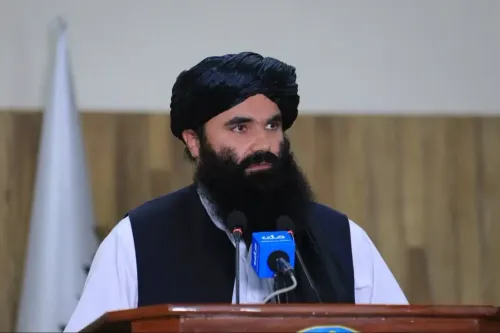
Taliban spokesperson Zabihullah Mujahid separately accused Pakistan of sabotaging negotiations, calling Islamabad's approach a 'failed policy' in a post on X.
Pakistan has not officially responded to the specific allegations made at the Moscow forum.
Afghanistan's Ambassador to Russia, Gul Hassan Hassan, has publicly declared Pakistan the 'only threat' to Afghanistan's security and the broader region, delivering the accusation at a major multilateral security forum in Moscow on 17 October 2026. The remarks, made at a joint conference of the Collective Security Treaty Organisation (CSTO), the Commonwealth of Independent States (CIS), and the Shanghai Cooperation Organisation (SCO), represent one of the most direct public condemnations Kabul has levelled against Islamabad in a multilateral setting.
Key Accusations Against Pakistan
Ambassador Hassan alleged that Pakistan not only shelters armed opponents of Afghanistan's government but has also provided what he called 'fertile ground' for narcotics trafficking and for the activities of ISIS (Daesh). He charged that these groups are actively recruiting members and raising funds inside Pakistani territory, with attempts being made to redeploy them into Afghanistan.
'We must state clearly that the threat to the security and stability of our region now comes from Pakistan. Pakistan not only shelters armed opponents of Afghanistan's government, but has also provided fertile ground there for narcotics and for Daesh's activities,' Hassan said in his address.
'This is not an empty allegation. You will also have followed reports on this in Pakistani and international media,' he added.
Specific Cross-Border Incidents Cited
Hassan went further, citing two specific alleged incursions. He claimed that hundreds of armed fighters were brought through Chitral into the Zebak district of Afghanistan's Badakhshan province on 23 July, and that a second attempt occurred into the Kamdesh district of Nuristan province on 25 September.
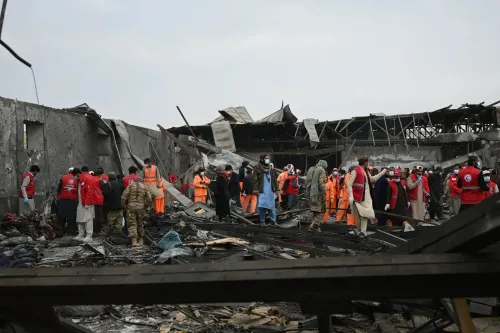
'During these attempts, Pakistani military forces not only directly led the groups concerned, but also carried out aerial bombardments of various Afghan provinces on both occasions,' Hassan alleged. He further claimed that Afghan border posts along the crossing routes were subjected to 'artillery and heavy-weapons fire' by Pakistani forces. These are serious allegations that have not been independently verified.
Taliban Spokesperson Echoes Criticism
The ambassador's remarks follow a separate broadside earlier this week from Taliban spokesperson Zabihullah Mujahid, who accused Pakistani authorities of attempting to sabotage the negotiation process between the two countries. In a post on X, Mujahid said that Pakistan blaming Afghanistan for its own failures is 'no solution to any problem' and described Islamabad's approach as a 'failed policy.' He also noted that Pakistan facing 'political, security, social, and economic challenges is a matter of serious concern.'
Broader Context: A Deteriorating Relationship
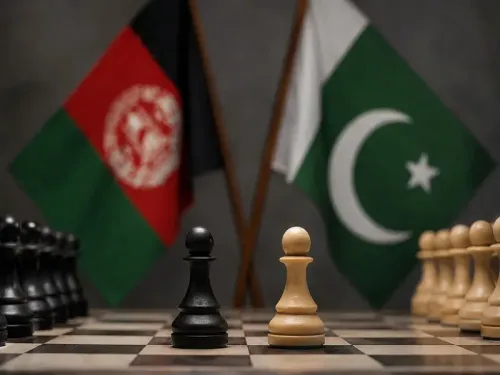
This comes amid a prolonged deterioration in Afghanistan-Pakistan relations since the Taliban's return to power in 2021. Islamabad has repeatedly accused Kabul of harbouring Tehrik-i-Taliban Pakistan (TTP) militants responsible for cross-border attacks inside Pakistan — a charge the Taliban government denies. Kabul, in turn, has accused Pakistan of conducting airstrikes on Afghan soil and of supporting anti-Taliban armed groups. The exchange of accusations has grown sharper in recent months, with both sides escalating rhetoric in international forums. Notably, Pakistan has not yet officially responded to the specific allegations made by Ambassador Hassan at the Moscow conference.
Significance of the Moscow Forum
The choice of venue is significant. By raising these charges at a CSTO-CIS-SCO joint security platform — attended by Russia, China, and Central Asian states — Kabul appears to be seeking to internationalise its grievances against Islamabad in front of the region's most consequential security actors. Afghanistan is not a member of these organisations, making the invitation to speak itself a signal of diplomatic standing.
How Russia, China, and SCO member states respond to these allegations — or choose to remain silent — will shape the next phase of the region's security architecture.
Point of View
Both of whom have significant leverage over Islamabad. The allegations of direct Pakistani military involvement in cross-border incursions are extraordinarily serious and, if substantiated, would constitute acts of aggression under international law; the fact that they remain unverified does not diminish the political weight they carry in Moscow. For Pakistan, already navigating an IMF bailout and domestic political turbulence, a sustained reputational campaign in multilateral forums is a vulnerability it can ill afford. The deeper irony is that Pakistan's own complaints about TTP cross-border attacks from Afghan soil — complaints with documented basis — are now being drowned out by a louder Afghan counter-narrative at the very forums where Islamabad seeks security cooperation.
NationPress
17 Oct 2026
Frequently Asked Questions
What did Afghanistan's ambassador say about Pakistan at the Moscow security conference?
Afghanistan's Ambassador to Russia, Gul Hassan Hassan, declared Pakistan the 'only threat' to Afghanistan's security and regional stability at a joint CSTO-CIS-SCO conference in Moscow on 17 October 2026. He alleged Pakistan shelters ISIS (Daesh), armed anti-government fighters, and narcotics networks, and claimed Pakistani military forces directly supported two cross-border incursions into Afghan territory in July and September 2026.
What specific incidents did the Afghan envoy allege against Pakistan?
Hassan alleged that hundreds of armed fighters were brought through Chitral into Badakhshan province's Zebak district on 23 July and into Nuristan province's Kamdesh district on 25 September. He claimed Pakistani military forces led these groups, conducted aerial bombardments, and fired artillery at Afghan border posts on both occasions. These claims have not been independently verified.
Why did the Taliban spokesperson criticise Pakistan this week?
Taliban spokesperson Zabihullah Mujahid accused Pakistani authorities of trying to sabotage the Afghanistan-Pakistan negotiation process, calling it Islamabad's 'failed policy.' In a post on X, Mujahid said Pakistan blaming Afghanistan for its own failures is 'no solution to any problem' and described Pakistan's internal challenges as a 'matter of serious concern.'
Why is the CSTO-CIS-SCO forum significant for these accusations?
By raising its grievances at a CSTO-CIS-SCO security forum attended by Russia, China, and Central Asian states, Kabul is seeking to internationalise the Afghanistan-Pakistan dispute before the region's most influential security actors. Afghanistan is not a member of these organisations, making the platform diplomatically significant for Kabul's ability to shape the regional security narrative.
How has Pakistan responded to these allegations?
Pakistan has not officially responded to the specific allegations made by Ambassador Hassan at the Moscow conference, according to available reports. Islamabad has historically denied Taliban claims that it supports anti-Afghan groups, and has itself accused Kabul of harbouring TTP militants responsible for attacks inside Pakistan.