Ghana seeks BRICS+ partner status under India's chairmanship
Synopsis
Ghana is formally pursuing BRICS+ partner status following talks between EAM Jaishankar and Ghanaian FM Ablakwa — a move that would make it West Africa's second partner-state after Nigeria, and a notable diplomatic win for India's BRICS chairmanship as the bloc reshapes the global order.
Key Takeaways
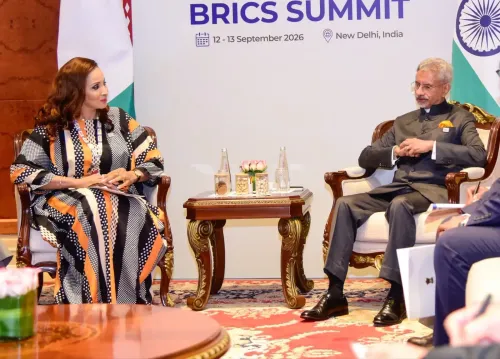
Ghana announced plans to seek BRICS+ partner status after diplomatic talks between EAM S.
Jaishankar and Ghanaian FM Samuel Okudzeto Ablakwa .
Ghana would become the second West African nation after Nigeria to hold partner status in the grouping.
Indonesia was the most recent country to join BRICS as a full member, in January 2025 ; 10 countries currently hold partner status.
BRICS was formally established in 2009 and has since expanded to include six new full members : Ethiopia, Egypt, Indonesia, Iran, Saudi Arabia, and the UAE.
Ghana has led the Commonwealth Secretariat since January 2025 and holds prominent roles in ECOWAS , the African Union , and the United Nations .
The BRICS+ framework emphasises non-interference and positions itself as complementary to, not a replacement for, existing multilateral institutions.
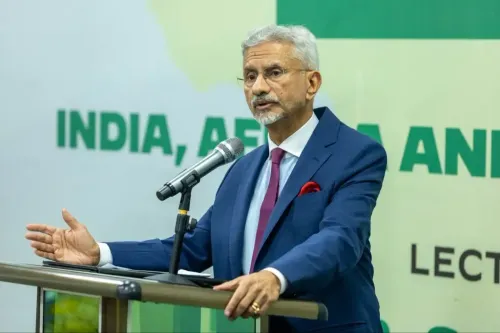
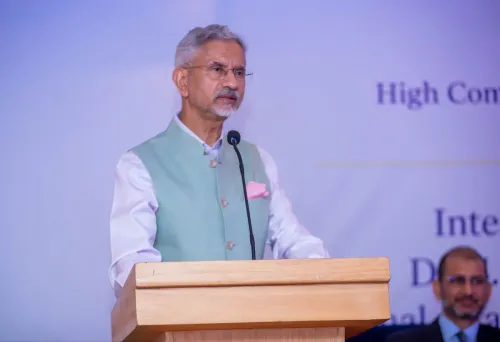
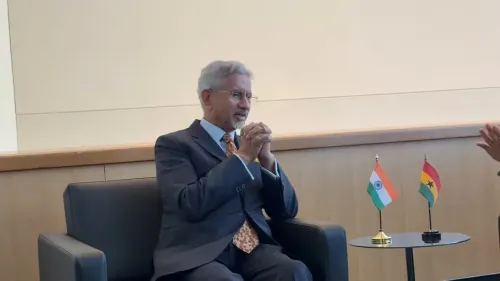
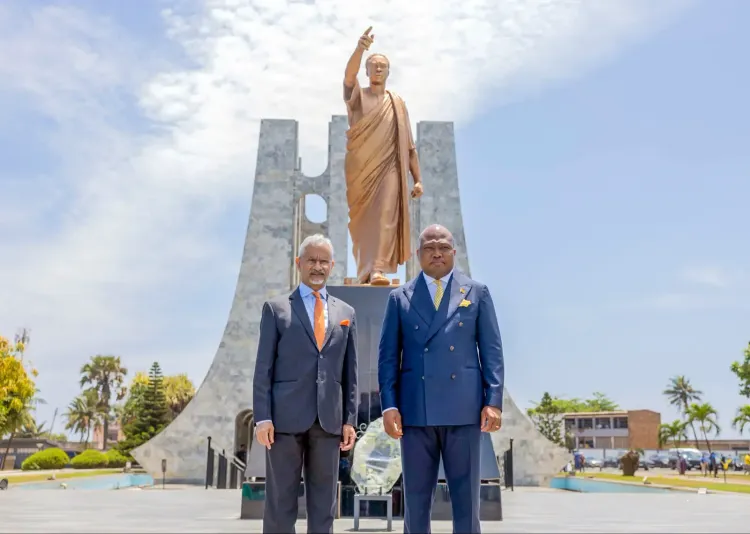
Ghana is moving to formally seek partner status in the BRICS-plus grouping, a step that could significantly expand its economic prospects and deepen its ties with nations across the Global South, as the bloc grows its global footprint under India's chairmanship. The announcement follows diplomatic consultations between External Affairs Minister S. Jaishankar and his Ghanaian counterpart, Samuel Okudzeto Ablakwa, earlier this month.
The Announcement and Its Significance
According to reports, the two foreign ministers acknowledged during their consultations that joining BRICS+ would complement — rather than replace — Ghana's existing relationships with institutions such as the International Monetary Fund (IMF), the World Bank, and other traditional multilateral partners. The move is being framed as an expansion of engagement with emerging powers, not a departure from established alliances.
If formalised, Ghana would become the second West African nation after Nigeria to hold partner status within the grouping, underscoring the growing political and economic appeal of BRICS+ membership across the African continent.
How BRICS Has Evolved
Formally established in 2009 by Brazil, Russia, India, and China, BRICS was founded on the premise that institutions such as the World Bank and the IMF were disproportionately shaped by Western interests and had fallen short in serving developing nations. South Africa joined in 2010 by invitation of China.
The bloc has since expanded considerably. Six new full members — Ethiopia, Egypt, Indonesia, Iran, Saudi Arabia, and the United Arab Emirates — have been added. Indonesia was the most recent to attain full membership, joining in January 2025. Currently, ten countries, including Nigeria, hold partner status, which allows them to attend summits but does not confer full voting rights.
Ghana's Multilateral Standing
Joining BRICS+ would mark a historic milestone for Ghana, which already commands a prominent position in multilateral institutions including the Economic Community of West African States (ECOWAS), the African Union (AU), and the United Nations. Since January 2025, Ghana has also led the Commonwealth Secretariat, further cementing its standing as a key voice in global governance.
According to a report in the Bulgaria-based publication Modern Diplomacy, Ghana meets the fundamental requirements for BRICS+ inclusion, distinguishing it from some other African nations that entered the partner-state category under different circumstances. The report noted that unlike South Africa, which acquired full membership in 2011, Ghana is being assessed specifically for partner status at this stage.
The BRICS+ Philosophy and What It Offers Members
The BRICS+ framework operates on principles of non-interference and mutual cooperation, positioning itself as a non-Western platform open to countries with broadly aligned political outlooks. Members retain full freedom to maintain bilateral relations with any nation of their choosing — a feature that reportedly appeals to countries wary of the conditionalities attached to Western-led institutions.
The grouping has consistently maintained that its expansion is not aimed at confrontation with existing global structures, but at fostering cooperation to address shared challenges while respecting each country's sovereign right to chart its own course. This framing has made partner status an attractive proposition for nations seeking strategic diversification without burning existing bridges.
With India holding the chairmanship, the pace and direction of BRICS+ expansion will be closely watched — and Ghana's formal application, if submitted, will be an early test of how the bloc manages its growing queue of aspirants.
Point of View
The real question is whether BRICS+ can translate partner status into tangible economic outcomes, or whether it remains, for most members, a geopolitical signal without structural weight.
NationPress
17 Oct 2026
Frequently Asked Questions
What is BRICS+ partner status and how does it differ from full membership?
BRICS+ partner status allows countries to attend summits and engage with the grouping without holding full voting rights. Full members, such as Brazil, Russia, India, China, and South Africa, have complete decision-making authority, while partner states — currently numbering ten, including Nigeria — participate in a more limited capacity.
Why is Ghana seeking to join BRICS+?
Ghana is pursuing partner status to expand its economic prospects and deepen cooperation with Global South nations, according to reports. The move is framed as complementary to its existing ties with the IMF, World Bank, and other traditional institutions — not a replacement for them.
What role is India playing in BRICS expansion?
India currently holds the BRICS chairmanship, giving New Delhi a central role in shaping the bloc's agenda and the pace of its expansion. The talks between EAM Jaishankar and Ghana's foreign minister signal that India is actively engaging prospective partner states during its tenure.
Which countries are already BRICS+ partner states?
Ten countries currently hold BRICS+ partner status, including Nigeria. If Ghana's application is formalised, it would become the second West African nation in this category. Partner states can attend summits but do not hold full voting rights within the grouping.
How has BRICS grown since its founding?
BRICS was established in 2009 by Brazil, Russia, India, and China, with South Africa joining in 2010. Six new full members — Ethiopia, Egypt, Indonesia, Iran, Saudi Arabia, and the UAE — have since been added, with Indonesia being the most recent, joining in January 2025.