Dr. Jitendra Singh at Bloomberg Roundtable on India's Space Economy
Synopsis
Union Minister Dr. Jitendra Singh joined Bloomberg's New Delhi Roundtable on 'Space, Sovereignty and the New Economy', spotlighting India's tech sovereignty drive backed by IN-SPACe, the Indian Space Policy 2023 and PM Modi's Atmanirbhar Bharat framework.
Key Takeaways
Jitendra Singh represented the government at the Bloomberg 'New Delhi Roundtable' on Space, Sovereignty and the New Economy on 18 October 2026 .
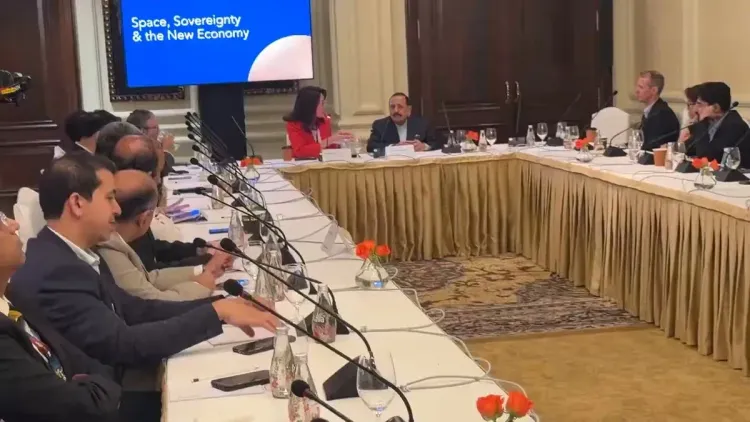
The forum brought together government officials, space startups, industry leaders and domain experts in New Delhi .
IN-SPACe , created in 2020 , opened India's space sector to private players and handles both promotion and regulation.
The Indian Space Policy 2023 clarified roles for government, private industry and academia in the space ecosystem.
Both reforms sit within the Atmanirbhar Bharat framework targeting self-reliance in satellites, launches and downstream applications.
Further private sector authorisations by IN-SPACe and new space economy targets in upcoming budgets are the key near-term milestones to watch.
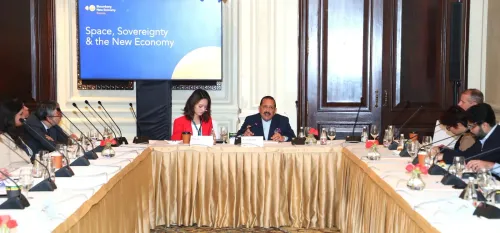
India's push for technology sovereignty took centre stage in New Delhi on Saturday, 18 October 2026, as Union Science and Technology Minister Dr. Jitendra Singh participated in a Bloomberg 'New Delhi Roundtable' themed 'Space, Sovereignty and the New Economy' — a high-table conversation that brought together government officials, space startups, industry leaders and domain experts to map where India's space ambitions are headed next.
What the Bloomberg Roundtable put on the table
Dr. Singh described the session as 'an enlightening conversation' tracking 'India's growing sovereignty in technology, enabled by policy support and progression vision of PM Narendra Modi.' The forum is notable precisely because it is not a government-only affair — the presence of startup founders and private industry leaders alongside regulators signals that the dialogue has moved from policy drafting to operational execution.
Roundtables of this format serve a specific purpose: they compress months of bilateral back-and-forth into a single room, letting investors, regulators and entrepreneurs stress-test the same assumptions simultaneously. That Bloomberg chose New Delhi as the venue underscores the city's rising profile as a node in the global space economy conversation.
The policy scaffolding behind India's space sovereignty drive
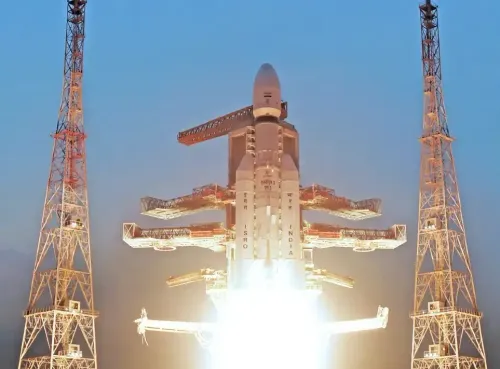
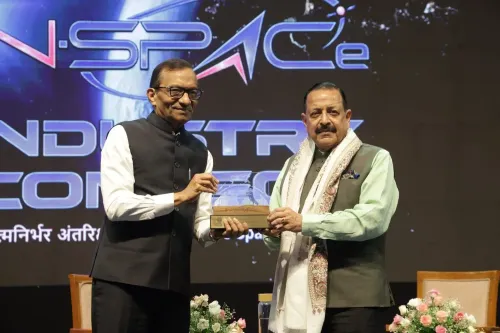
The conversation at the roundtable did not emerge in a vacuum. IN-SPACe — the Indian National Space Promotion and Authorisation Centre — was created in 2020 specifically to open India's historically state-dominated space sector to private players, handling both promotion and regulation under one roof. Three years later, the Indian Space Policy 2023 sharpened the architecture further, delineating the roles of government agencies, private industry and academia with a clarity the sector had long lacked.
Together, these two milestones form the structural backbone of what the government frames under the broader Atmanirbhar Bharat initiative — the drive for self-reliance in strategic sectors. Satellites, launch vehicles and downstream applications such as geospatial data services are all in scope. The policy shift has already seeded a clutch of private launch and satellite startups that are now seeking commercial mandates and international partnerships.
Why industry-government dialogue matters right now
India's space economy is at an inflection point. Private sector authorisations by IN-SPACe are expected to accelerate, and any fresh space economy targets signalled in upcoming budget cycles will set the commercial runway for the next five years. Forums like the Bloomberg roundtable are where those signals get road-tested — where a startup founder can ask a ministry official whether a regulatory window will open in twelve months or thirty-six.
Dr. Singh's presence as the minister holding independent charge of both Science and Technology and Earth Sciences — portfolios that together span satellites, remote sensing and atmospheric science — makes his participation substantively relevant, not merely ceremonial. His seat at the table is also his ministry's seat.
India's space economy story is no longer a future-tense promise. The roundtable in New Delhi is evidence that the world's financial and media institutions are now showing up to read the fine print.
Point of View
Framing space sovereignty as an economic opportunity rather than just a strategic imperative is a maturing of the Atmanirbhar Bharat pitch — one aimed as much at foreign investors as at domestic startups. The real test will be whether IN-SPACe's authorisation pipeline and budget allocations keep pace with the ambition on display at high-profile forums.
NationPress
17 Oct 2026
Frequently Asked Questions
What was the Bloomberg New Delhi Roundtable on Space, Sovereignty and the New Economy?
It was a high-level forum organised by Bloomberg in New Delhi bringing together government representatives, space startups, industry leaders and domain experts to discuss India's growing role in the global space economy and the policy framework enabling it.
What is IN-SPACe and what does it do?
IN-SPACe — the Indian National Space Promotion and Authorisation Centre — was established in 2020 to promote and regulate private sector participation in India's space activities, acting as a single-window body for authorisations and support.
What is the Indian Space Policy 2023?
The Indian Space Policy 2023 is a government framework that clearly defines the roles of state agencies, private industry and academia in India's space sector, providing a regulatory roadmap for commercial space activities.
How does India's space programme connect to Atmanirbhar Bharat?
India's space reforms — including private launch vehicles, satellite manufacturing and downstream data services — are positioned under the Atmanirbhar Bharat initiative, which aims to build domestic self-reliance in strategic and high-technology sectors.
What should we watch next in India's space economy?
Key milestones include further private sector authorisations issued by IN-SPACe and any new space economy targets or budget allocations announced by the government in upcoming financial statements.