Yogi Adityanath: Emergency 1975 taught India 'Rule of Law vs Ruler of Law'
Synopsis
At a law university convocation in Lucknow, UP CM Yogi Adityanath recast the 1975 Emergency as a constitutional lesson still relevant today — invoking Justice H.R. Khanna's lone dissent, the Allahabad High Court's voiding of Indira Gandhi's election, and a direct parallel to his own anti-mafia governance push. The address was equal parts legal history lecture and political manifesto aimed at the next generation of lawyers.
Key Takeaways
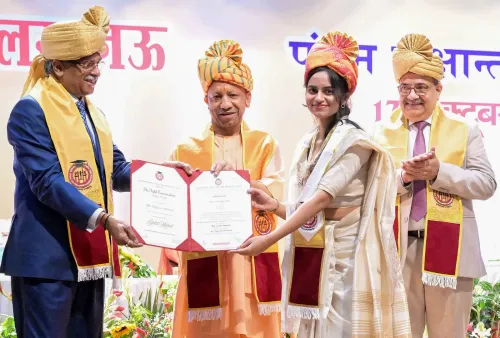
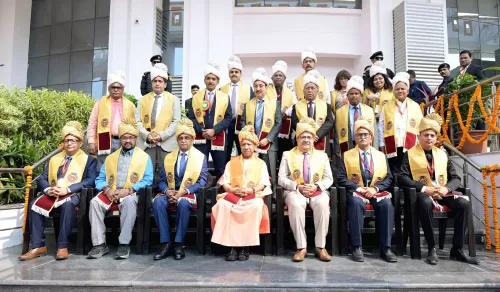
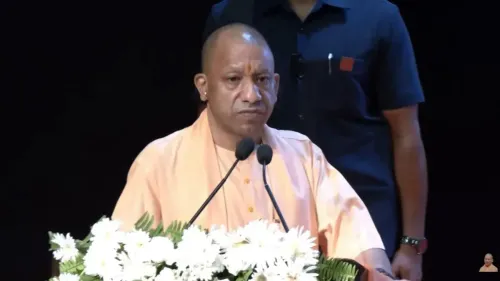
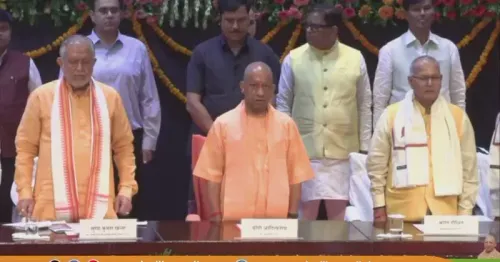
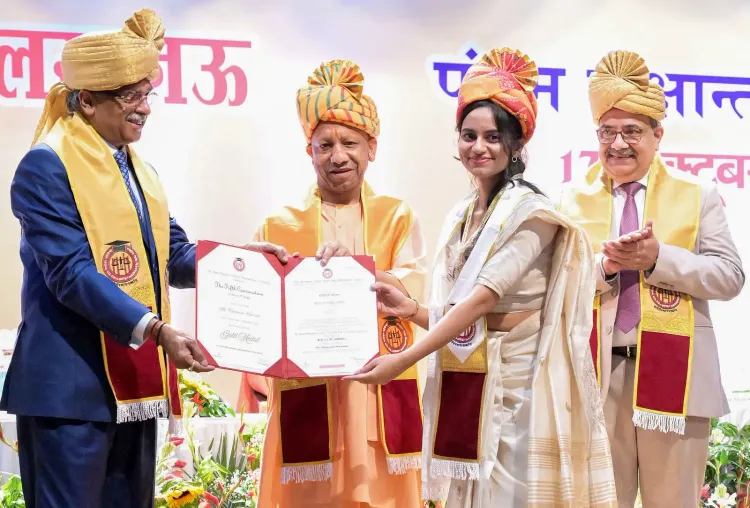
UP CM Yogi Adityanath addressed the fifth convocation of Ram Manohar Lohia National Law University , Lucknow, on 17 October .
He framed graduates' mission as case '2047-Viksit Bharat' with 140 crore Indians as petitioners.
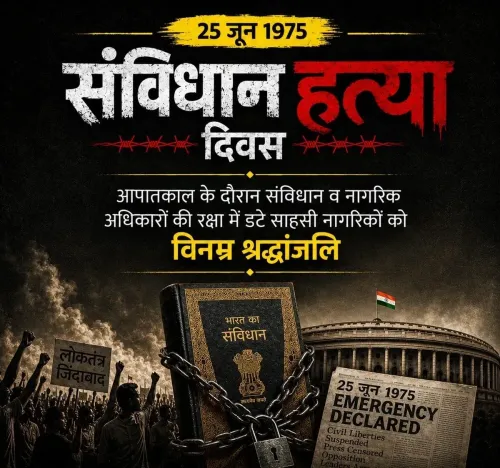
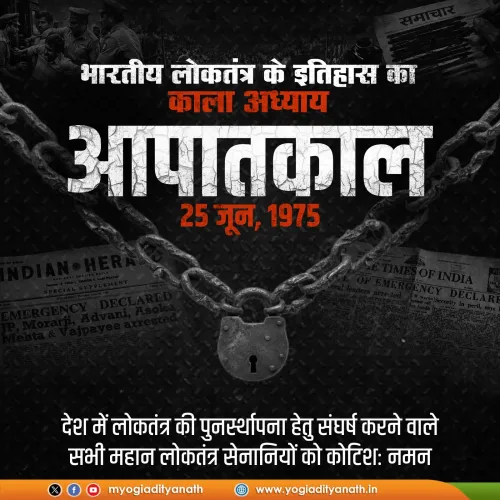
Adityanath said the 1975 Emergency taught India the difference between 'Rule of Law' and 'Ruler of Law', citing Justice H.R.
Khanna's dissent — upheld by the Supreme Court in 2017 .
He recalled that the Allahabad High Court voided Indira Gandhi's election, and Emergency was imposed thirteen days later.
Adityanath credited his government with replacing a 'rule of mafia' in Prayagraj with 'rule of law'.
He urged graduates to avoid shortcuts, stay rooted in rural realities, and treat legal updates like mobile software upgrades.
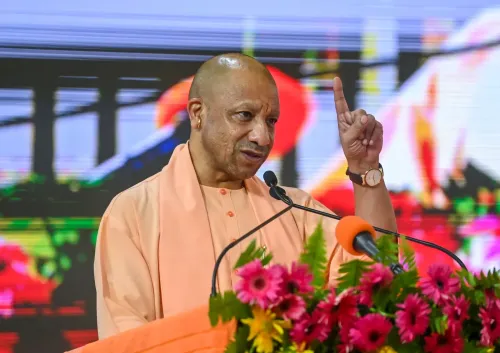
Uttar Pradesh Chief Minister Yogi Adityanath on Saturday, 17 October invoked the 1975 Emergency to draw a sharp distinction between 'Rule of Law' and 'Ruler of Law', telling law graduates at Lucknow's Ram Manohar Lohia National Law University that the dark chapter in India's constitutional history had ultimately strengthened the country's democratic foundations.
The '2047-Viksit Bharat' brief
Addressing the university's fifth convocation ceremony, Chief Minister Adityanath asked the graduating batch to treat their professional mission as a case number: '2047-Viksit Bharat', with 140 crore Indians as the petitioners. 'The opponents in this case are those who believe that this development is not possible in any case. You have to fight this case against those stubborn opponents who are not ready to hear any arguments and do not believe any evidence,' he said, in a veiled reference to the Opposition.
Adityanath mapped a constitutional timeline as the successive 'hearing dates' of this case — 15 August 1947 (Independence), 26 January 1950 (adoption of the Constitution), 25 June 1975 (imposition of Emergency), and 16 May 2024 (the Bharatiya Janata Party's return to power under Prime Minister Narendra Modi).
Emergency, Justice Khanna, and the Rule of Law
The Chief Minister recalled that the Allahabad High Court had declared the election of the 'person sitting on the country's most powerful chair' — a reference to then-Prime Minister Indira Gandhi — as void, and that Emergency was imposed thirteen days later as a direct response. He then cited the lone dissent of Justice H.R. Khanna during the 1975–1977 Emergency as a landmark instance of judicial courage. 'In 2017, the Supreme Court considered that dissent as correct,' he noted. 'It was the Rule of Law under which the apex court, in 2017, upheld Justice H.R. Khanna's dissent,' Adityanath added, framing the Supreme Court's eventual validation as proof that institutional integrity outlasts executive overreach.
Uttar Pradesh: From 'Rule of Mafia' to 'Rule of Law'
Drawing a parallel with his own tenure, Adityanath referenced the situation in Prayagraj before he assumed office as Chief Minister. 'There used to be a mafia; whichever land he stepped onto became his. He did not abide by law, not even the Chief Minister or Governor. Earlier, there was rule of mafia in the state; we implemented the rule of law which made it possible to bring in reforms here,' he said. He credited Prime Minister Modi with ending 'obsolete laws' and driving what he termed a 'reform express' nationally.
Advice to young lawyers: Roots, red flags, and staying updated
The Chief Minister urged the graduates to remain anchored to their origins, deploying the popular Gen Z phrase 'touch grass' — typically meaning to step away from screens — and reframing it: 'My advice to you is — try to touch the mud of your villages, try to look at your roots because the stronger your roots are, the longer will be the journey of India's democracy.' He invoked Lord Krishna's counsel to Arjun in the Bhagavad Gita as a call to become the 'main character' of their own professional stories. Adityanath also cautioned graduates against shortcuts: 'There will be moments in your career where you will be asked to manage. Remember it is a red flag as there is no shortcut to success.' He urged them to help resolve land and family disputes in rural areas, resist external pressure, and stay updated on legal developments — comparing law amendments to software updates on mobile phones.
Point of View
Adityanath's own anti-mafia record in Uttar Pradesh is contested; rights groups and opposition parties have raised due-process concerns even as the administration claims crime reduction. The '2047-Viksit Bharat' metaphor is a deft piece of soft mobilisation — conscripting a generation of lawyers into a ruling-party electoral timeline without formally making it a campaign speech.
NationPress
17 Oct 2026
Frequently Asked Questions
What did Yogi Adityanath say about the 1975 Emergency at the law convocation?
Yogi Adityanath said the 1975 Emergency helped India understand the difference between 'Rule of Law' and 'Ruler of Law'. He noted that the Allahabad High Court had voided Indira Gandhi's election and that Emergency was imposed thirteen days later, calling it a direct assault on legal institutions.
Who is Justice H.R. Khanna and why did Adityanath cite him?
Justice H.R. Khanna was the sole dissenter in a Supreme Court majority ruling during the 1975–1977 Emergency. Adityanath cited his dissent as a symbol of judicial courage, noting that the Supreme Court itself validated that dissent in 2017 — which Adityanath presented as proof of the enduring 'Rule of Law'.
What is the '2047-Viksit Bharat' case Adityanath referred to?
It is a metaphor Adityanath used to frame the professional mission of graduating lawyers: treating India's development journey towards a 'Viksit Bharat' (Developed India) by 2047 as a legal case, with 140 crore Indians as petitioners and sceptics of development as the opposing side.
What personal governance example did Yogi Adityanath cite for 'Rule of Law'?
Adityanath pointed to Prayagraj, where he said a land mafia previously operated with impunity, defying even the Chief Minister and Governor. He claimed his government replaced 'rule of mafia' with 'rule of law', enabling broader reforms in Uttar Pradesh.
What advice did CM Adityanath give to the graduating law students?
He urged graduates to stay rooted in rural realities (reinterpreting the Gen Z phrase 'touch grass' as connecting with village roots), resist pressure to take shortcuts, help resolve land and family disputes in rural areas, and keep updating their legal knowledge — comparing it to installing software updates on a phone.