Yogi Adityanath: 1975 Emergency showed difference between Rule of Law and Law of Ruler
Synopsis
At a Lucknow law university convocation, Yogi Adityanath reframed the 1975 Emergency not as a tragedy alone, but as a constitutional lesson — the moment India learnt to tell 'Rule of Law' from 'Law of Ruler'. Asking graduates to fight for 'Viksit Bharat 2047' as their defining case, he drew a direct line from the Allahabad High Court's historic ruling to the Supreme Court's 2017 vindication of Justice H.R. Khanna's lone dissent.
Key Takeaways
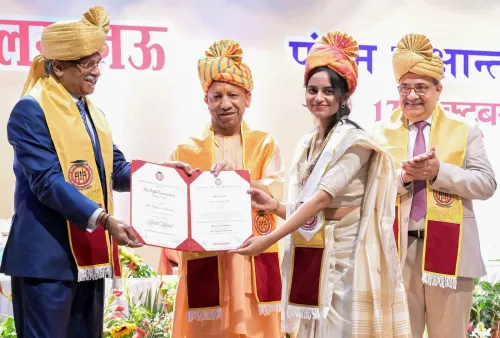
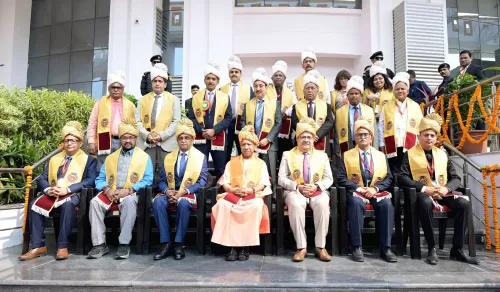
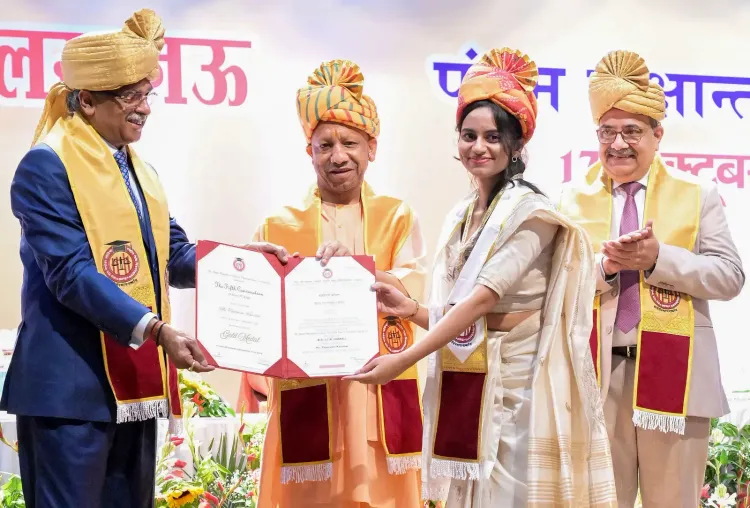
UP CM Yogi Adityanath addressed the fifth convocation of Ram Manohar Lohia National Law University , Lucknow, on 17 October 2026 .
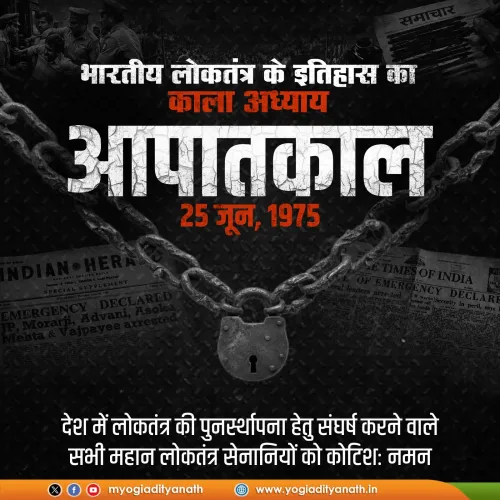
He invoked the 1975 Emergency as a lesson distinguishing 'Rule of Law' from 'Law of Ruler', noting the Emergency followed the Allahabad High Court's order by just 13 days .
He cited the Supreme Court's 2017 ruling upholding Justice H.R.
Khanna's lone Emergency-era dissent as vindication of constitutional principles.
Graduates were asked to treat '2047-Viksit Bharat' as their defining case, with 140 crore Indians as petitioners.
Adityanath contrasted UP's current governance with what he called a prior era of 'rule of mafia', citing Prayagraj as an example.
He urged young advocates to resolve rural land and family disputes and resist pressure to 'manage' cases, calling such requests a 'red flag'.
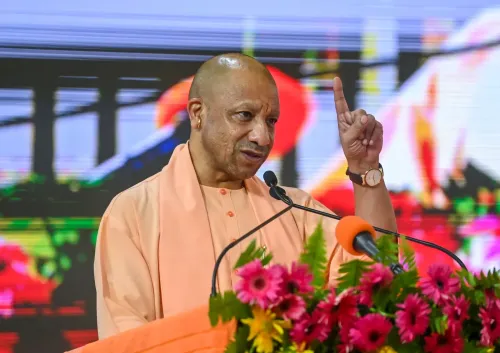
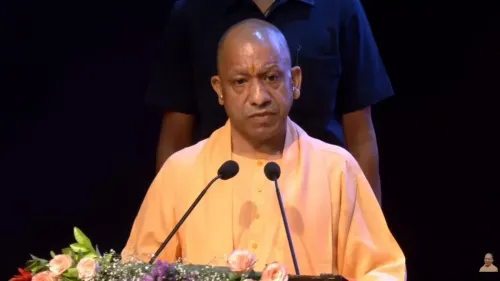
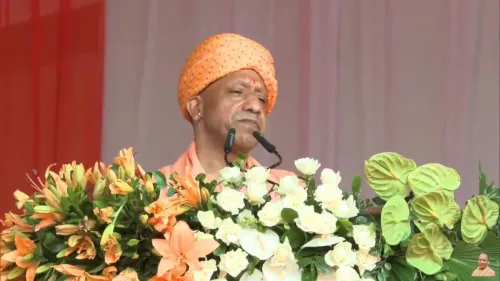
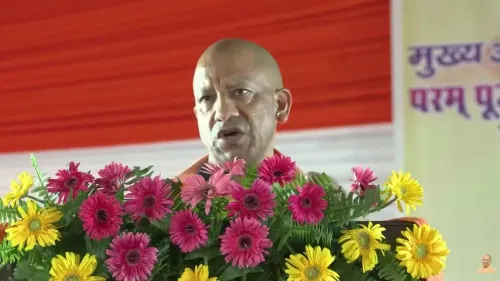
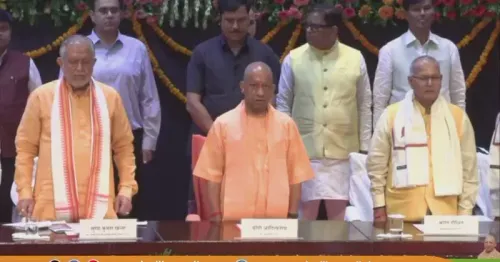
Uttar Pradesh Chief Minister Yogi Adityanath on Saturday, 17 October 2026, invoked the 1975 Emergency to draw a sharp distinction between the 'Rule of Law' and the 'Law of Ruler', arguing that the dark chapter in Indian democratic history ultimately strengthened constitutional values. Speaking at the fifth convocation ceremony of Ram Manohar Lohia National Law University in Lucknow, the Chief Minister challenged graduating lawyers to dedicate their careers to the vision of a developed India by 2047.
The '2047-Viksit Bharat' Case
Addressing the graduates in evocative legal metaphor, Chief Minister Adityanath asked them to treat their professional mandate as case number '2047-Viksit Bharat', with 140 crore Indians as petitioners. 'The opponents in this case are those who believe that this development is not possible in any case. You have to fight this case against those stubborn opponents who are not ready to hear any arguments and do not believe any evidence,' he said, in what was widely read as a veiled reference to political opposition.
He mapped the arc of independent India through a series of 'case dates' — beginning with 15 August 1947 (Independence), followed by 26 January 1950 (the adoption of the Constitution), and then the contested third date: 25 June 1975, when the Emergency was imposed. He described the Constitution as 'the most important document to realise our vision of Ek Bharat Shreshth Bharat' and noted that every Indian and every institution in the country is bound by it.
Emergency, Justice H.R. Khanna, and the Rule of Law
Chief Minister Adityanath recalled that it was the Allahabad High Court — in Uttar Pradesh — that had declared the election of the then Prime Minister as void, and that the Emergency was imposed thirteen days later as a direct response. Drawing on one of India's most celebrated judicial acts of conscience, he highlighted Justice H.R. Khanna's lone dissent from the majority order during the 1975–1977 Emergency period. 'In 2017, the Supreme Court considered that dissent as correct,' he said, adding: '1975 taught the country the difference between Rule of Law and Law of Ruler... It was the Rule of Law under which the apex court, in 2017, upheld Justice H.R. Khanna's dissent.'
This comes amid a broader national conversation about constitutional safeguards, with references to the Emergency period recurring in political and legal discourse ahead of the 50th anniversary of its imposition.
On UP's Transformation and the Mafia Reference
Turning to Uttar Pradesh's recent governance record, Adityanath contrasted the state's present legal order with what he described as an earlier era of lawlessness. 'In Prayagraj, there used to be a mafia — whichever land he stepped onto became his. He did not abide by law, not even the Chief Minister or Governor. Earlier, there was rule of mafia in the state; we implemented the rule of law, which made it possible to bring in reforms here,' he said. He also praised Prime Minister Narendra Modi for having ended laws that had 'become obsolete', characterising the Centre's legislative reforms as a 'reform express'.
Advice to Young Advocates
In a lighter register, Chief Minister Adityanath borrowed from contemporary slang, telling students: 'Your generation is told to touch grass — to look away from screens and explore the world. My advice to you is: try to touch the mud of your villages, try to look at your roots, because the stronger your roots are, the longer will be the journey of India's democracy.' He invoked Lord Krishna's counsel to Arjun in the Bhagavad Gita to encourage students to become the 'main character' of their professional lives rather than passive bystanders.
He also warned graduates against compromise, flagging requests to 'manage' outcomes as a 'red flag', and urged them to stay updated — comparing legal amendments to software updates on mobile phones. The Chief Minister appealed to young advocates to resolve land and family disputes in rural areas, oppose injustice, and remain steadfast in their principles under pressure.
Point of View
But placing it alongside the '2047-Viksit Bharat' case metaphor converts a constitutional lesson into a partisan campaign frame. Notably, the speech says little about institutional independence today — the very quality that made Justice Khanna's dissent possible. Whether the graduates take away the courage to dissent against any ruler, or loyalty to one political project, will depend on how they read the subtext.
NationPress
17 Oct 2026
Frequently Asked Questions
What did Yogi Adityanath say about the 1975 Emergency at the Lucknow convocation?
Chief Minister Yogi Adityanath said the 1975 Emergency taught India the difference between 'Rule of Law' and 'Law of Ruler', noting that the Allahabad High Court's order voiding the then Prime Minister's election preceded the Emergency by just 13 days. He cited the Supreme Court's 2017 ruling upholding Justice H.R. Khanna's lone dissent as proof that the constitutional principle ultimately prevailed.
What is the '2047-Viksit Bharat' case that Yogi Adityanath referred to?
It is a metaphor used by Chief Minister Adityanath to frame India's development goal as a legal case, with 140 crore Indians as petitioners and the target date of 15 August 2047 — India's centenary of independence — as the final hearing date. He asked graduating lawyers to act as advocates for this vision and fight 'stubborn opponents' of development.
Who is Justice H.R. Khanna and why did Yogi Adityanath mention him?
Justice Hans Raj Khanna was the sole Supreme Court judge who dissented from the majority ruling during the 1975–1977 Emergency, arguing that even in an emergency the state could not suspend the right to life. In 2017, the Supreme Court formally recognised his dissent as constitutionally correct. Adityanath cited this to illustrate the enduring power of the 'Rule of Law'.
What governance points did Adityanath make about Uttar Pradesh?
Adityanath claimed that before his government came to power, Uttar Pradesh — particularly Prayagraj — was dominated by a 'rule of mafia' where land was captured unlawfully and even constitutional authorities were disregarded. He contrasted that with what he described as the current 'rule of law' regime under his administration.
What advice did Yogi Adityanath give to graduating law students?
He urged the graduates to stay rooted in their villages and communities, resist requests to 'manage' cases (calling such overtures a 'red flag'), remain updated on legal amendments, and focus on resolving rural land and family disputes. He also invoked the Bhagavad Gita, encouraging students to be the 'main character' rather than a passive observer in their professional lives.