Mahua Moitra invokes Art 19 in Tiranga row, warns police
Synopsis
TMC MP Mahua Moitra invoked Article 19(1)(a) and the Supreme Court's 2004 Naveen Jindal ruling to assert citizens' right to fly the Tiranga every day, warning that any police misconduct would be recorded, published, and the officers named publicly.
Key Takeaways
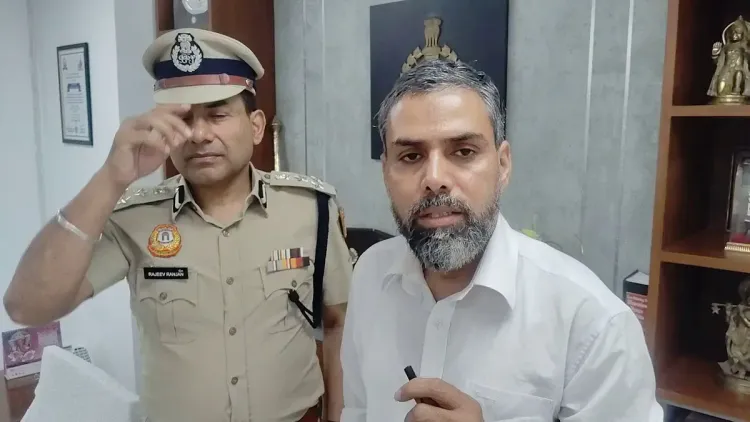
Mahua Moitra , TMC Lok Sabha MP from Krishnanagar , publicly challenged @IpsRajeev over alleged police misconduct toward citizens flying the national flag.
She cited Article 19(1)(a) of the Constitution, which protects freedom of speech and expression, as the legal basis for citizens flying the Tiranga on all days.
The Supreme Court's 2004 Union of India v.
Naveen Jindal ruling confirmed that flying the national flag is a protected constitutional right subject to Flag Code restrictions on dignified use.
Moitra warned that officers who 'misbehave' will be recorded, published, and named — a deliberate reputational-accountability strategy beyond formal legal action.
Such Tiranga-related friction between citizens and enforcement has been a recurring flashpoint, often escalating into litigation and parliamentary statements by opposition MPs.
A constitutional right, a national flag, and a direct warning to a police officer — TMC MP Mahua Moitra compressed all three into a single post on Saturday, 17 October 2026, firing back at @IpsRajeev over what she described as police misconduct against citizens flying the Tiranga.
Moitra's message was blunt: 'Hello @IpsRajeev — pls read Art 19(1)(a) of the Constitution. We, as citizens, have right to fly Tiranga on all days with pride and honour. Also each time your thug police misbehave we will record, publish and name them so even their families will be ashamed.'
What Article 19(1)(a) actually says — and what the Supreme Court ruled
The constitutional provision Moitra cited guarantees every citizen the right to freedom of speech and expression. In the landmark Union of India v. Naveen Jindal (2004) judgment, the Supreme Court specifically extended this right to the flying of the national flag, holding that displaying the Tiranga is a protected form of expression — subject only to the Flag Code of India's reasonable restrictions on its dignified use.
That ruling effectively settled the question of whether citizens may fly the flag on days outside designated national holidays. The court's answer was yes — with dignity. Any enforcement action that goes beyond Flag Code provisions therefore risks crossing a constitutional line.
The pattern: Tiranga displays, police friction, and political flashpoints
Incidents in which citizens face police pushback while flying the national flag have surfaced repeatedly across Indian states. Opposition MPs, Moitra among them, have consistently framed such episodes as overreach — using constitutional provisions to put pressure on officers and the administrations they report to.
What makes Moitra's post particularly sharp this time is the explicit threat of accountability by exposure. Her warning — that officers who 'misbehave' will be recorded, published, and named — signals a crowdsourced transparency approach that social media has made increasingly feasible. It is less a legal threat than a reputational one, and it is aimed squarely at deterrence.
A direct challenge, a named officer, an accountability gambit
By addressing an individual by handle rather than issuing a general statement, Moitra personalised the confrontation. The specifics of the underlying incident involving @IpsRajeev and any police action around this date remain unverified, but the constitutional and political argument she is making is well-established ground for the Krishnanagar MP.
Watch for any response from the Ministry of Home Affairs on Flag Code enforcement norms, or related petitions that may follow in high courts — because when a sitting MP publicly invokes a Supreme Court precedent against a named officer, the legal chain rarely stops at a single tweet.
Point of View
Making it harder to dismiss as partisanship, and it deploys the threat of viral public naming as a deterrent where formal legal mechanisms are slow. The move fits a broader opposition pattern of using social-media accountability pressure alongside — not instead of — institutional remedies. For the ruling dispensation, the friction over flag-flying rights is a reputational liability: the Tiranga is a symbol it has aggressively championed, making any police action against citizens displaying it politically awkward. Expect this to feed into debates about the limits of Flag Code enforcement and the balance between public-order powers and fundamental rights.
NationPress
17 Oct 2026
Frequently Asked Questions
Do Indian citizens have the right to fly the national flag every day?
Yes. The Supreme Court in Union of India v. Naveen Jindal (2004) held that flying the Tiranga is a protected right under Article 19(1)(a), meaning citizens may display it on all days — not only national holidays — as long as they follow the Flag Code of India's rules on dignified use.
What is Article 19(1)(a) of the Indian Constitution?
Article 19(1)(a) guarantees every citizen the fundamental right to freedom of speech and expression. Courts have interpreted this broadly to include symbolic acts such as flying the national flag.
What is the Flag Code of India?
The Flag Code of India, 2002 consolidates rules governing the display and use of the national flag. It sets out standards of dignity and proper use, and was amended in 2022 to allow the Tiranga to be flown day and night at private premises.
Why is Mahua Moitra targeting @IpsRajeev?
Moitra addressed her post directly to the handle @IpsRajeev in connection with alleged police misconduct against citizens flying the Tiranga. The specific details of the underlying incident have not been independently verified.
What happens legally if police prevent citizens from flying the Tiranga?
Such action could constitute an infringement of the fundamental right guaranteed under Article 19(1)(a) , as upheld in the Naveen Jindal (2004) ruling. Affected citizens can approach a High Court under Article 226 or the Supreme Court under Article 32 for relief.