CM Dhami Holds 'Viksit Uttarakhand' Dialogue With Entrepreneurs
Synopsis
Chief Minister Pushkar Singh Dhami hosted the 'Viksit Uttarakhand — Yatra Jaari Hai' dialogue on 17 October 2026, engaging entrepreneurs and innovators from across the state. He cited startup numbers doubling to over 1,700, highlighted success stories in herbal farming, dairy, and tech, and framed the state's progress as aligned with PM Modi's Viksit Bharat 2047 vision.
Key Takeaways
CM Pushkar Singh Dhami held the 'Viksit Uttarakhand — Yatra Jaari Hai' dialogue on 17 October 2026 at Mukhya Sevak Sadan, Dehradun.
Uttarakhand's registered startups have reportedly grown from approximately 700 to over 1,700 in five years.
Harpal Negi of Chamoli has mobilised over 300 people to cultivate medicinal plants, generating ₹1.5–₹2 crore in collective annual income.
Vikas Kumar Shah of Udham Singh Nagar runs a startup with his wife that has crossed a ₹10 crore turnover .
Shailesh of Tanakpur , based in Singapore, expressed intent to adopt a village in Champawat for development support.
The event was jointly organised by the Planning Department and Devbhoomi Dialogue , reflecting a structured state-level engagement model with ground innovators.
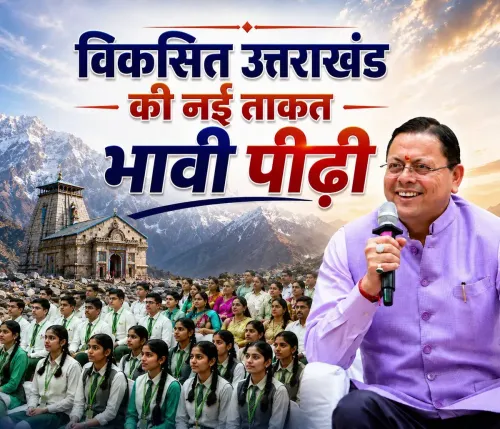
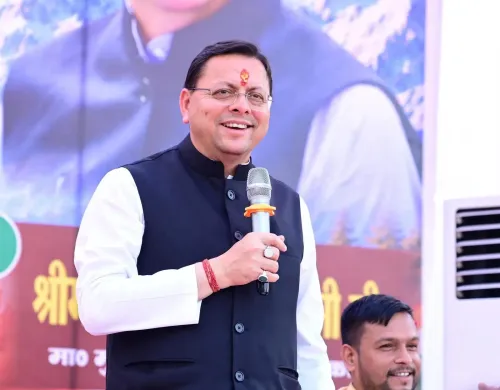
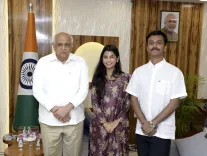
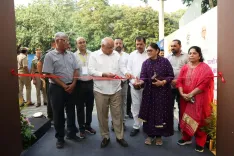
A solar-powered car built in Champawat. A dairy farm grown from a single cow in Uttarkashi. A startup in Udham Singh Nagar crossing a ₹10 crore turnover. On Saturday, 17 October 2026, these were not investor-pitch headlines — they were the voices inside Mukhya Sevak Sadan at the Chief Minister's Camp Office in Dehradun, as Chief Minister Pushkar Singh Dhami sat down with the state's grass-roots builders for the 'Viksit Uttarakhand — Yatra Jaari Hai' (Developed Uttarakhand — The Journey Continues) dialogue programme.
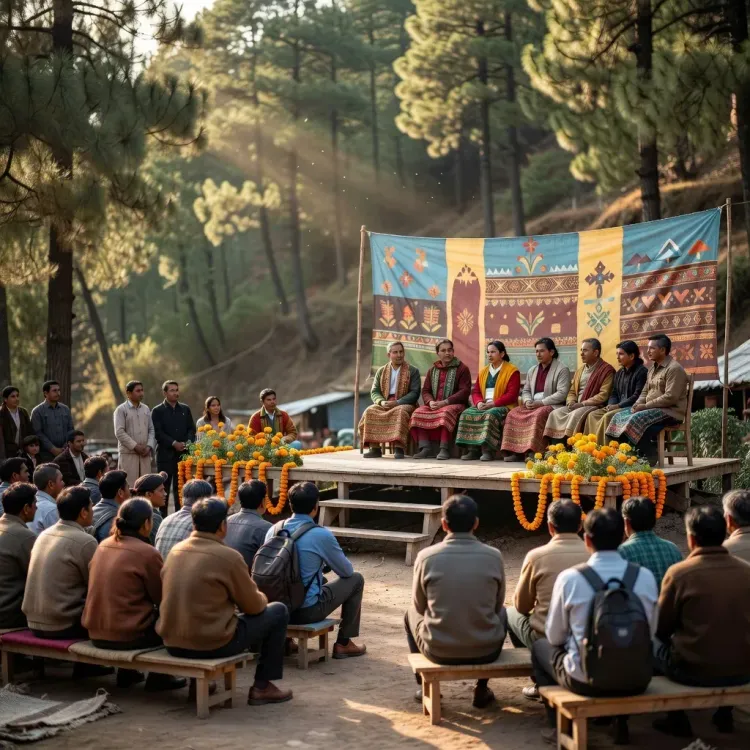
The event, jointly organised by the Planning Department (Niyojan Vibhag) and Devbhoomi Dialogue, brought together entrepreneurs, innovators, progressive farmers, and self-employed individuals from across Uttarakhand's districts. CM Dhami listened to their experiences, achievements, and suggestions — and made a pointed declaration: 'Uttarakhand nirantar aage badh raha hai' (Uttarakhand is moving continuously forward), aligning the state's trajectory with Prime Minister Narendra Modi's Viksit Bharat 2047 vision.
From 700 to 1,700 Startups in Five Years
CM Dhami cited startup growth as one of the clearest markers of the state's transformation. He said the number of registered startups in Uttarakhand has grown from approximately 700 to over 1,700 in the last five years — more than doubling — driven by youth entering agriculture, technology, and industry with fresh experiments. The government, he said, is continuously working to strengthen the local economy through self-employment promotion.
He also revisited the foundational logic of the state's formation: when Uttarakhand was carved out in 2000, tourism and energy were identified as its two primary development pillars. Both, he said, have seen significant progress — tourism is generating employment, and multiple energy projects, including hydroelectric ventures, are currently in motion.
The Faces Behind the Numbers
The dialogue's most striking moments came from the participants themselves. Rahul Nariyal of Champawat described building a car that runs on solar energy and battery power. Jayprakash of Uttarkashi started with a single cow, used state government schemes to scale up, and now runs a dairy with five Badri cows and eight indigenous cows. Naveen Patwal of Pauri district is commercially cultivating Gucchi mushrooms — a high-value Himalayan variety — and generating employment for others in the process.
Vikas Kumar Shah of Udham Singh Nagar told CM Dhami that the startup he runs with his wife has crossed a turnover of ₹10 crore. Rajesh of Chamoli district presented a rare reverse-migration success story: he returned to his village, built a business around rosemary and herbal products, and is now employing local residents. Kamala Devi of Nainital shared that she earns a good income repairing vehicle tyres — a reminder that self-employment takes many forms.
Dr. Harpal Negi of Chamoli's Ghes region has encouraged over 300 people to cultivate Kutki (Picrorhiza kurroa) and other medicinal plants, generating a collective annual income of approximately ₹1.5 to ₹2 crore. Lalit Khati of Someshwar spoke about integrated farming and local job creation, while Anita Sharma Thapliyal, joining virtually, described her work in inclusive education for autism-affected children in Dehradun.
A Singapore Connection and a Village Adoption Promise
Among the most striking contributions came from Shailesh, a native of Tanakpur in Champawat, who joined the programme virtually from Singapore, where he works in sewage water treatment. He expressed his wish to adopt a village in Champawat and contribute to its development — a signal that Uttarakhand's diaspora is looking inward, not just outward.
Taken together, these stories from the hills are Uttarakhand's most compelling argument yet that the journey it set out on in 2000 is finally gathering speed on the ground — one farm, one startup, one returning son at a time.
Point of View
Who has staked political identity on development delivery, the event serves a dual purpose: it generates authentic human-interest narratives around government schemes, and it creates visible alignment with PM Modi's Viksit Bharat 2047 framework — important optics for a BJP state government. The reverse-migration stories and diaspora-village-adoption pledge are particularly notable, directly countering Uttarakhand's long-standing political vulnerability of outward migration from hill districts. Whether these dialogues translate into systemic policy adjustments — or remain ceremonial showcases — will be the real test of the 'Yatra Jaari Hai' promise.
NationPress
17 Oct 2026
Frequently Asked Questions
What is the 'Viksit Uttarakhand — Yatra Jaari Hai' programme?
'Viksit Uttarakhand — Yatra Jaari Hai' (Developed Uttarakhand — The Journey Continues) is a dialogue initiative organised jointly by Uttarakhand's Planning Department and Devbhoomi Dialogue. It brings CM Pushkar Singh Dhami face-to-face with entrepreneurs, innovators, farmers, and self-employed individuals to hear their success stories and suggestions for state policy.
How many startups are there in Uttarakhand in 2026?
CM Dhami stated at the 17 October 2026 dialogue that Uttarakhand's registered startups have grown from approximately 700 to over 1,700 in the last five years, more than doubling as the state pushed entrepreneurship and self-employment schemes.
What is the Viksit Bharat 2047 vision and how does Uttarakhand fit in?
Viksit Bharat 2047 is Prime Minister Narendra Modi's national vision to make India a developed nation by the centenary of independence. CM Dhami has positioned Uttarakhand's development agenda — in tourism, hydropower, startups, and self-employment — as a state-level contribution to this broader national goal.
Who are some of the entrepreneurs who spoke at the Uttarakhand dialogue on 17 October 2026?
Notable participants included Rahul Nariyal of Champawat (solar-powered car), Jayprakash of Uttarkashi (dairy business from one cow to 13), Naveen Patwal of Pauri (Gucchi mushroom cultivation), Vikas Kumar Shah of Udham Singh Nagar (₹10 crore startup), Rajesh of Chamoli (herbal products, reverse migration), and Dr. Harpal Negi of Chamoli (300+ people growing medicinal Kutki plants).
What is reverse migration in the context of Uttarakhand?
Reverse migration in Uttarakhand refers to people who had left hill districts for cities returning to their native villages to start businesses or take up farming. It is a key policy concern for the state government, which is actively promoting self-employment to stem outward migration. Rajesh of Chamoli, who returned to grow herbal products, was cited as an example at the 17 October dialogue.