Uttarakhand CM Highlights Global Jobs, Local Enterprise Push
Synopsis
At a state event on 17 October 2026, Uttarakhand's Chief Minister spotlighted Tehri's Sapna Rana, who secured a Germany nursing job via the state's global skill scheme, alongside local entrepreneurs turning pine needles, millets, and horticulture into livelihoods.
Key Takeaways
Ms Sapna Rana of Tehri district secured a nursing position in Germany after completing German-language training under the state's global employment scheme.
The Mukhyamantri Kaushal Unnayan Evam Vaishvik Rozgar Yojana provides skill and language training to enable youth employment both abroad and locally.
Smt Geeta Pant and Smt Suman Panthari convert pine needles ( pirul ) into commercial products, addressing both livelihood and forest-fire risk.
Smt Kalpana Bisht runs a millet-based bakery , leveraging Uttarakhand's coarse-grain resources for value-added enterprise.
The Chief Minister stated the government aims to create entrepreneurship and self-employment opportunities so youth can generate jobs for others, not just themselves.
Uttarakhand's strategy pairs international skilled placements with local micro-enterprise to counter chronic out-migration from hill districts.
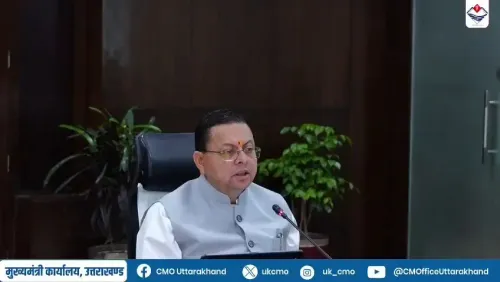
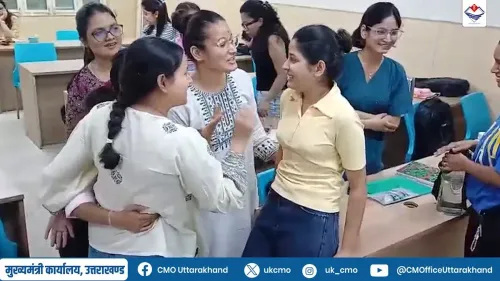
A young woman from Tehri district packed her bags for Germany — not as an emigrant escaping limited options, but as a trained nurse who earned her placement through a state-run skill programme. On Saturday, 17 October 2026, the Chief Minister's Office of Uttarakhand shared how Ms Sapna Rana's story anchored a larger gathering of entrepreneurs and achievers convened to celebrate livelihood innovation across the hill state.
Sapna Rana's Germany Journey and What the Scheme Made Possible
Ms Sapna Rana told the programme how the state government's support in German-language training directly opened a nursing career in Germany for her — a trajectory that would have been difficult to chart without institutional backing. Her placement came under the Mukhyamantri Kaushal Unnayan Evam Vaishvik Rozgar Yojana (Chief Minister's Skill Upgradation and Global Employment Scheme), Uttarakhand's flagship initiative designed to equip youth with the language and vocational skills required by overseas labour markets.
Her case reflects a growing bilateral current: India and Germany have been deepening labour mobility arrangements in the healthcare sector, and Uttarakhand's programme is one of the state-level vehicles channelling that demand. For a hill district where working-age populations have long drifted toward plains cities, a direct posting to Germany represents a qualitatively different kind of mobility — skilled, salaried, and structured.
Pine Needles, Millets, and a Bakery: Local Enterprise at the Same Table
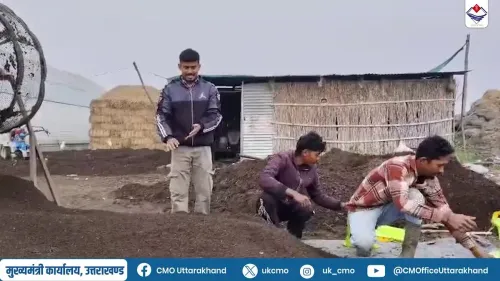
The event was not only about international placements. Smt Geeta Pant and Smt Suman Panthari described how they convert pirul (pine needles) — an abundant and fire-prone forest material — into useful commercial products, turning an ecological liability into rural income. Shri Mahabal Negi spoke about his work in horticulture, while Smt Kalpana Bisht runs a bakery anchored around millet-based products, riding the national push for coarse-grain revival.
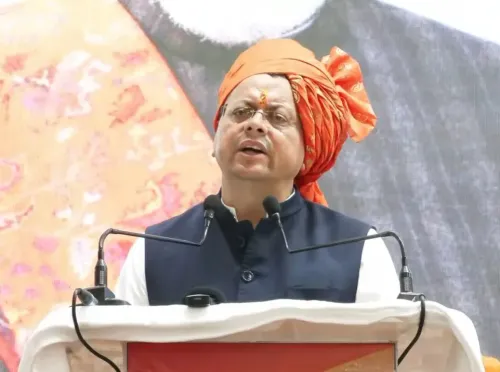
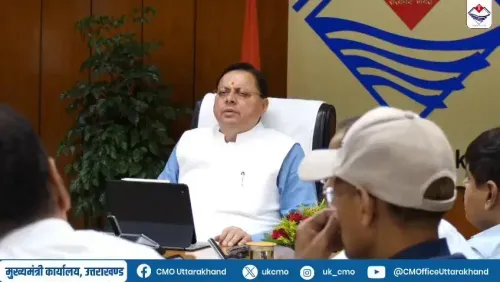
Together, these stories were framed not as isolated successes but as a template. The Chief Minister, addressing participants, said that 'pradeś ke vibhinn kṣetroṃ meṃ ho rahe aise kārya anya logoṃ ke lie bhī preraṇā haiṃ' ['such work happening across various regions of the state is an inspiration for others too']. He added that Uttarakhand's natural resources, local produce, and youth talent could generate entirely new livelihood opportunities — a pointed reference to the state's chronic out-migration problem.
State's Dual Bet: Global Placements and Homegrown Entrepreneurship
The Chief Minister stated that the government's intent is to ensure youth have better access to entrepreneurship and self-employment — so that they not only advance themselves but also create jobs for others. The message threads two goals that might seem contradictory: encouraging skilled emigration abroad while simultaneously building reasons to stay and invest locally.
A video presentation by Shri Ramesh Bhatt, editor of Devbhoomi Dialogue, highlighting youth achievers across sectors gave the event a documentary dimension — putting faces and stories to what the state frames as a quiet transformation in the hills.
Senior officials including Principal Secretary Shri R.K. Sudhanshu, Dr R. Meenakshi Sundaram, Secretary Dr Pankaj Kumar Pandey, Shri C. Ravishankhar, and Additional Secretary and Director General (Information) Shri Banshidhar Tiwari were present, signalling institutional weight behind the programme beyond ceremonial optics.
One nurse in Germany, a pirul entrepreneur, a millet baker, and a horticulturist — Uttarakhand's bet is that these stories, told loudly enough, become the next generation's plan B before out-migration ever crosses their minds.
Point of View
But the real test is scale. A single nursing placement in Germany is a proof-of-concept; the policy arc only becomes consequential when batch placements, language training infrastructure, and bilateral agreements are institutionalised beyond individual success stories. The simultaneous spotlighting of pirul entrepreneurs and millet bakers signals that the state is hedging: if global placements hit diplomatic or capacity limits, homegrown livelihood chains must carry the load. How the next state budget allocates resources between these two tracks will reveal which bet the government is truly placing.
NationPress
17 Oct 2026
Frequently Asked Questions
What is the Mukhyamantri Kaushal Unnayan Evam Vaishvik Rozgar Yojana?
It is an Uttarakhand government scheme that provides skill training, including foreign-language instruction, to help youth secure employment abroad and build local enterprises. Under it, candidates like Sapna Rana received German-language training before placement in nursing jobs in Germany.
Who is Sapna Rana from Uttarakhand?
Sapna Rana is a resident of Tehri district, Uttarakhand, who trained in German under the state's global employment scheme and subsequently secured a nursing position in Germany, making her a key example of the scheme's outcomes.
How does Uttarakhand use pine needles (pirul) for employment?
Women entrepreneurs such as Geeta Pant and Suman Panthari convert pine needles (pirul) into useful commercial products, creating rural livelihoods from a material that is otherwise a forest-fire hazard in Uttarakhand's hill regions.
Why is Germany a destination for Uttarakhand nurses?
India and Germany have been developing bilateral labour mobility arrangements in the healthcare sector, creating structured demand for trained nurses. Uttarakhand's scheme targets this demand by providing German-language and nursing skill training to eligible candidates.
What is Uttarakhand's approach to stopping out-migration?
The state government is pursuing a twin-track approach: facilitating organised, skilled international placements for youth who wish to work abroad, while simultaneously building local micro-enterprises based on natural resources such as millets, pine needles, and horticulture to create viable home-state livelihoods.