BRICS must play 'stabilising role' amid global flux, says Jaishankar at New Delhi meet
Synopsis
With the world fractured by conflicts, trade tensions, and climate pressure, External Affairs Minister Jaishankar used India's BRICS chair platform to make a pointed argument: the expanded bloc must now earn its relevance by delivering tangible support to developing nations — on energy, food, finance, and beyond. The Foreign Ministers' Meeting in New Delhi is the clearest signal yet of how India intends to shape the BRICS agenda in 2026.
Key Takeaways
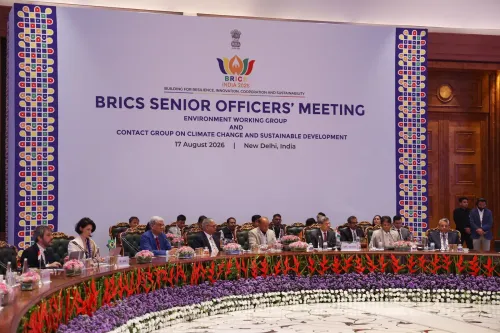
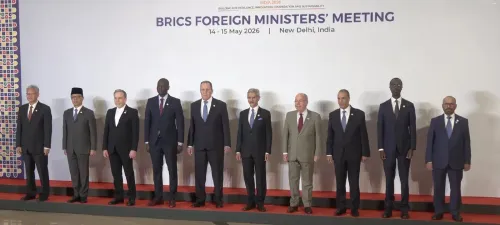
Jaishankar opened the BRICS Foreign Ministers' Meeting at Bharat Mandapam, New Delhi on 14 May 2026 .
He called on BRICS to play a 'constructive and stabilising role' amid global conflicts, trade disruptions, and economic uncertainty.
Jaishankar highlighted developing-country challenges in energy, food, fertiliser, health security, and access to finance as priority areas for BRICS action.
He invoked the principle of common but differentiated responsibilities on climate, a key demand of developing nations.
The minister called for stronger multilateral cooperation on counter-terrorism and stressed the importance of dialogue and diplomacy amid ongoing regional conflicts.
Meeting outcomes are expected to feed into the BRICS Leaders' Summit later in 2026 under India's chairship.
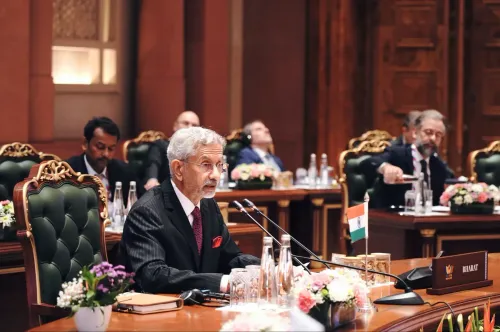
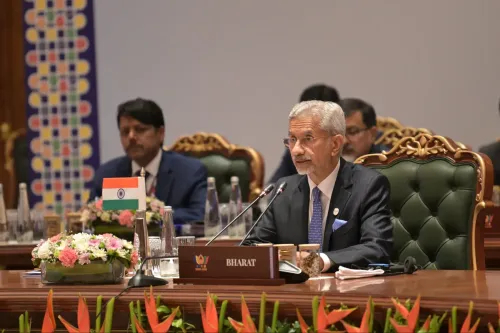
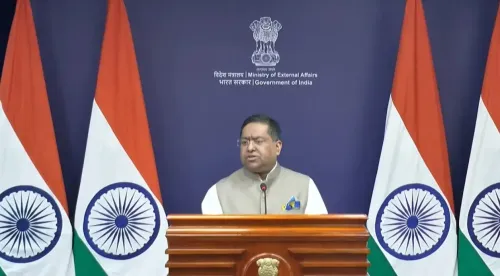
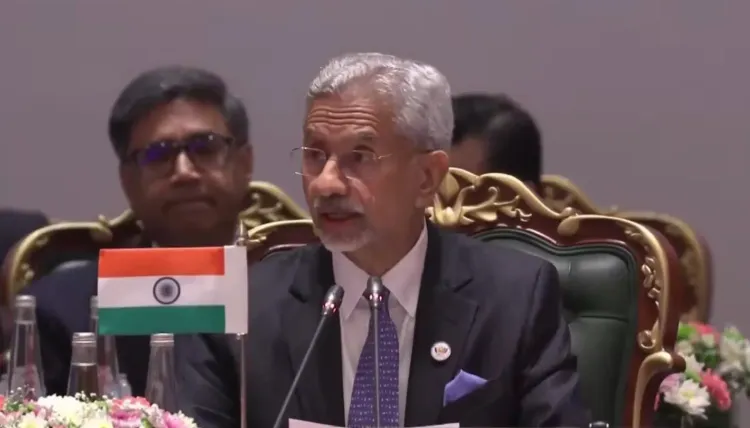
External Affairs Minister S. Jaishankar on Thursday, 14 May said there is a growing expectation — especially among emerging markets and developing countries — that BRICS must step up as a 'constructive and stabilising force' in a world marked by conflicts, economic uncertainty, and fractured trade relations. He made these remarks while delivering the opening address at the BRICS Foreign Ministers' Meeting held at Bharat Mandapam, New Delhi, under India's 2026 chairship of the expanded grouping.
Setting the Stage at Bharat Mandapam
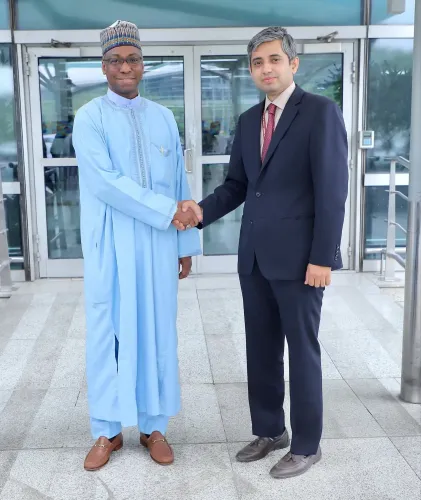
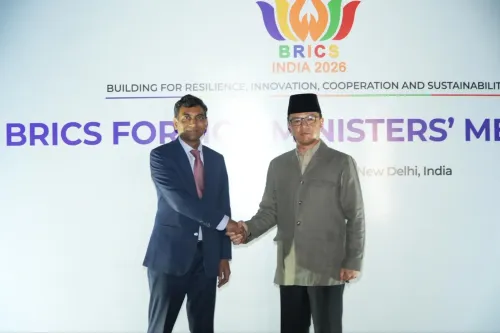
Foreign ministers and senior diplomats from BRICS member and partner nations converged on the national capital for the high-level meeting. Jaishankar personally received the visiting delegations at the venue ahead of the formal discussions — a gesture underscoring the diplomatic weight India is attaching to its chairship year.
Opening the session, he acknowledged the support of participating nations: 'India's chairship appreciates your support, which has contributed to the steady progress of our work,' he said.
Key Themes: Conflict, Trade, Climate, Technology
Jaishankar outlined four pressure points reshaping the international order. 'We meet at a time of considerable flux in international relations, ongoing conflicts, economic uncertainties, and challenges in trade, technology and climate are shaping the global landscape,' he said, framing the meeting as an opportunity to convert shared concern into practical cooperation.
On development priorities, he was specific: 'Many countries face challenges in energy, food, fertiliser, and health security, as well as access to finance. BRICS can help them respond more effectively.' He added that economic resilience — built on reliable supply chains and diversified markets — must remain a core focus.
On climate, Jaishankar called for discussions that advance sustainable development while upholding the principle of common but differentiated responsibilities — a formulation that developing nations have long insisted upon in global climate negotiations. Notably, this framing pushes back against attempts by developed economies to apply uniform emission-reduction obligations regardless of historical contributions.
Peace, Security, and Counter-Terrorism
The External Affairs Minister stressed that peace and security remain central to the global order, pointing to ongoing regional conflicts as evidence of the urgent need for dialogue and diplomacy. 'Recent conflicts only underline the importance of dialogue and diplomacy,' he said, while also calling for stronger multilateral cooperation against terrorism — a consistent Indian priority in every major multilateral forum.
He further highlighted the growing influence of technology on governance structures, arguing that technological advancements must be harnessed to promote good governance and inclusive growth rather than deepen existing divides.
India's Role as BRICS Chair
Speaking in his capacity as chair, Jaishankar assured delegations of an 'open and constructive exchange' and invited members to present their perspectives freely. 'Your inputs will help guide our discussions and contribute to meaningful outcomes,' he said.
This comes amid a broader recalibration of BRICS's identity following its expansion to include new member and partner nations, raising questions about the grouping's coherence and its ability to speak with a unified voice on contentious global issues. With India at the helm in 2026, New Delhi appears determined to anchor the bloc's agenda around development, multipolarity, and reform of global institutions — while keeping the forum's tone cooperative rather than confrontational.
The outcomes of the Foreign Ministers' Meeting are expected to feed into the broader BRICS Leaders' Summit scheduled later in the year under India's chairship.
Point of View
Both China and India, actually deliver on energy security or supply-chain resilience without fracturing over competing national interests? India's 2026 chairship is as much a diplomatic balancing act as it is a policy agenda.
NationPress
13 Oct 2026
Frequently Asked Questions
What did EAM Jaishankar say at the BRICS Foreign Ministers' Meeting?
Jaishankar said there is a growing expectation among emerging markets and developing countries that BRICS must play a 'constructive and stabilising role' amid global conflicts, economic uncertainties, and challenges in trade, technology, and climate. He made these remarks on 14 May at Bharat Mandapam in New Delhi, where he chaired the meeting under India's 2026 BRICS chairship.
Where was the BRICS Foreign Ministers' Meeting held?
The meeting was held at Bharat Mandapam in New Delhi on 14 May 2026, under India's chairship of the expanded BRICS grouping. Foreign ministers and senior diplomats from member and partner nations attended the high-level session.
What issues did Jaishankar highlight as priorities for BRICS?
Jaishankar identified energy, food, fertiliser, and health security, as well as access to finance, as key development challenges BRICS must address. He also stressed economic resilience through reliable supply chains, climate action based on equity principles, counter-terrorism cooperation, and harnessing technology for inclusive growth.
What is India's role in BRICS in 2026?
India holds the chairship of the expanded BRICS grouping in 2026. As chair, India is steering the bloc's agenda with a focus on development, multipolarity, and reform of global institutions. The Foreign Ministers' Meeting in New Delhi is a key milestone ahead of the BRICS Leaders' Summit later in the year.
What does 'common but differentiated responsibilities' mean in the BRICS context?
It is a principle from international climate negotiations holding that all countries share responsibility for addressing climate change, but that developed nations — having historically contributed more to emissions — bear a greater burden. Jaishankar's invocation of this principle signals that India, as BRICS chair, intends to defend the Global South's position against uniform climate obligations.