Taliban logs 90+ foreign trips to break isolation despite UN sanctions
Synopsis
The Taliban has clocked over 90 foreign trips in a year — an audacious diplomatic blitz by a government under UN sanctions, without a single formal recognition to its name. With India deepening humanitarian ties, Russia the sole formal partner, and 3.7 million Afghan children facing acute malnutrition amid clinic closures, Kabul's outreach reveals how far pragmatism has stretched the boundaries of international isolation.
Key Takeaways
Taliban officials undertook more than 90 foreign trips in the past year, according to spokesperson Zabihullah Mujahid , despite active UN sanctions requiring prior travel exemptions.
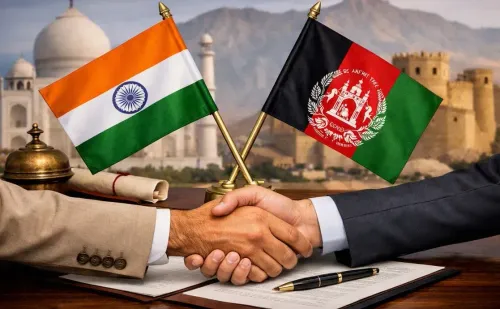
India has adopted an 'engagement without recognition' policy, upgrading its Kabul mission to a full embassy while stopping short of formal recognition; Kabul appointed a diplomat at the Afghan Embassy in New Delhi .
Russia is the only country with official diplomatic ties to Taliban-governed Afghanistan; China has exchanged representatives without formal recognition.
Afghanistan's bilateral economic relations have expanded with Iran , India , and Uzbekistan , per Taliban claims.
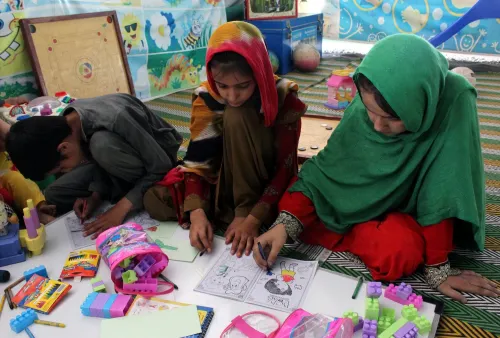
More than 100 clinics treating malnourished children have closed due to funding cuts; 3.7 million children face acute malnutrition, according to UN officials.
A UNAMA report based on interviews with 195 victims documents ongoing suffering from the conflict period spanning 2001 to 15 August 2021 .
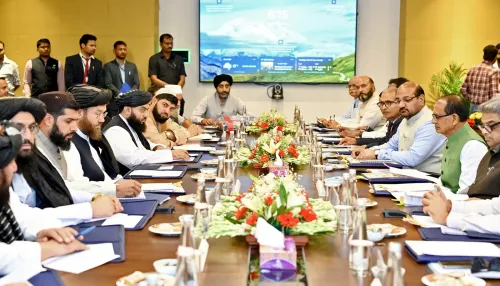
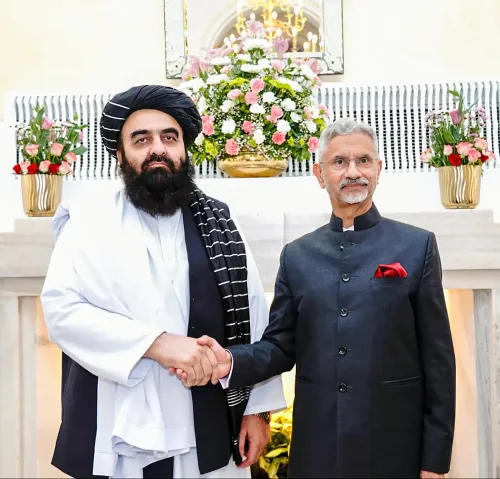
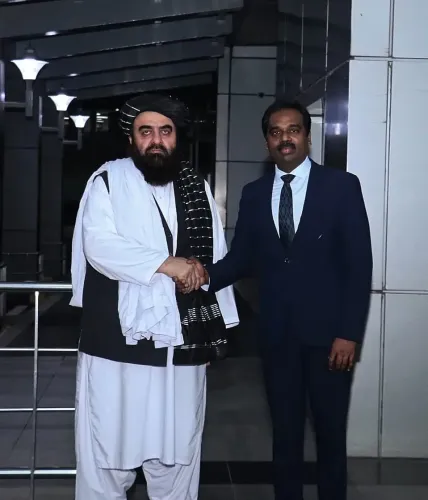
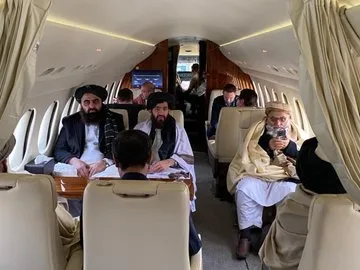
Afghanistan's Taliban administration has conducted more than 90 foreign trips by government officials over the past year in a sustained push to build working relations with other nations, even as it remains without formal international recognition due to its human rights record. The outreach campaign, confirmed by administration spokesperson Zabihullah Mujahid and reported by Afghan media, signals Kabul's determination to end its diplomatic isolation despite active United Nations sanctions that require Taliban leaders to seek prior exemption before travelling abroad.
The Outreach Strategy
The Taliban administration has renewed operations at Afghanistan's diplomatic missions in select countries, functioning without the formal recognition that would ordinarily underpin such arrangements. The regime is pursuing what analysts describe as a pragmatic engagement track — building economic and functional ties while sidestepping the recognition question entirely.
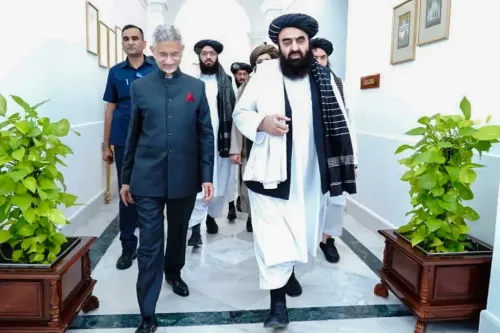
According to Mujahid, Afghanistan's bilateral relations — particularly in the economic sector — have expanded over the past year with Iran, India, and Uzbekistan. The administration has also appointed a diplomat at the Afghan Embassy in New Delhi, a move that reflects the incremental normalisation of ties with one of its most strategically significant neighbours.
India's 'Engagement Without Recognition' Stance
India has been among the countries visited by multiple Taliban ministers from Kabul. New Delhi has extended humanitarian support and upgraded its technical mission in Kabul to a full embassy, while maintaining diplomatic channels. Kabul has repeatedly emphasised the long-standing ties between the two countries and described India as 'a reliable health partner'. However, India does not formally recognise the Taliban government, maintaining instead a calibrated policy of 'engagement without recognition'.
Notably, Russia remains the only country that has established official diplomatic ties with Afghanistan under Taliban rule. China has exchanged representatives with the Taliban administration, though without formal recognition either.
UN Warnings and the Humanitarian Crisis
Roza Otunbayeva, Special Representative of the Secretary-General and Head of the United Nations Assistance Mission in Afghanistan (UNAMA), has cautioned that Afghanistan 'is ruptured from the international community', with many Taliban de facto ministers operating under sanctions and travel bans. Afghanistan's Central Bank assets remain frozen, constraining private sector development, and the de facto authorities hold no representation in multilateral institutions.
Yasmine Praz Dessimoz, Director of Operations at the International Committee of the Red Cross (ICRC), expressed concern that Afghanistan, despite its severe humanitarian needs, 'has fallen off the international community's radar'. She also flagged restrictions on women in education and employment, warning of a future shortage of female healthcare workers.
A UNAMA report this month highlighted the ongoing suffering of victims of decades of armed conflict, who 'continue to suffer profound physical, psychological, social and economic consequences, often without access to justice, adequate assistance or acknowledgement of their harm'. The report, based on interviews with 195 victims and their relatives, covers the conflict period from 2001 until the Taliban takeover on 15 August 2021.
Women's Rights and the Morality Law
Since Kabul fell to the Taliban for the second time in August 2021, global bodies and individual nations severed or suspended diplomatic ties with the regime, citing its treatment of women in particular. Girls are barred from education beyond middle school, and women are excluded from most workplaces. The UN Security Council has previously examined the impacts of the Taliban's 'morality law' on women and girls, with speakers calling on the de facto authorities to reverse course.
Child Malnutrition and Clinic Closures
Melissa Fleming, UN Under-Secretary-General for Global Communications, has warned that more than 100 clinics treating malnourished children have been shut down in Afghanistan, attributing the closures to cuts in humanitarian funding. She cautioned that 3.7 million children are suffering from acute malnutrition. The UN Security Council is scheduled to hold its quarterly open briefing on Afghanistan later this month, where Rabab Fatima, Special Representative for Afghanistan and Head of UNAMA, is expected to address participants. A UN report noted that Council members remain divided on how to achieve their shared goal of inclusive governance and counter-terrorism compliance in Afghanistan.
Point of View
And no Council member has yet offered a credible answer to that gap.
NationPress
18 Oct 2026
Frequently Asked Questions
How many foreign trips have Taliban officials made despite UN sanctions?
Taliban officials have undertaken more than 90 foreign trips over the past year, according to administration spokesperson Zabihullah Mujahid. This is despite UN sanctions that require Taliban leaders to seek prior exemption before travelling abroad.
Does India recognise the Taliban government in Afghanistan?
No. India maintains a policy of 'engagement without recognition' — it has upgraded its technical mission in Kabul to a full embassy and accepted a Taliban-appointed diplomat at the Afghan Embassy in New Delhi, but has not formally recognised the Taliban as Afghanistan's government.
Which countries have official diplomatic ties with Taliban-ruled Afghanistan?
Russia is currently the only country with official diplomatic ties with the Taliban administration. China has exchanged representatives with Kabul but has not extended formal recognition.
What is the humanitarian situation in Afghanistan?
The situation is severe. More than 100 clinics treating malnourished children have been shut down due to cuts in humanitarian funding, and 3.7 million children are suffering from acute malnutrition, according to UN officials. Afghanistan's Central Bank assets remain frozen, further limiting economic recovery.
Why has the international community not recognised the Taliban government?
The primary reasons cited by global bodies and individual nations are the Taliban's human rights record, particularly its treatment of women and girls — who are barred from education beyond middle school and excluded from most workplaces. The UN Security Council has called on the Taliban to reverse its 'morality law' and engage constructively with the international community.