Odisha signs 18 MoUs worth ₹1.17 lakh crore for clean energy at BRES 2026
Synopsis
Odisha just made its biggest clean-energy bet yet — ₹1.17 lakh crore in investment proposals and 11,742 MW of tentative capacity across 18 MoUs signed at the Bharat Renewable Energy Summit 2026 in New Delhi. With a 74% non-fossil target by 2047 and a ₹15,948 crore grid upgrade already sanctioned, the state is positioning itself as eastern India's clean-energy powerhouse.
Key Takeaways
Odisha signed 18 MoUs worth approximately ₹1,17,557 crore at BRES 2026 in New Delhi on 3 November 2026 .
The agreements represent a tentative capacity addition of 11,742 MW spanning solar, wind, pumped storage, green hydrogen, battery storage, and green data centres.
Key industry signatories include Hinduja Renewables, Renew Green, Suzlon Renewable Development, MeghaMani Renew Energy , and the India Energy Storage Alliance .
Chief Minister Mohan Charan Majhi set a target of 74% non-fossil fuel power capacity by 2047 and positioning Odisha among India's top five power-exporting states . ₹15,948 crore has been sanctioned under the Mukhya Mantri Shakti Bikash Yojana for grid modernisation and expansion.
GRIDCO Limited signed an institutional MoU with CMET-MANIT Bhopal, MPUVNL , and IIT Bhubaneswar for grid research and renewable integration.
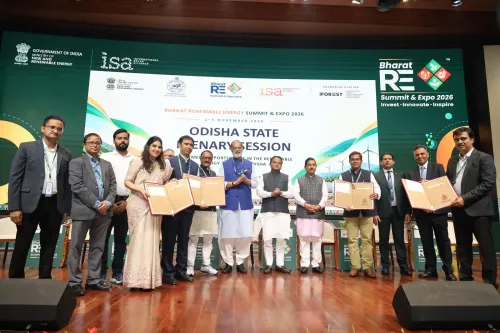
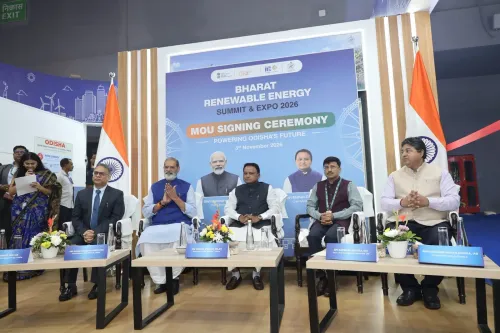
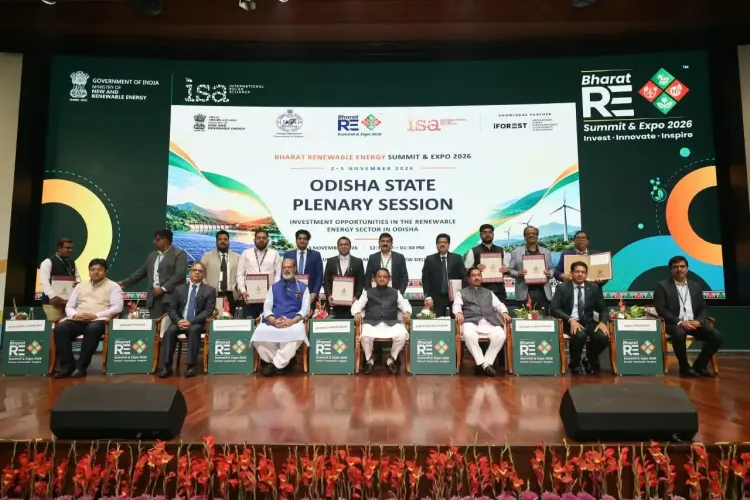
Odisha secured investment proposals worth approximately ₹1,17,557 crore through the signing of 18 Memoranda of Understanding (MoUs) at the Bharat Renewable Energy Summit & Expo (BRES) 2026, held at Bharat Mandapam, New Delhi on Tuesday, 3 November 2026. The agreements represent a tentative capacity addition of around 11,742 MW across renewable energy and emerging clean-energy sectors, marking what officials described as a landmark moment in the state's clean-energy transition.
What the MoUs Cover
The proposed investments span a wide spectrum of clean-energy technologies, including pumped storage, solar, wind, hybrid renewable energy, battery storage, green hydrogen, green data centres, and other emerging technologies. The Energy Department of Odisha signed an MoU with 15 renewable energy developers and industry partners — among them Hinduja Renewables, Renew Green, Suzlon Renewable Development, MeghaMani Renew Energy, and the India Energy Storage Alliance (IESA).
Separately, state-run GRIDCO Limited formalised an institutional partnership with the Centre for Mission on Energy Transition (CMET-MANIT Bhopal), Madhya Pradesh Urja Vikas Nigam Limited (MPUVNL), and IIT Bhubaneswar. That pact is aimed at establishing a framework for technical research, grid modernisation, renewable integration, and capacity building between Odisha and Madhya Pradesh.
State Leadership's Vision
Chief Minister Mohan Charan Majhi described the signings as a 'watershed moment' in Odisha's clean-energy journey. Inaugurating the Odisha Pavilion alongside Deputy Chief Minister Kanak Vardhan Singh Deo, he outlined an ambition for Odisha to source 74 per cent of its installed power capacity from non-fossil fuel sources by 2047, and to rank among India's top five power-exporting states.
Majhi also set a target of meeting at least 33 per cent of industrial electricity consumption through green power at competitive tariffs. Declaring that 'Odisha is open for business and ready for clean energy investment,' he highlighted three priorities for investors: a stable and predictable policy framework, time-bound approvals through a single-window mechanism, and proactive strengthening of transmission infrastructure ahead of generation capacity.
Transmission Infrastructure Push
To back the clean-energy ambition with physical infrastructure, Chief Minister Majhi highlighted ₹15,948 crore sanctioned under the Mukhya Mantri Shakti Bikash Yojana for modernising and expanding the state's power transmission network. Odisha's strategic deep-water ports at Paradip, Dhamra, and Gopalpur were cited as additional competitive advantages for green hydrogen and clean-energy export corridors.
Union Government's Endorsement
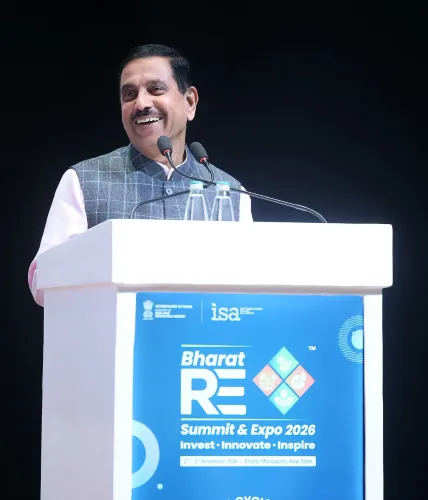
Union Minister Pralhad Joshi underlined Odisha's strategic role in India's national clean-energy transition at the summit, pointing to the state's abundant natural resources, strong industrial base, and port infrastructure as decisive factors in attracting investment. He flagged renewable energy storage, floating solar, wind power, green hydrogen, and green ammonia as the highest-opportunity segments going forward.
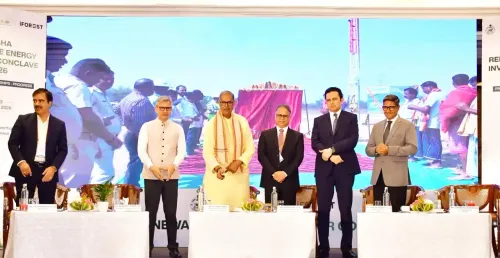
The summit's Odisha State Plenary on 'Investment Opportunities in the Renewable Energy Sector in Odisha' drew participation from over 900 delegates, signalling strong industry interest. Satya Priya Rath, Managing Director of GRIDCO Limited, formally exchanged the MoUs with the respective industry partners in the presence of the Chief Minister and Deputy CM. With sectoral guidelines and project timelines yet to be detailed, the pace of actual project commissioning will be the next critical benchmark for Odisha's clean-energy story.
Point of View
With conversion rates that rarely exceed 40-50% in the best-case scenarios. The state's real differentiator may not be the quantum of pledges but the ₹15,948 crore grid upgrade already in motion: transmission bottlenecks, not investor intent, have historically been the ceiling on renewable scale-up in eastern India. The GRIDCO-IIT Bhubaneswar-MANIT research axis is a quietly significant move — technical capacity building for grid integration is the unglamorous but essential work that most MoU announcements skip entirely. Whether Odisha can convert its port and resource advantages into a functioning green hydrogen export corridor before competing states do will be the real test of this 2047 vision.
NationPress
3 Nov 2026
Frequently Asked Questions
What was signed at the Bharat Renewable Energy Summit 2026 by Odisha?
Odisha signed 18 MoUs at the Bharat Renewable Energy Summit & Expo 2026 in New Delhi on 3 November 2026, attracting investment proposals worth approximately ₹1,17,557 crore. The agreements cover a tentative capacity addition of around 11,742 MW across solar, wind, pumped storage, green hydrogen, and battery storage, among other technologies.
Which companies signed MoUs with Odisha at BRES 2026?
Key industry partners include Hinduja Renewables, Renew Green, Suzlon Renewable Development, MeghaMani Renew Energy, and the India Energy Storage Alliance (IESA), among 15 renewable energy developers. GRIDCO Limited separately signed an institutional pact with CMET-MANIT Bhopal, Madhya Pradesh Urja Vikas Nigam Limited, and IIT Bhubaneswar.
What is Odisha's clean energy target by 2047?
Chief Minister Mohan Charan Majhi stated that Odisha aims to source 74 per cent of its installed power capacity from non-fossil fuel sources by 2047. The state also targets meeting at least 33 per cent of industrial electricity consumption through green power at competitive tariffs.
What is the Mukhya Mantri Shakti Bikash Yojana?
The Mukhya Mantri Shakti Bikash Yojana is a state scheme under which ₹15,948 crore has been sanctioned for modernising and expanding Odisha's power transmission network. It is designed to strengthen grid infrastructure ahead of the large-scale renewable energy capacity expected from the new MoUs.
Why is Odisha considered strategically important for India's clean energy transition?
Union Minister Pralhad Joshi highlighted Odisha's abundant natural resources, strong industrial base, and strategic port infrastructure at Paradip, Dhamra, and Gopalpur as key advantages. These ports are seen as critical enablers for green hydrogen and green ammonia export corridors, making Odisha a potential clean-energy hub for eastern India.