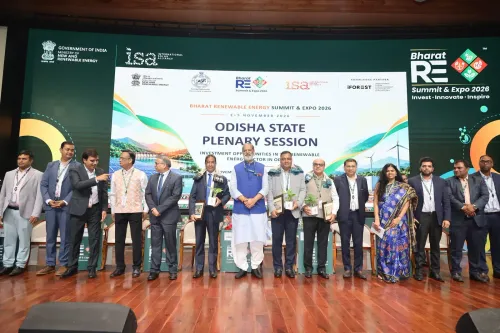
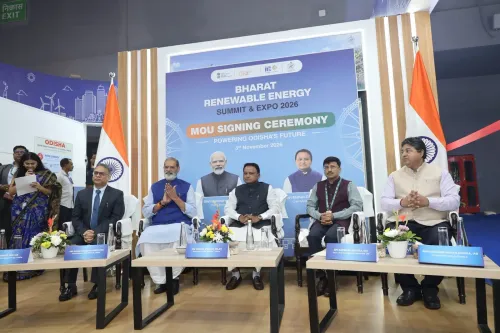
Odisha Signs 18 MoUs Worth ₹1.17 Lakh Crore at Bharat RE Summit
Synopsis
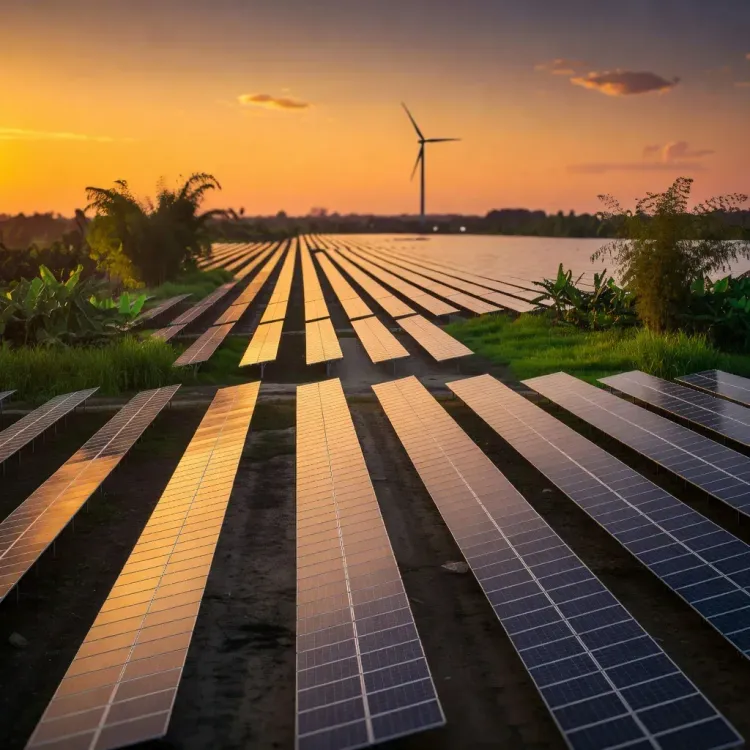
At the Bharat Renewable Energy Summit & Expo 2026, Odisha signed 18 MoUs worth over ₹1,17,500 crore in prospective investments, targeting 11,742 MW of new capacity across solar, wind, pumped storage, and hybrid renewables — a major push to establish the eastern state as India's next clean energy powerhouse.
Key Takeaways
18 MoUs were signed at the Bharat Renewable Energy Summit & Expo 2026 involving Odisha.
Prospective investments total more than ₹1,17,500 crore across renewable energy sectors.
The deals target a combined addition of 11,742 MW of clean energy capacity.
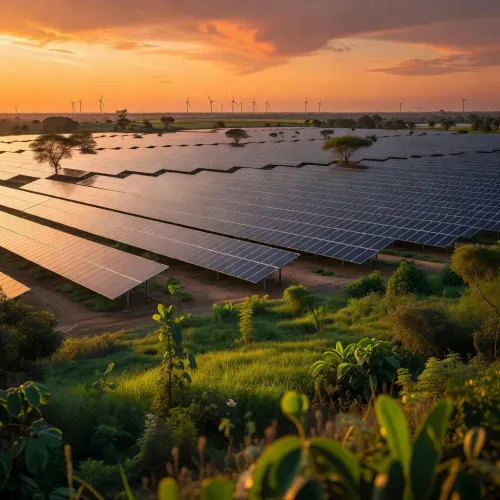
Investment categories span solar, wind, pumped storage, and hybrid renewable energy .
The government linked the push to both industrial growth and employment creation in the state.
Actual commissioning will hinge on land acquisition, grid integration, and state policy follow-through over the next 3–5 years .
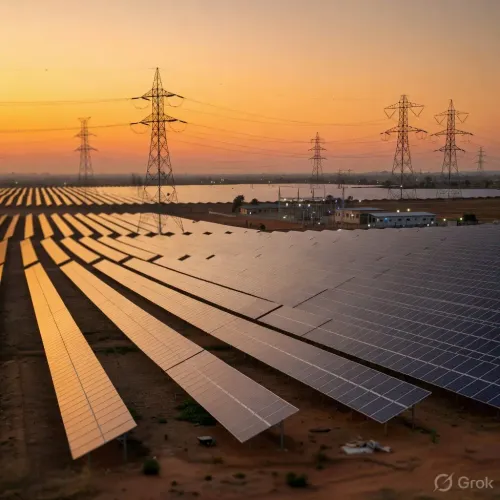
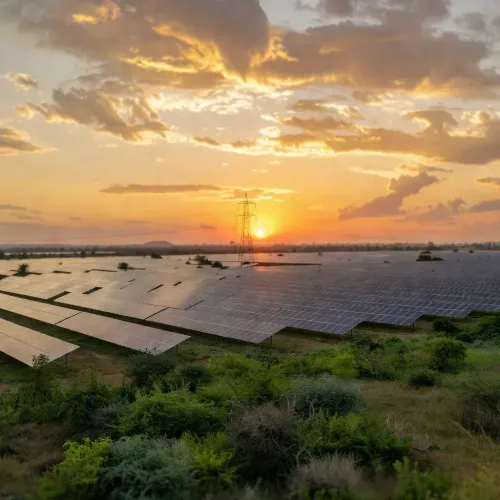
A state once defined by coal seams and mineral wealth just made its boldest bet yet on a cleaner future. At the Bharat Renewable Energy Summit & Expo 2026, Odisha signed 18 MoUs representing prospective investments exceeding ₹1,17,500 crore — deals that could add 11,742 MW of clean energy capacity to the grid across solar, wind, pumped storage, and hybrid renewable technologies.
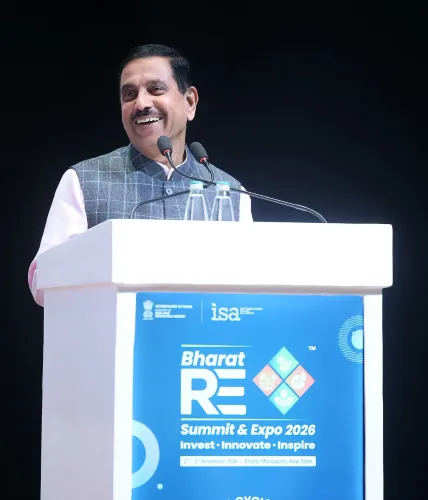
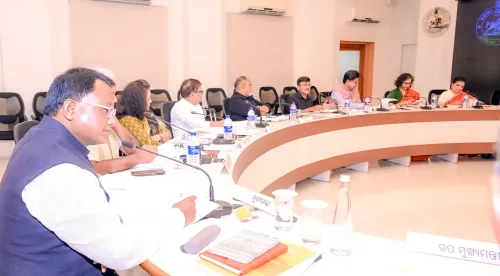
The Chief Minister's Office of Odisha announced the outcome on Tuesday, November 3, 2026, framing the summit as a milestone in the state's drive to become a leading national hub for clean energy. The agreements span the full spectrum of the renewable transition — from utility-scale solar and offshore-capable wind to the storage technologies that make intermittent generation grid-reliable.
₹1.17 Lakh Crore and 11,742 MW: What the Numbers Mean
Eleven-thousand-plus megawatts is not a marginal addition. For scale, that is roughly equivalent to adding a mid-sized state's entire installed power capacity in a single investment cycle. The investment figure of over ₹1.17 lakh crore underscores that these are not symbolic declarations — they represent binding commitments by energy developers to deploy serious capital in Odisha.
The inclusion of pumped storage in the MoU mix is particularly notable. Odisha's hilly eastern terrain and river systems make it well-suited for pumped hydro, which acts as a giant rechargeable battery for the grid — storing surplus solar and wind generation and releasing it on demand. That combination of generation plus storage signals an ambition to be a net energy exporter, not merely a consumer of the green transition.
Why Odisha Is Positioned for This Moment
India's pledge at COP26 in 2021 — 500 GW of non-fossil capacity by 2030 and net-zero by 2070 — created a race among states to attract renewable investment. Odisha brings specific geographic advantages: a long coastline primed for offshore and near-shore wind, vast inland tracts suitable for solar parks, and an existing heavy-industry ecosystem — steel, aluminium, petrochemicals — that can absorb large volumes of clean power directly.
Eastern India has historically lagged behind Rajasthan, Gujarat, and Tamil Nadu in commissioned renewable capacity, but states like Odisha are now leaning hard into policy summits and investor-facing MoUs to close that gap. The Bharat Renewable Energy Summit format mirrors similar events that have unlocked investment pipelines in other states, combining ministerial commitment with on-the-spot deal-signing to accelerate timelines.
Jobs, Industry, and the Conversion Question
The CMO's statement explicitly tied the investment wave to 'new opportunities for industrial growth and employment' — a signal that clean energy is being sold to Odisha's workforce not as an environmental abstraction but as a jobs story. Solar and wind projects generate significant construction employment in their build phase and, critically, feed cheaper electricity into the state's power-hungry manufacturing base, making Odisha-made steel and aluminium more competitive globally.
The real test, however, will be conversion. MoUs are intent, not installed capacity. The gap between signed agreements and commissioned megawatts — shaped by land acquisition timelines, grid infrastructure investment, and state budget follow-through — will define whether this summit becomes a historic inflection point or another entry in India's long catalogue of renewable promises. Analysts and investors will watch Odisha's policy pipeline closely over the next three to five years.
Odisha has declared its direction unmistakably. The meters start running now.
Point of View
Historically sidelined in green investment, are now using summit diplomacy to reposition themselves as preferred destinations for large-scale clean energy capital. The explicit linkage to industrial employment suggests the Mohan Majhi government is threading a politically astute needle: selling the energy transition as an economic opportunity rather than an environmental sacrifice in a state with deep mineral-sector roots. The inclusion of pumped storage MoUs is a strategic differentiator, signalling grid-balancing ambition beyond simple generation. The critical variable remains execution — if even half these MoUs convert into commissioned capacity, Odisha could meaningfully alter India's renewable geography before 2030.
NationPress
3 Nov 2026
Frequently Asked Questions
How many MoUs did Odisha sign at the Bharat Renewable Energy Summit 2026?
Odisha signed 18 MoUs at the Bharat Renewable Energy Summit & Expo 2026, representing prospective investments of over ₹1,17,500 crore .
What is the total renewable energy capacity targeted through Odisha's new MoUs?
The 18 MoUs signed at the summit have the potential to add 11,742 MW of clean energy capacity across solar, wind, pumped storage, and hybrid renewable technologies.
What types of renewable energy are covered in Odisha's Bharat RE Summit deals?
The MoUs cover investments in solar, wind, pumped storage, and hybrid renewable energy projects, positioning Odisha across the full spectrum of the clean energy value chain.
Why is Odisha focusing on pumped storage as part of its renewable energy push?
Odisha's terrain and river systems make it suitable for pumped hydro storage, which stores surplus solar and wind power and releases it on demand — making the grid more reliable and potentially turning Odisha into a net clean energy exporter.
Will the Odisha renewable energy MoUs definitely result in commissioned projects?
MoUs represent intent and are not guaranteed to translate into operational capacity. Conversion depends on land acquisition, grid infrastructure investment, and state policy follow-through, which analysts expect to track over the next 3–5 years .