Sitharaman hails Dikshitar at IIT BHU coin release
Synopsis
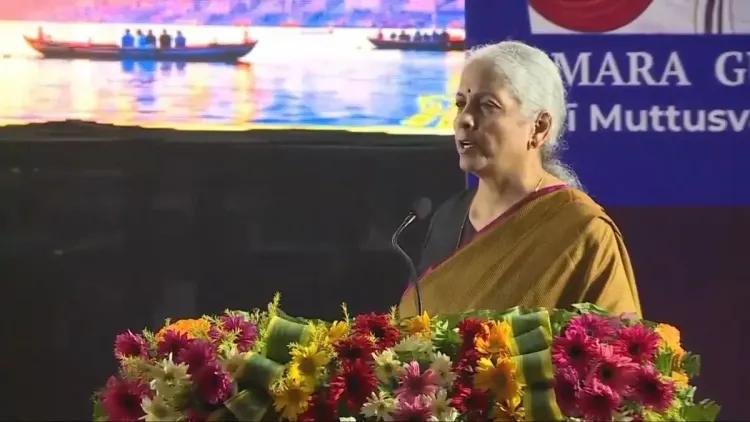
Union Finance Minister Nirmala Sitharaman, speaking at IIT BHU Varanasi, celebrated the Government of India's commemorative coin release for Carnatic legend Muthuswami Dikshitar's 250th birth anniversary, calling it a tribute to the composer who unified North and South Indian musical traditions.
Key Takeaways
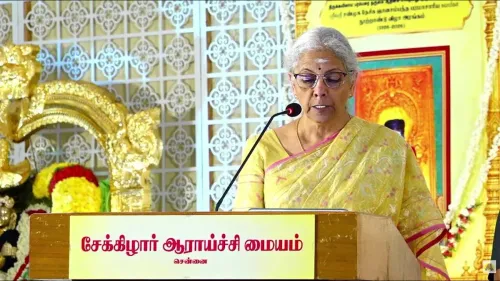
Union Finance Minister Nirmala Sitharaman spoke at IIT BHU Varanasi on 3 November 2026 .
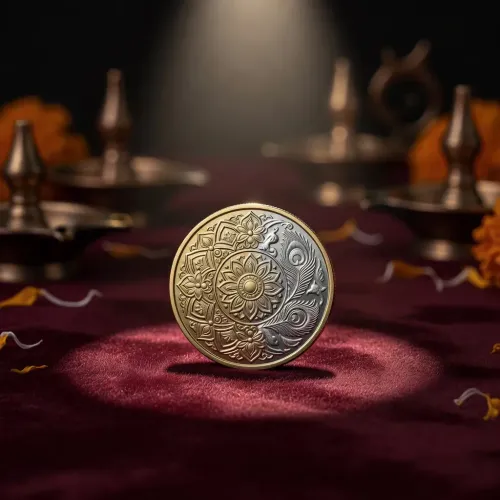
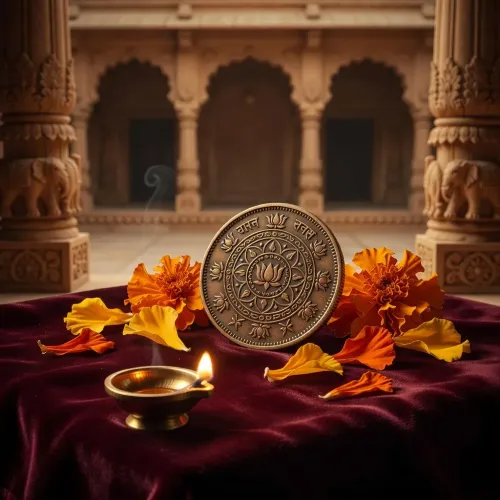
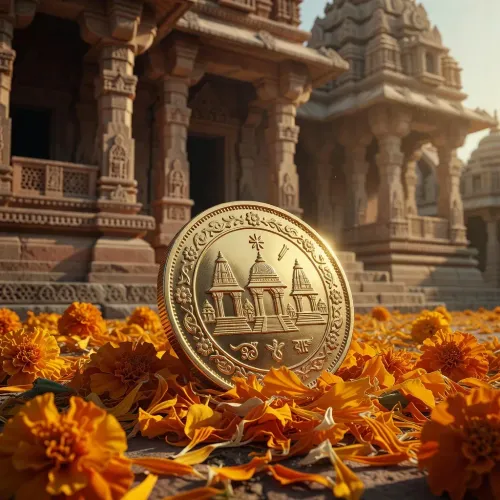
The Government of India is issuing commemorative coins to mark the 250th birth anniversary of Muthuswami Dikshitar ( 1775–1835 ).
Dikshitar is celebrated for blending Hindustani and Carnatic musical elements , composing across multiple ragas.
Sitharaman described the coin release as 'a humble offering' honouring a scholar who 'brought North and South India together.' The commemorative coin programme operates under the Coinage Act framework through the Ministry of Finance .
The India Government Mint will handle the formal minting and distribution of the coins.
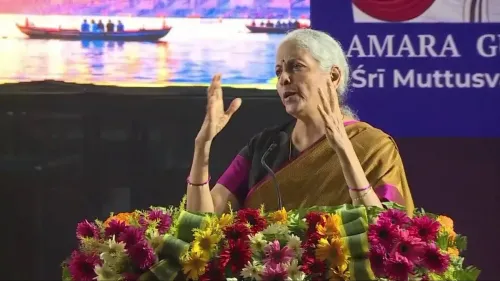
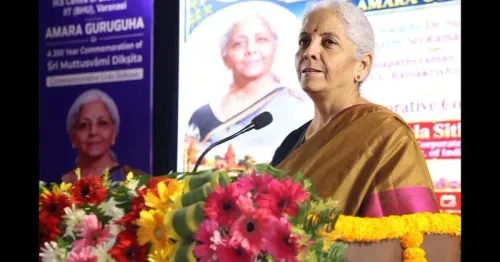
A 250-year-old musical legacy got a fresh tribute on Tuesday, 3 November 2026, when Union Finance Minister Nirmala Sitharaman spoke at IIT BHU Varanasi and celebrated the Government of India's decision to issue commemorative coins marking the 250th birth anniversary of Sri Muthuswami Dikshitar — the Carnatic maestro whose genius stitched North and South India together through sound.
Why Dikshitar stands apart in India's classical tradition
Muthuswami Dikshitar (1775–1835) is one of the three pillars of the Carnatic trinity, alongside Tyagaraja and Syama Sastri. What set him apart was an audacious cultural reach: he absorbed the melodic grammar of Hindustani music during his years in North India and wove it back into the Carnatic framework, creating compositions in rare and hybrid ragas that remain unmatched in scope. His kritis — often in Sanskrit, Tamil, Telugu, and Manipravalam — span an extraordinary breadth of raga material, making him as much a musicologist as a composer.
Speaking at the event, Sitharaman described him as 'a great scholar blessed with divine grace' who 'composed music in several ragas, brought together elements of North Indian and South Indian music and introduced new dimensions to Carnatic music.' She called the commemorative coin release 'a humble offering in remembrance of the great scholar who brought North and South India together.'
Commemorative coins as instruments of cultural memory
The Government of India has long used the commemorative coin framework — authorised under the Coinage Act — to honour musicians, scholars, and reformers on significant birth anniversaries. The mechanism routes through the Ministry of Finance, making Sitharaman's presence at the unveiling both symbolically and institutionally fitting. Past honourees have spanned classical performers, freedom fighters, and literary figures, underscoring the programme's role as a living archive of national heritage.
The choice of IIT BHU Varanasi — a premier technical institution located in a city regarded as the spiritual and classical-arts heartland of North India — as the venue for this announcement carries its own resonance. Varanasi is a living crossroads of the very North-South cultural dialogue that Dikshitar embodied.
Heritage unity as a recurring official thread
The emphasis on Dikshitar as a symbol of pan-Indian synthesis is not incidental. Recognising classical figures who transcend regional boundaries has become a consistent strand in official cultural messaging — a way of grounding national unity in shared artistic heritage rather than purely political narratives. Dikshitar, who drew from Dhrupad, absorbed raga vocabulary from the North, and yet composed within the Carnatic idiom, is a near-perfect emblem for that argument.
The formal minting and distribution of the commemorative coins by the India Government Mint, along with any accompanying concerts or exhibitions by the Ministry of Culture, will be the next moment when Dikshitar's 250th-anniversary tribute moves from announcement to artefact — a coin small enough to hold, carrying a legacy too large to contain.
Point of View
Stewarding such cultural moments also softens its image beyond fiscal policy, projecting a stewardship role over India's civilisational legacy. The 250th-anniversary marker gives the gesture historical weight that routine cultural events rarely command.
NationPress
3 Nov 2026
Frequently Asked Questions
Who was Muthuswami Dikshitar?
Muthuswami Dikshitar ( 1775–1835 ) was one of the three pillars of the Carnatic music trinity. He is renowned for composing kritis across a vast range of ragas and for uniquely blending North Indian Hindustani musical elements with the South Indian Carnatic tradition.
Why is the Government of India issuing commemorative coins for Muthuswami Dikshitar?
The coins mark the 250th birth anniversary of Dikshitar. The Government of India regularly issues commemorative coins under the Coinage Act to honour cultural, musical, and scholarly figures on significant anniversaries.
What did Nirmala Sitharaman say about Muthuswami Dikshitar?
Sitharaman called Dikshitar 'a great scholar blessed with divine grace' who brought together North and South Indian music. She described the commemorative coin as 'a humble offering in remembrance' of his legacy.
Where did Nirmala Sitharaman speak about Muthuswami Dikshitar?
She delivered her remarks at IIT BHU Varanasi on 3 November 2026 , at the event marking the coin release.
How did Muthuswami Dikshitar blend North and South Indian music?
Dikshitar spent time in North India absorbing the Dhrupad and Hindustani raga tradition, then incorporated those melodic structures into Carnatic compositions, creating hybrid ragas and expanding the raga palette available to Carnatic music.