Sitharaman Marks 11 Years of Digital India's Transformation
Synopsis
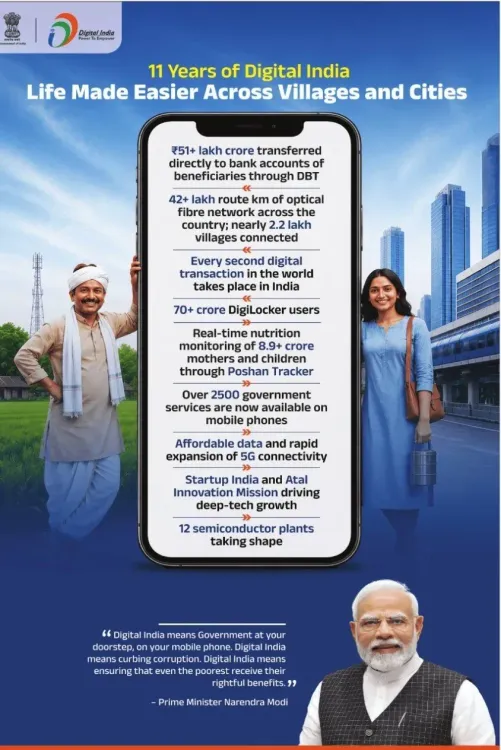
Union Finance Minister Nirmala Sitharaman marked eleven years of the Digital India programme on 1 July 2026, citing direct benefit transfers, UPI payments, DigiLocker, Poshan Tracker, 5G rollout, and semiconductor manufacturing as pillars of a decade-long digital transformation.
Key Takeaways
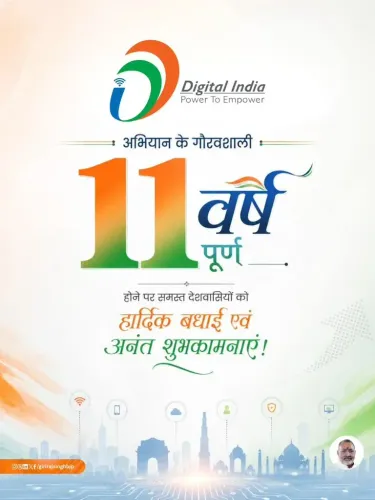
The Digital India programme completed 11 years on 1 July 2026 , having been launched on the same date in 2015 .
Direct Benefit Transfer (DBT) has been a flagship delivery mechanism, routing welfare subsidies directly to beneficiaries' bank accounts to reduce leakages.
DigiLocker (launched 2015) and Poshan Tracker represent the programme's e-governance and mobile-first public service pillars.
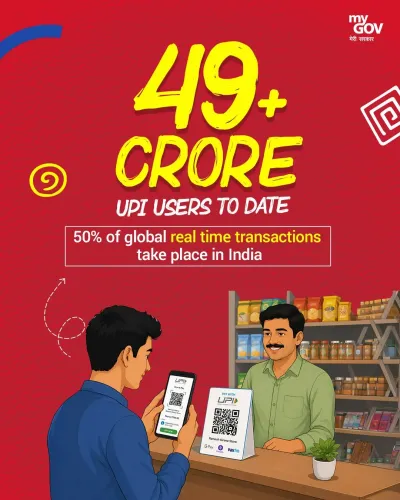
India's Unified Payments Interface (UPI) has positioned the country as a global benchmark for real-time digital retail payments.
The India Semiconductor Mission , approved in 2021 , marks Digital India's evolution from connectivity to advanced technology manufacturing under the Atmanirbhar Bharat framework.
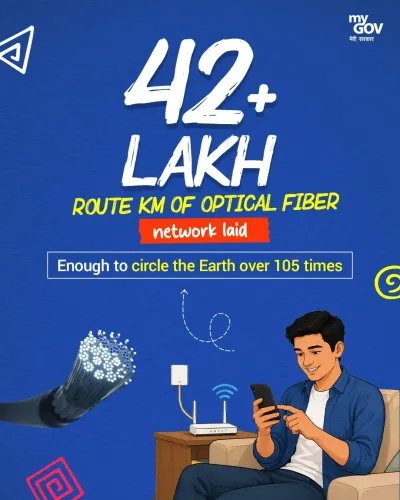
Optical fibre expansion and the 5G rollout continue to extend last-mile digital access to rural households and underpin next-generation services.
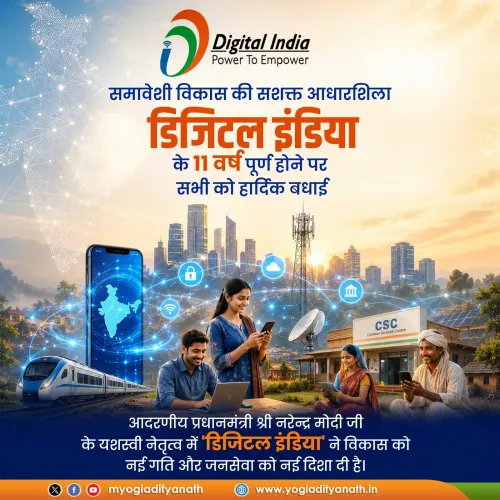
Union Finance Minister Nirmala Sitharaman on Wednesday, 1 July 2026 marked the eleventh anniversary of the Digital India programme, highlighting the initiative's sweeping impact across welfare delivery, connectivity, and technology manufacturing as the country observes #11YearsOfDigitalIndia.
Context
The Digital India programme was formally launched on 1 July 2015 by the Government of India with the stated objective of transforming the country into a digitally empowered society and knowledge economy. Its three core pillars — digital infrastructure, digital literacy, and e-governance — have since been woven into nearly every major welfare and economic policy of the past decade.
Sitharaman's post on X enumerated the programme's milestones: 'record Direct Benefit Transfers and world-leading digital payments' (record direct benefit transfers and world-leading digital payments), expanding optical fibre connectivity, DigiLocker, Poshan Tracker, mobile-first public services, 5G rollout, startup innovation, and semiconductor manufacturing.
Policy Backdrop
The Direct Benefit Transfer (DBT) mechanism, scaled nationally from 2013 onward after pilots in 2011–12, routes subsidies and welfare payments directly into beneficiaries' bank accounts, cutting intermediaries and reducing leakages. DigiLocker, launched alongside Digital India in 2015, now allows citizens to store and access government-issued documents digitally, reducing dependence on physical paperwork.
Poshan Tracker, operated under the Ministry of Women and Child Development, provides real-time monitoring of nutrition scheme beneficiaries through a mobile application — a direct example of mobile-first governance. India's Unified Payments Interface (UPI) has established the country as a global reference point for real-time retail digital payments by volume.
The India Semiconductor Mission, approved in 2021, represents the programme's evolution beyond connectivity into advanced manufacturing. Under the Atmanirbhar Bharat framework, it seeks to attract investment in chip fabrication and design, moving India up the global technology value chain. The 5G rollout, which gathered pace in subsequent years, underpins the next generation of these digital services.
Stakeholders and Impact
The programme's beneficiaries span a wide spectrum: rural households receiving welfare payments through DBT, startups operating on digital public infrastructure, and citizens accessing services through DigiLocker and government mobile applications. Optical fibre expansion into villages has been a critical enabler, bringing last-mile connectivity to populations previously excluded from the digital economy.
For the startup ecosystem, Digital India has provided both a market and a regulatory environment — from Aadhaar-linked authentication to UPI-based payment rails — that has supported the growth of fintech, healthtech, and agritech ventures. Semiconductor manufacturing ambitions, if realised, would add a significant industrial dimension to what began as a governance-efficiency programme.
What's Next
Attention will now turn to the progress of approved semiconductor fabrication units and any new phases of Digital India that may be announced in upcoming Union Budgets or policy documents from the Ministry of Electronics and Information Technology (MeitY). As the programme enters its second decade, the policy focus is expected to shift further toward artificial intelligence integration, deeper rural broadband penetration, and building domestic capability in critical technology components. Sitharaman's acknowledgement of these milestones signals that digital infrastructure will remain central to India's economic growth narrative heading into the latter half of the decade.
Point of View
UPI, DigiLocker, 5G, and semiconductors in a single breath, she frames the decade as a coherent arc from welfare efficiency to industrial ambition. The inclusion of semiconductor manufacturing is particularly notable — it positions Digital India as a precursor to Atmanirbhar Bharat's hard-technology goals, elevating the programme's legacy beyond e-governance into geopolitical economic strategy. As the government approaches the next budget cycle, such messaging also sets the stage for continued or expanded public investment in digital infrastructure.
NationPress
29 Sept 2026
Frequently Asked Questions
When was Digital India launched and what is it?
Digital India was formally launched on 1 July 2015 by the Government of India. It is a flagship programme aimed at transforming India into a digitally empowered society through three pillars: digital infrastructure, digital literacy, and e-governance.
What is Direct Benefit Transfer (DBT) and how does it work?
Direct Benefit Transfer (DBT) is a government mechanism that routes subsidies and welfare payments directly into beneficiaries' bank accounts, bypassing intermediaries to reduce leakages. It was scaled nationally from 2013 onward after pilot schemes in 2011–12.
What is DigiLocker and who can use it?
DigiLocker is a cloud-based platform launched in 2015 that allows Indian citizens to store, access, and share government-issued digital documents. It eliminates the need to carry physical copies of certificates, licences, and other official records.
What is the India Semiconductor Mission?
The India Semiconductor Mission was approved in 2021 to attract investment in chip fabrication and design within India. It is part of the broader Atmanirbhar Bharat framework and represents Digital India's shift from connectivity to advanced technology manufacturing.
What did Nirmala Sitharaman say about Digital India's anniversary?
On 1 July 2026 , Finance Minister Nirmala Sitharaman posted on X marking 11 years of Digital India , citing record Direct Benefit Transfers, world-leading digital payments, optical fibre expansion, DigiLocker, Poshan Tracker, 5G rollout, startup innovation, and semiconductor manufacturing as key achievements of the programme.