FM Sitharaman Marks 11 Years of Digital India
Synopsis
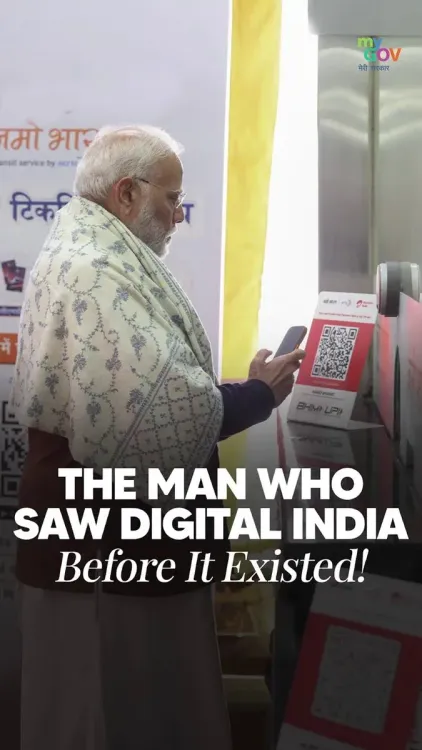
Finance Minister Nirmala Sitharaman marked 11 years of the Digital India programme on 1 July 2026, crediting PM Modi's vision for elevating India's digital infrastructure into a globally recognised model built on UPI, Aadhaar, and e-governance.
Key Takeaways
The Digital India programme completed 11 years on 1 July 2026 , having been launched on the same date in 2015 .
Finance Minister Nirmala Sitharaman marked the anniversary on X, attributing the programme's global standing to PM Narendra Modi 's vision.
India's digital public infrastructure — including Aadhaar and UPI — has been presented internationally as a scalable model for other nations.
Successive Union Budgets have funded 5G rollout , data centres, and digital skilling to sustain the programme's growth.
The milestone reflects over a decade of policy continuity across multiple ministries under the current government.
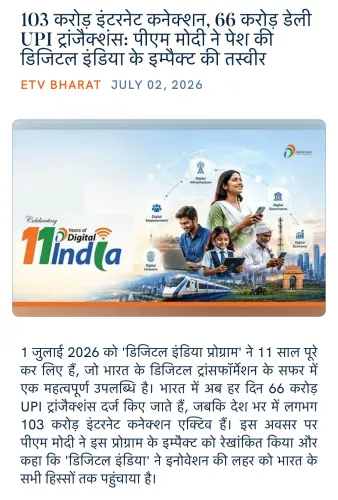
Union Finance Minister Nirmala Sitharaman on Wednesday, 1 July 2026 marked the 11th anniversary of the Digital India programme, crediting Prime Minister Narendra Modi's vision for transforming the country's digital journey into what the government describes as a global model.
Context
The Digital India programme was formally launched on 1 July 2015 by the Government of India with the stated objective of bridging the digital divide, expanding broadband infrastructure, and delivering e-governance services to citizens across rural and urban areas. The initiative marked a structural shift in how the government approached service delivery, moving from paper-based processes to digital channels.
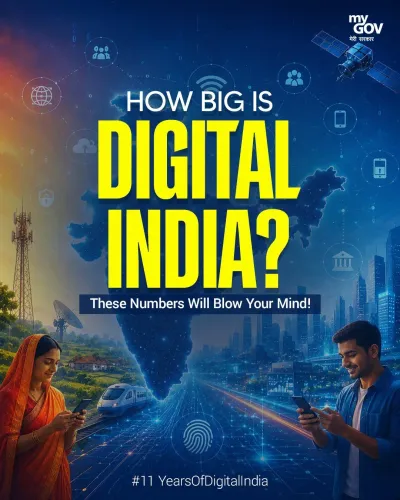
Sitharaman's post on X described Modi's vision as having 'transformed India's Digital Story into a Global Model', using the hashtag #11YearsOfDigitalIndia to mark the occasion.
Policy Backdrop
Over the past decade, Digital India has expanded well beyond its original e-governance mandate. India's digital public infrastructure stack — anchored by Aadhaar-linked identity services and the Unified Payments Interface (UPI) — has drawn interest from governments and multilateral institutions seeking scalable models for financial inclusion and digital service delivery.
As Finance Minister, Sitharaman has played a direct role in shaping the fiscal architecture supporting this expansion. Successive Union Budgets under her tenure have allocated funds for 5G rollout, data centre capacity, and digital skilling programmes aimed at sustaining the programme's trajectory. The fintech and payments sector, in particular, has seen significant policy attention through budget provisions and regulatory frameworks.
The 11-year milestone reflects the continuity of the 2015 policy framework across multiple ministries and two full terms of the current government, with the programme now encompassing areas from digital health to agricultural data platforms.
Stakeholders and Impact
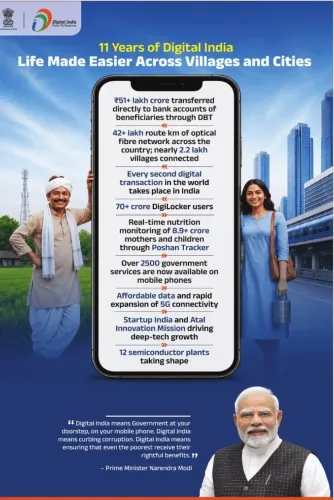
The primary beneficiaries of Digital India span a wide demographic — from rural citizens accessing government subsidies through Direct Benefit Transfer linked to Aadhaar, to small merchants using UPI for daily transactions. The IT and fintech sectors have also grown substantially in the ecosystem created by the programme's infrastructure investments.
India's digital public infrastructure model has been presented at international forums as a replicable framework for developing economies. Several countries have engaged with India Stack components, particularly the UPI interoperability architecture, as a potential template for their own payment systems.
What's Next
The anniversary comes at a time when parliamentary attention is expected to turn to the next Union Budget's digital infrastructure allocations, including continued investment in AI compute capacity, rural broadband last-mile connectivity, and data governance frameworks. Any new bilateral agreements to export India's digital public infrastructure stack to partner nations will also be closely watched as the government seeks to cement the programme's international standing.
Point of View
' the government is consciously elevating a domestic infrastructure story into a foreign policy and soft-power asset. The Finance Minister's involvement underscores how deeply digital infrastructure has become intertwined with fiscal strategy, from Direct Benefit Transfer savings to fintech-led growth. The 11-year marker also sets the stage for the next budget to double down on AI, data infrastructure, and DPI exports as the logical next chapter of the same policy arc.
NationPress
30 Sept 2026
Frequently Asked Questions
When was Digital India launched?
The Digital India programme was launched on 1 July 2015 by the Government of India under Prime Minister Narendra Modi , making 2026 its 11th anniversary.
What is Digital India?
Digital India is a flagship government programme aimed at expanding broadband infrastructure, enabling e-governance, promoting digital literacy, and bridging the digital divide between urban and rural India.
What did Nirmala Sitharaman say about Digital India?
Finance Minister Nirmala Sitharaman posted on X on 1 July 2026 that PM Modi's vision had 'transformed India's Digital Story into a Global Model,' marking the programme's 11th anniversary.
How has Digital India become a global model?
India's digital public infrastructure — particularly UPI and Aadhaar -linked services — has attracted interest from multiple countries and international institutions as a replicable framework for financial inclusion and digital governance.
What is India Stack?
India Stack refers to the set of open digital infrastructure layers — including Aadhaar identity, UPI payments, and data-sharing frameworks — that underpin the Digital India ecosystem and are being explored by other nations as a model.