Anurag Thakur Marks Digital India's 11th Year
Synopsis
BJP MP Anurag Thakur marked Digital India's 11th anniversary on 1 July 2026, crediting PM Modi's leadership for transforming governance through digital payments, direct benefit transfers, and public digital infrastructure that now reaches villages and smaller cities.
Key Takeaways
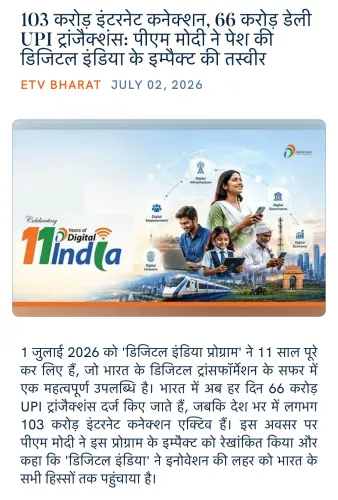
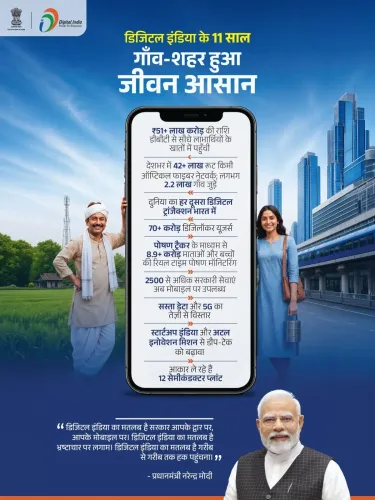
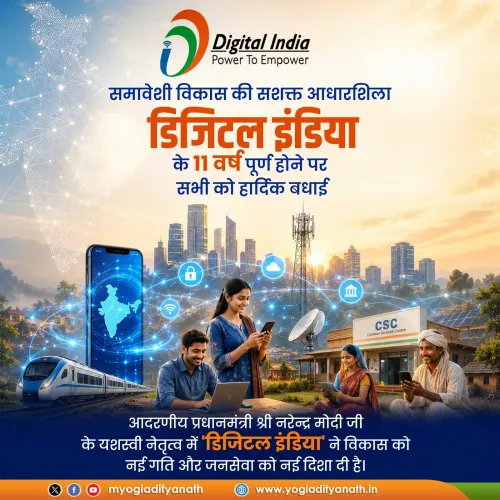
The Digital India programme completed 11 years on 1 July 2026 , having been launched by PM Narendra Modi on 1 July 2015.
BJP MP Anurag Thakur credited the programme with making governance 'faster, more transparent and accessible to every citizen.' Key pillars cited include digital payments , Direct Benefit Transfers , and world-class digital public infrastructure .
The programme's reach has extended to villages, Tier 2 and Tier 3 cities , aiming to bridge the urban-rural digital divide.
India's JAM Trinity (Jan Dhan, Aadhaar, Mobile) and UPI are foundational to the Digital India ecosystem built since 2014.
Thakur described India as 'no longer a follower in the digital revolution but a global technology powerhouse.'
BJP MP Anurag Thakur on Wednesday, 1 July 2026 marked the 11th anniversary of the Digital India programme, crediting Prime Minister Narendra Modi's leadership for transforming India into what he called 'a global technology powerhouse' through digital empowerment of citizens across urban and rural India.
Context
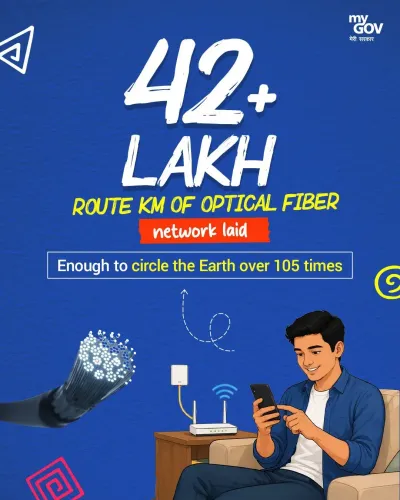
The Digital India programme was officially launched on 1 July 2015 by Prime Minister Narendra Modi with the stated goal of transforming India into a digitally empowered society and knowledge economy. The initiative set out three broad vision areas: digital infrastructure as a core utility for every citizen, governance and services on demand, and digital literacy for all.
Thakur, a former Union Minister who held the portfolios of Information and Broadcasting and Youth Affairs and Sports, wrote on X that the programme 'has placed technology at the heart of governance,' pointing to digital payments, direct benefit transfers, and digital public infrastructure as markers of the decade-long shift.
Policy Backdrop
The foundation of Digital India rests on the JAM Trinity — Jan Dhan bank accounts, Aadhaar biometric identity, and Mobile connectivity — which the Modi government began scaling from 2014 onward to enable targeted welfare delivery and reduce intermediaries in subsidy transfer chains.
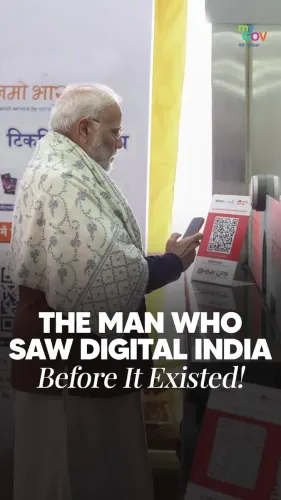
The Unified Payments Interface (UPI), launched in 2016, became one of the programme's most visible outcomes, enabling real-time, interoperable digital payments that now process billions of transactions monthly. The broader India Stack framework — a set of open application programming interfaces covering identity, payments, and data sharing — has been progressively built out since 2015 and is now cited internationally as a model for digital public infrastructure.
The Direct Benefit Transfer (DBT) system, which routes welfare subsidies directly into beneficiaries' bank accounts using Aadhaar authentication, has been a centrepiece of the government's claim that digital tools have reduced leakages and improved last-mile delivery.
Stakeholders and Impact
Thakur specifically highlighted the reach of Digital India beyond metropolitan centres, noting that it has empowered 'villages, Tier 2 and Tier 3 cities alike.' This framing underscores the programme's stated ambition to bridge the urban-rural digital divide, not merely accelerate connectivity in already-wired cities.
Rural citizens and small-town residents have been the primary target beneficiaries of schemes flowing through the Digital India umbrella — from Common Service Centres (CSCs) that deliver government services in remote areas to digital literacy drives aimed at first-time internet users. The government has also positioned India's digital public infrastructure model as an exportable framework for other developing nations seeking scalable, low-cost governance technology.
What's Next
The anniversary comes as policymakers continue to build out next-phase components of the Digital India architecture, with attention on data protection legislation and standards for digital public infrastructure interoperability. Thakur's post signals that the ruling party intends to keep Digital India's achievements central to its political messaging, framing eleven years of technology-led governance as a defining achievement of the Modi era. The broader question for the programme's next phase is whether its infrastructure gains translate into measurable improvements in health, education, and economic outcomes for the citizens it was designed to serve.
Point of View
Positioning Digital India not merely as a technology scheme but as the ideological cornerstone of the BJP's development narrative ahead of any electoral cycle. By invoking villages and Tier 2-3 cities alongside UPI and DBT, he is stitching together two distinct voter audiences — aspirational urban youth and rural beneficiaries — under a single digital-empowerment story. The framing of India as a 'global technology powerhouse' also serves a foreign-policy dimension, reinforcing the government's push to export its India Stack model to the Global South. Whether the opposition contests these claims on outcome metrics — internet penetration depth, digital literacy rates, or DBT leakage data — will define how this narrative holds through the next legislative session.
NationPress
29 Sept 2026
Frequently Asked Questions
When was Digital India launched and who started it?
Digital India was launched on 1 July 2015 by Prime Minister Narendra Modi to transform India into a digitally empowered society through e-governance, digital infrastructure, and literacy.
What has Digital India achieved in 11 years?
Over 11 years, Digital India's key achievements include the rollout of UPI for real-time payments, the Direct Benefit Transfer system for welfare delivery, expansion of the India Stack infrastructure, and increased digital access in rural areas and smaller cities.
What is the JAM Trinity in Digital India?
The JAM Trinity refers to Jan Dhan bank accounts, Aadhaar biometric identity, and Mobile connectivity — three pillars the Modi government scaled from 2014 to enable financial inclusion and targeted welfare delivery.
Who is Anurag Thakur and why did he post about Digital India?
Anurag Thakur is a BJP Lok Sabha MP from Hamirpur, Himachal Pradesh and a former Union Minister of Information and Broadcasting. He posted to mark the programme's 11th anniversary on 1 July 2026, highlighting its impact on governance and citizens.
How has Digital India helped rural and small-town citizens?
Digital India has extended services to rural areas through Common Service Centres , digital literacy drives, and DBT-linked welfare delivery, while UPI has enabled cashless transactions even in Tier 2 and Tier 3 cities and villages.