Sitharaman releases commemorative coin for Muthuswami Dikshitar at IIT-BHU
Synopsis
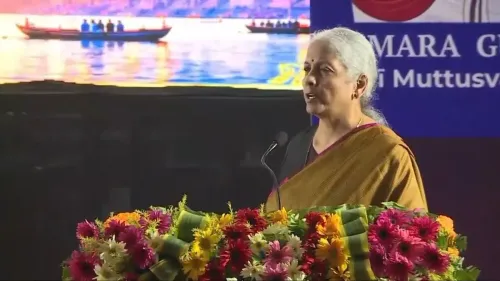
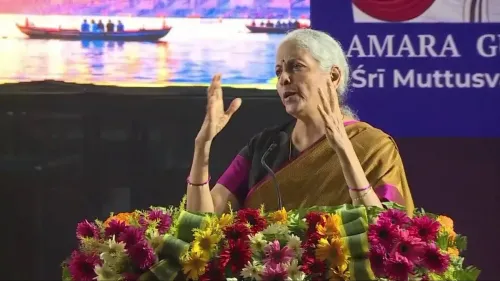
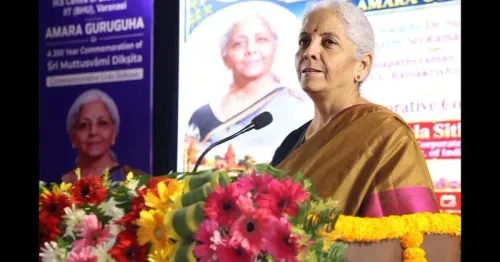
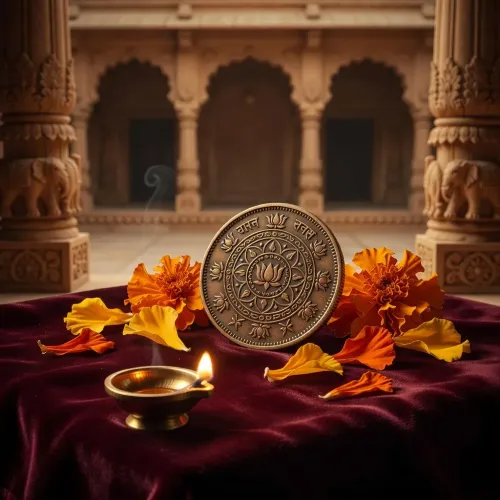
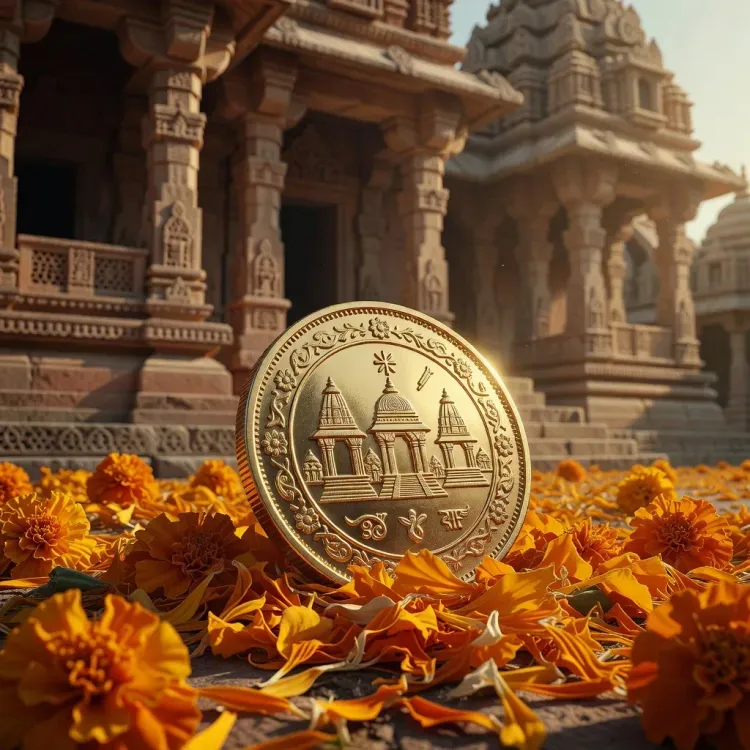
Union Finance Minister Nirmala Sitharaman addressed the release of a commemorative coin marking the 250th birth anniversary of Carnatic composer Muthuswami Dikshitar at IIT (BHU), Varanasi on 3 November 2026, continuing a government tradition of honouring classical artists under the Coinage Act, 2011.
Key Takeaways
Union Finance Minister Nirmala Sitharaman addressed the commemorative coin release at IIT (BHU), Varanasi on 3 November 2026 .
The coin marks the 250th birth anniversary of Carnatic composer Muthuswami Dikshitar (1775–1835) , one of the three pillars of the Carnatic classical tradition.
Commemorative coins are authorised under the Coinage Act, 2011 and require Ministry of Finance approval — making Sitharaman's role both ceremonial and institutional.
Previous recipients of such coins include classical musicians Tansen (2018) and Tyagaraja , placing Dikshitar in a select group of officially recognised cultural figures.
The event at IIT (BHU) connects Dikshitar's own historical association with Varanasi to a broader government heritage-promotion programme.
Further events are expected under the 250th anniversary series , with coin distribution through RBI and cultural ministry channels.
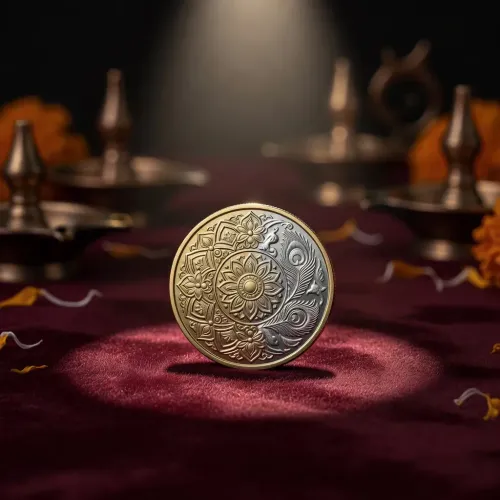
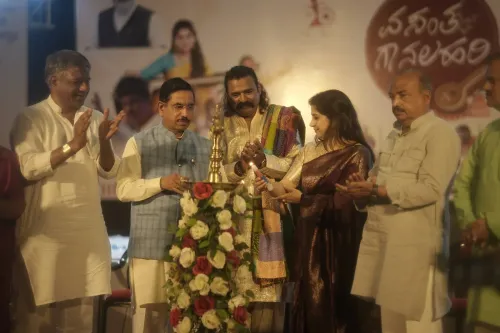
A Carnatic giant born 250 years ago was honoured with the weight of the national mint on Tuesday, 3 November 2026, as Union Finance Minister Nirmala Sitharaman addressed the release of a commemorative coin marking the 250th birth anniversary of Sri Muthuswami Dikshitar at IIT (BHU), Varanasi in Uttar Pradesh.
Who was Muthuswami Dikshitar — and why 250 matters
Muthuswami Dikshitar (1775–1835) stands as one of the three towering pillars of the Carnatic classical tradition, alongside Tyagaraja and Syama Sastri. His compositions — primarily in Sanskrit — range from the celebrated Navagraha kritis (a cycle dedicated to the nine planetary deities) to devotional works spanning dozens of ragas, many of which remain active in concert repertoire today. His work is notable for weaving together Vedic, tantric, and Hindustani influences into a distinctly south Indian idiom, making him a figure of genuinely pan-Indian cultural stature.
A 250th birth anniversary carries particular weight: it is the kind of milestone that invites institutional recognition, and the choice of IIT (BHU) Varanasi — a leading technical institution embedded in one of India's oldest cultural cities — as the venue is itself a signal, linking classical heritage to a new generation of students in the Ganga belt.
The Finance Ministry's role in minting cultural memory
Commemorative coins are not ceremonial trinkets — they are legal tender authorised under the Coinage Act, 2011, and their issue requires the formal approval of the Ministry of Finance. Sitharaman's presence at the release therefore carries both symbolic and institutional force: she is simultaneously the custodian of the nation's fiscal architecture and the officer whose ministry signs off on which cultural figures earn a place on the national coin.
This is part of an established tradition. The government has previously issued commemorative coins for classical musicians including Tansen (2018) and Tyagaraja, marking the centenary of his 1847 passing. Dikshitar now joins that select company — a composer rendered in metal, distributed through RBI channels and cultural ministries as a portable piece of national heritage.
Varanasi as the stage for a south Indian maestro
The geography is deliberate. Varanasi has deep significance in Dikshitar's own biography — he spent formative years in the city, absorbing north Indian musical influences that would later surface in his compositions. Holding the anniversary event here, at an institution of national importance, draws a direct line between the composer's personal pilgrimage and the republic's cultural memory project.
The broader 250th anniversary series is expected to include further programmes across music, scholarship, and cultural outreach — the coin release functioning as a high-visibility opening act that places the celebrations firmly in the public record.
A composer who spent his life making the sacred audible now has his name struck in metal — and the Finance Minister flew to Varanasi to make it official.
Point of View
Not just in concert halls. Choosing IIT (BHU) Varanasi as the venue weaves together the BJP-led government's dual emphasis on technical India and cultural heritage, particularly in a politically significant state. Sitharaman's personal presence, rather than a delegation, signals that the administration views classical arts patronage as a Cabinet-level priority, not a departmental footnote. The broader 250th anniversary series will be a test of whether the cultural recognition translates into sustained institutional support for Carnatic scholarship and performance.
NationPress
3 Nov 2026
Frequently Asked Questions
Who was Muthuswami Dikshitar?
Muthuswami Dikshitar (1775–1835) was one of the three great composers of Carnatic classical music, known for his Sanskrit kritis and the celebrated Navagraha series. He spent time in Varanasi, which influenced his incorporation of north Indian musical elements.
Why did Nirmala Sitharaman release a coin for Muthuswami Dikshitar?
The coin marks Dikshitar's 250th birth anniversary. As Union Finance Minister, Sitharaman heads the ministry that authorises commemorative coins under the Coinage Act, 2011, and she was present at the official release ceremony at IIT (BHU), Varanasi.
What is the significance of a government commemorative coin?
Commemorative coins are legal tender issued under the Coinage Act, 2011, requiring Finance Ministry approval. They place cultural figures in the official national record and are distributed through RBI and cultural ministry channels.
Which other classical musicians have received government commemorative coins?
The government has previously issued commemorative coins for Carnatic composer Tyagaraja and classical musician Tansen (2018), making Muthuswami Dikshitar part of a select group of officially recognised classical artists.
Where was the Muthuswami Dikshitar 250th anniversary coin released?
The coin was released at IIT (BHU) — the Indian Institute of Technology at Banaras Hindu University — in Varanasi, Uttar Pradesh, a city with which Dikshitar had a personal historical connection.