Smriti Irani: India defeating poverty on the ground, not in slogans
Synopsis
BJP leader Smriti Irani declared on November 3, 2026 that India has moved from slogan-based anti-poverty rhetoric to measurable ground-level delivery, invoking a decade of JAM trinity reforms, flagship welfare schemes, and NITI Aayog's Multidimensional Poverty Index as evidence.
Key Takeaways
Smriti Irani posted on November 3, 2026 , stating India is now defeating poverty on the ground rather than in slogans.
The post contrasts pre-2014 political rhetoric with post-2014 technology-enabled direct welfare delivery.
The JAM trinity (Jan Dhan, Aadhaar, Mobile) from 2014 onward was designed to eliminate leakages in welfare transfers.
Pradhan Mantri Awas Yojana (2015) and Swachh Bharat Mission (2014) are among the flagship schemes cited as ground-level interventions.
NITI Aayog's Multidimensional Poverty Index is the primary official metric tracking deprivation in health, education, and living standards.
The next MPI release and forthcoming Union Budget welfare allocations will be the key tests of the claims made.
The fight against poverty in India, BJP leader Smriti Irani declared on Tuesday, November 3, 2026, has moved decisively from rhetoric to reality — a pointed assertion that draws a sharp line between pre-2014 political promises and what she describes as measurable, ground-level delivery today.
Posting on X, Irani wrote: 'पहले गरीबी से लड़ाई सिर्फ नारों में थी, आज भारत गरीबी को धरातल पर पराजित कर रहा है' — 'Earlier, the fight against poverty existed only in slogans; today India is defeating poverty on the ground.' Short, declarative, and aimed squarely at a political legacy.
The JAM trinity and the architecture behind the claim
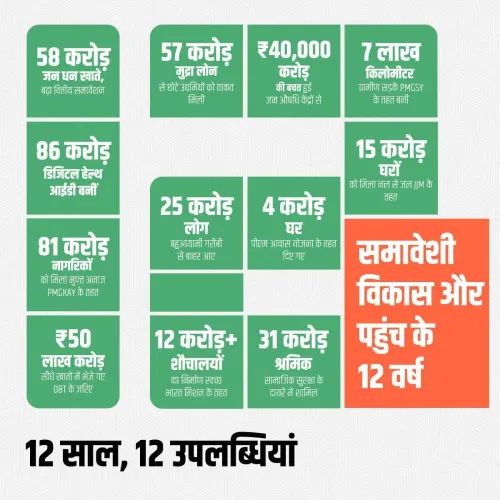
The government framework underpinning Irani's assertion is a decade-old redesign of how welfare reaches the poor. The JAM trinity — Jan Dhan bank accounts, Aadhaar biometric identity, and Mobile connectivity — stitched together from 2014 onward was engineered specifically to cut the leakages that had long hollowed out anti-poverty programmes. Technology-enabled direct benefit transfers replaced the older chain of intermediaries, with the stated goal of putting money and services into beneficiaries' hands without attrition.
Alongside JAM, flagship schemes reshaped basic living conditions: the Swachh Bharat Mission launched in 2014 tackled open defecation, Pradhan Mantri Awas Yojana from 2015 targeted housing for the rural and urban poor, and the Pradhan Mantri Garib Kalyan Anna Yojana — expanded massively during the pandemic — continued to provide free foodgrain to vulnerable households.
How NITI Aayog's poverty index frames the debate
NITI Aayog, the government's principal policy think tank, publishes India's Multidimensional Poverty Index (MPI), which tracks deprivations across health, education, and living standards rather than income alone. Successive MPI releases have recorded a decline in multidimensional poverty, and the index has become the primary official yardstick for the 'ground-level defeat' narrative that Irani is channelling. The next MPI release — and how it reflects the most recent welfare allocations — will be closely watched as the most concrete test of that claim.
The broader political pattern is consistent: since 2014, central government communications have routinely framed welfare delivery as a departure from what they characterise as slogan-driven predecessors. Irani's post fits precisely into that arc — crisp, confident, and designed to land as a verdict rather than an argument. Whether voters in below-poverty-line households experience it that way is the question that the next budget cycle and the next MPI report will begin to answer.
Point of View
She keeps the message broad enough to resonate across constituencies while leaving the evidentiary burden to the NITI Aayog MPI and scheme rollout data. The timing, ahead of what could be a budget cycle, suggests a pre-emptive bid to set the welfare narrative. The credibility of the claim will ultimately rest on whether the next official poverty index corroborates the political assertion.
NationPress
3 Nov 2026
Frequently Asked Questions
What did Smriti Irani say about poverty in India in her November 2026 post?
Smriti Irani stated that the fight against poverty in India has shifted from mere slogans to ground-level action, writing that 'today India is defeating poverty on the ground' — a contrast she drew with pre-2014 political approaches.
What is India's Multidimensional Poverty Index and who publishes it?
India's Multidimensional Poverty Index is published by NITI Aayog and measures deprivations across health, education, and living standards, going beyond income alone to capture how poverty is actually experienced.
What is the JAM trinity in Indian welfare policy?
The JAM trinity refers to Jan Dhan bank accounts, Aadhaar biometric identity, and Mobile connectivity, introduced from 2014 onward to channel welfare benefits directly to beneficiaries and cut leakages in delivery.
What is the Pradhan Mantri Garib Kalyan Anna Yojana?
Pradhan Mantri Garib Kalyan Anna Yojana is a central government scheme providing free foodgrain to vulnerable households; it was significantly expanded during the pandemic and continued thereafter.
What welfare schemes does the BJP government cite as evidence of poverty reduction?
The BJP government's anti-poverty framework centres on the JAM trinity, Pradhan Mantri Awas Yojana for housing (launched 2015), Swachh Bharat Mission for sanitation (2014), and the Pradhan Mantri Garib Kalyan Anna Yojana for food security.