Smriti Irani Champions Modi's Welfare Focus for Marginalised
Synopsis
BJP leader Smriti Irani posted a Hindi phrase on X on 23 June 2026 — 'Those whom no one cares for, Modi reveres' — reinforcing the party's welfare narrative around PM Modi's outreach to marginalised communities ahead of late-2026 state elections.
Key Takeaways
Smriti Irani posted on X on 23 June 2026 with the Hindi phrase: 'Jinko koi nahin poochta, unko Modi poojta hai.' The phrase translates as 'Those whom no one cares for, Modi reveres,' anchoring BJP's welfare messaging.
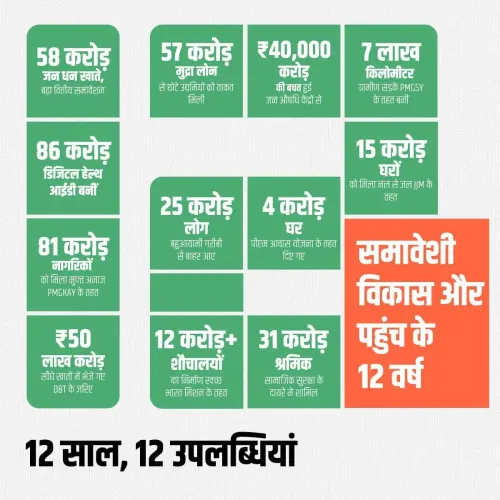
The post aligns with the BJP's 'Sabka Saath, Sabka Vikas' framework used since 2014 .
Key welfare schemes referenced implicitly include PMGKAY (2020) and Ujjwala Yojana (2016) .
The messaging comes ahead of state assembly elections scheduled for late 2026 .
Irani served as Union Minister of Women and Child Development and Minority Affairs from 2019 to 2024 .
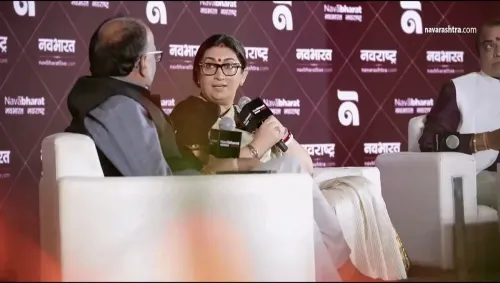
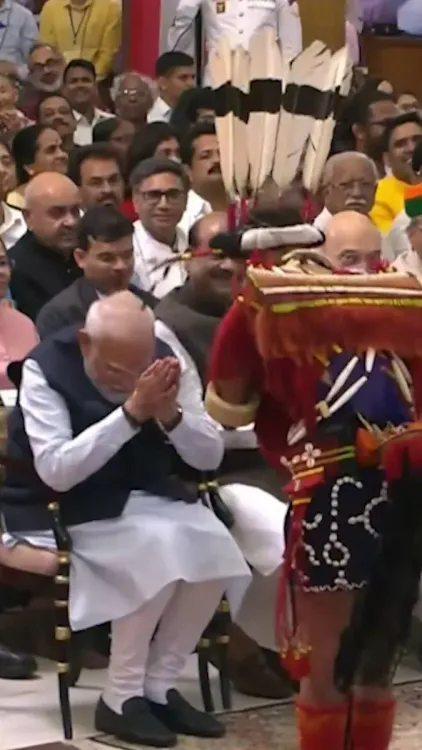
Senior BJP leader Smriti Irani on Tuesday, 23 June 2026, took to X to amplify the ruling party's welfare narrative, posting a pointed Hindi phrase that encapsulates the BJP's core messaging around Prime Minister Narendra Modi's outreach to India's most vulnerable citizens.
The post reads: 'Jinko koi nahin poochta, unko Modi poojta hai' — loosely translated as 'Those whom no one cares for, Modi reveres.' The line is a compact restatement of a theme the BJP has consistently deployed since 2014: that the current dispensation reaches citizens who were historically ignored by the political establishment.
Context
Irani, who served as Union Minister of Women and Child Development and Minority Affairs from 2019 to 2024, has been one of the party's most visible communicators on social welfare. Her post arrives as India looks ahead to state assembly elections scheduled for late 2026, a period when ruling-party leaders typically intensify messaging around flagship government programmes.
The phrase draws on the BJP's long-standing 'Sabka Saath, Sabka Vikas' (Together with all, Development for all) framework, which has been the rhetorical spine of the party's outreach to Dalits, tribals, women from below-poverty-line households, and religious minorities.
Policy Backdrop
The welfare architecture Irani's post implicitly references includes several landmark Central schemes. The Pradhan Mantri Garib Kalyan Anna Yojana (PMGKAY), launched in 2020, extended free food grain to poor households and has since been periodically renewed. The Ujjwala Yojana, introduced in 2016, provided LPG cooking-gas connections to women from below-poverty-line families, targeting a demographic that had long been excluded from clean-fuel access.
Together, these programmes represent the government's direct-benefit-transfer model — bypassing intermediaries to reach beneficiaries — which the BJP argues is proof of its commitment to last-mile delivery for citizens 'whom no one cares for.'
Stakeholders and Impact
Marginalised communities — including rural women, economically weaker sections, Scheduled Castes, Scheduled Tribes, and minorities — are the stated beneficiaries of the welfare ecosystem Irani's post gestures toward. For these groups, Central schemes such as PMGKAY and Ujjwala Yojana have materially altered access to food security and clean energy.
Opposition parties have contested the BJP's welfare narrative, arguing that structural poverty and unemployment data reveal a more complex picture. However, the BJP's messaging has proven electorally resilient, particularly in rural constituencies where direct-benefit transfers have a tangible household footprint.
What's Next
With state assembly elections on the horizon in late 2026, posts of this kind signal that welfare delivery and its communication will remain central to the BJP's campaign strategy. Any new phase or expansion of centrally sponsored schemes announced in the coming months is likely to be amplified through similar messaging by party leaders. Irani's post, brief as it is, illustrates how the BJP distils complex policy arguments into shareable cultural shorthand ahead of electoral cycles.
Point of View
Ahead of late-2026 state elections, suggests the party is warming up its grassroots communication engine well in advance. By invoking Modi's personal reverence for the marginalised, the post personalises state welfare as a moral act rather than a bureaucratic one — a framing that has historically resonated in rural and semi-urban constituencies. Whether it translates into votes will depend on whether beneficiaries of schemes like PMGKAY and Ujjwala Yojana perceive continuity and expansion of those programmes on the ground.
NationPress
22 Sept 2026
Frequently Asked Questions
What did Smriti Irani post on X on 23 June 2026?
Smriti Irani posted the Hindi phrase 'Jinko koi nahin poochta, unko Modi poojta hai,' which translates to 'Those whom no one cares for, Modi reveres,' reinforcing the BJP's welfare messaging around PM Modi.
What does 'Jinko koi nahin poochta unko Modi poojta hai' mean in English?
The phrase means 'Those whom no one cares for, Modi reveres.' It is a BJP slogan highlighting the party's claim that PM Modi prioritises India's most marginalised citizens.
Which welfare schemes is the BJP's messaging about marginalised communities linked to?
The messaging is linked primarily to the Pradhan Mantri Garib Kalyan Anna Yojana (PMGKAY), launched in 2020 to provide free food grains, and the Ujjwala Yojana (2016), which gave LPG connections to women from below-poverty-line families.
Why is Smriti Irani posting about Modi's welfare work in June 2026?
State assembly elections are scheduled for late 2026, and BJP leaders typically intensify welfare messaging during pre-election periods to consolidate support among beneficiary communities.
What is the BJP's 'Sabka Saath Sabka Vikas' slogan?
'Sabka Saath, Sabka Vikas' means 'Together with all, Development for all.' It has been the BJP's governing philosophy since 2014, emphasising inclusive welfare delivery to all sections of society, including historically marginalised groups.