Smriti Irani marks 12 years of Modi govt welfare push
Synopsis
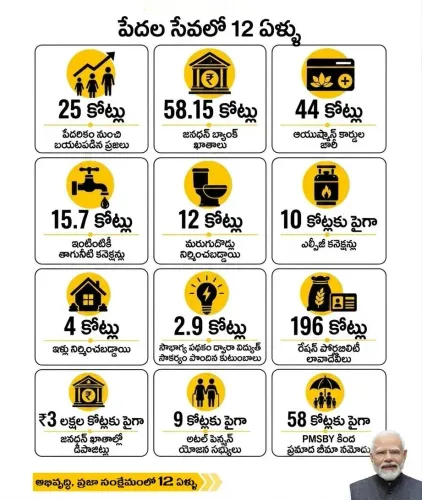
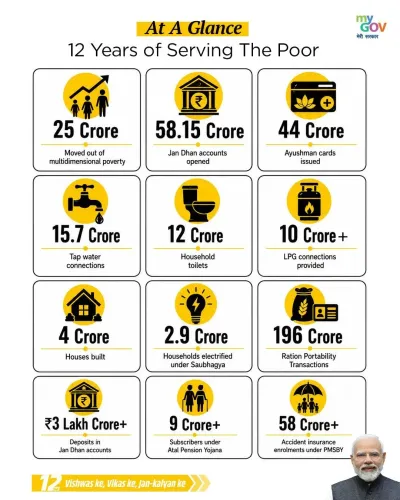
BJP leader Smriti Irani marked twelve years of the Modi government on June 8, 2026, crediting welfare schemes such as Jan Dhan, Ujjwala, and Garib Kalyan Anna Yojana with bringing dignity and opportunity to crores of families, framing the period as a journey from poverty relief to Viksit Bharat.
Key Takeaways
Smriti Irani posted on June 8, 2026 , marking 12 years of the Modi-led government under the hashtag #12YearsOfGaribKalyan .
The post frames the twelve-year record as a development model centred on antyodaya — uplift of the last person in society.
Pradhan Mantri Jan Dhan Yojana (2014) and the Direct Benefit Transfer mechanism were key early pillars of the government's financial inclusion push.
Pradhan Mantri Ujjwala Yojana (2016) extended LPG connections to below-poverty-line families, targeting rural women.
Pradhan Mantri Garib Kalyan Anna Yojana (2020) provided free food grain to hundreds of millions during and after the pandemic.
The BJP is positioning this welfare record as a central political narrative heading into the next electoral cycle.
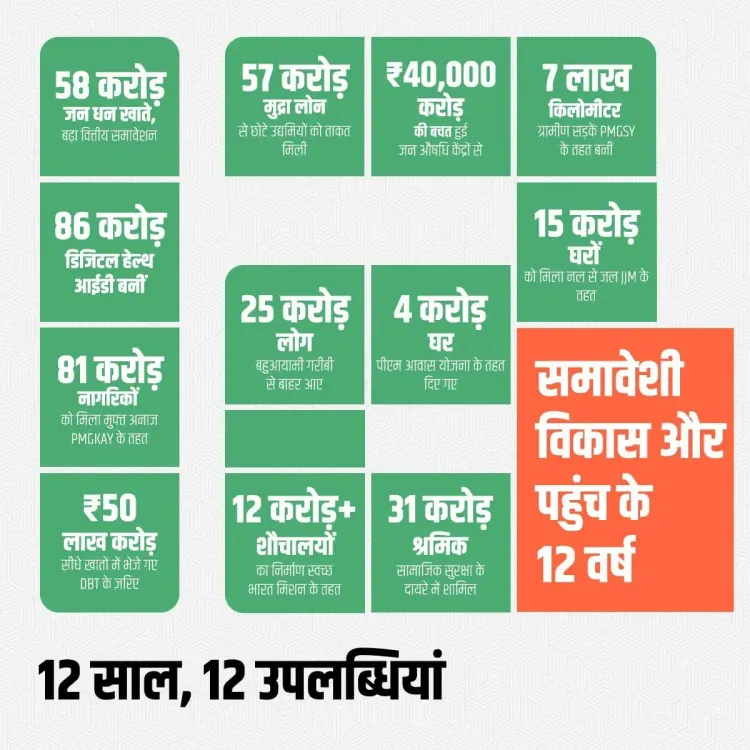
BJP leader and former Union Minister Smriti Irani on Monday, June 8, 2026, marked twelve years of the Narendra Modi-led government, highlighting its welfare delivery record and framing the period as a journey anchored in good governance, antyodaya (uplift of the last person in society), and direct benefit to the poor.
Posting in Hindi on X, Irani wrote: '12 saal vikas, vishwas evam jankalyan ke!' — '12 years of development, trust, and public welfare!' She described how, under Prime Minister Narendra Modi's leadership over the past twelve years, a development model centred on good governance, public welfare, and the spirit of antyodaya had been established, with benefits reaching directly to the last person in society.
She added that these schemes had brought dignity, security, convenience, and new opportunities to the lives of crores of families, calling the journey from garib kalyan (welfare of the poor) to Viksit Bharat (Developed India) 'an inspiring saga of service, sensitivity, and people's participation.'
Context
The post marks the completion of twelve years since the BJP-led National Democratic Alliance government assumed office in May 2014 under Prime Minister Narendra Modi. The hashtag #12YearsOfGaribKalyan signals a coordinated party effort to highlight the welfare record of the government ahead of future electoral cycles.
Irani, a senior BJP leader who has held ministerial charge of portfolios including Women and Child Development and Minority Affairs, has been a consistent voice amplifying the government's social welfare messaging. Her post is among several BJP leaders' tributes marking this milestone.
Policy Backdrop
The welfare architecture the post alludes to spans more than a decade of scheme launches. Pradhan Mantri Jan Dhan Yojana, launched in 2014, aimed to bring unbanked households into the formal financial system. The Direct Benefit Transfer mechanism, scaled nationally from 2014 onward, was designed to reduce leakages in subsidy delivery by routing funds directly to beneficiaries' accounts via Aadhaar linkage.
Pradhan Mantri Ujjwala Yojana, introduced in 2016, provided LPG cooking-gas connections to below-poverty-line families, targeting women in rural households. The Pradhan Mantri Garib Kalyan Anna Yojana, announced in 2020 during the pandemic, extended free food-grain support to hundreds of millions of beneficiaries and was subsequently extended multiple times.
Together, these interventions form the policy continuum that the government has consistently branded as technology-driven, last-mile welfare delivery — the same arc Irani's post references in moving from garib kalyan to the broader vision of Viksit Bharat.
Stakeholders and Impact
The primary stakeholders in this narrative are poor and low-income households across India — the intended beneficiaries of food security, clean cooking fuel, financial inclusion, and direct cash transfer programmes. The government has maintained that Aadhaar-linked direct transfers have significantly reduced leakage in subsidy pipelines, though independent assessments of scheme coverage and outcomes continue to be debated in policy circles.
For the BJP as a political organisation, the twelve-year welfare record represents a core electoral argument, particularly in states with large rural and below-poverty-line populations. Opposition parties have periodically contested the government's beneficiary claims and implementation data, making welfare delivery a live political battleground.
What's Next
Parliamentary discussions on welfare budget allocations and independent evaluations of scheme coverage are expected to intensify as India approaches the next general election cycle. The #12YearsOfGaribKalyan campaign signals that the BJP intends to make this twelve-year welfare record a centrepiece of its political communication in the months ahead.
Whether the Viksit Bharat vision — positioning India as a developed economy — gains traction as a mobilising narrative will depend significantly on how welfare outcomes are perceived at the ground level by the crores of families the government says it has reached.
Point of View
Using the twelve-year milestone to consolidate the party's welfare-delivery brand ahead of future elections. The shift in framing — from individual scheme names to the overarching 'Viksit Bharat' vision — suggests the party is transitioning its narrative from relief-mode governance to an aspirational development pitch. The invocation of antyodaya, a concept rooted in the RSS-BJP ideological tradition, reinforces the ideological continuity argument the party has long made. How this narrative lands will depend on whether independent assessments of scheme outcomes align with the government's own claims.
NationPress
23 Sept 2026
Frequently Asked Questions
What is the significance of #12YearsOfGaribKalyan?
#12YearsOfGaribKalyan is a BJP campaign hashtag marking twelve years since the Narendra Modi government took office in May 2014, highlighting welfare schemes aimed at poor and low-income families.
What welfare schemes did the Modi government launch in 12 years?
Key schemes include Pradhan Mantri Jan Dhan Yojana (financial inclusion, 2014), Pradhan Mantri Ujjwala Yojana (LPG for BPL families, 2016), and Pradhan Mantri Garib Kalyan Anna Yojana (free food grain, 2020), alongside the scaled-up Direct Benefit Transfer mechanism.
What is Viksit Bharat and how does it relate to Garib Kalyan?
Viksit Bharat, meaning 'Developed India', is the Modi government's long-term vision for India's economic and social progress. The BJP frames Garib Kalyan welfare schemes as the foundation on which this developed-India aspiration is being built.
What is antyodaya and why does the BJP use the term?
Antyodaya means 'uplift of the last person' and originates in the philosophy of Pandit Deendayal Upadhyaya, an ideological cornerstone of the RSS-BJP tradition. The BJP uses it to signal that its welfare policies prioritise the most marginalised sections of society.
Why did Smriti Irani post about 12 years of the Modi government?
As a senior BJP leader and former Union Minister, Smriti Irani posted on June 8, 2026, as part of a broader party effort to mark the twelve-year anniversary of the Modi government and highlight its welfare delivery record.