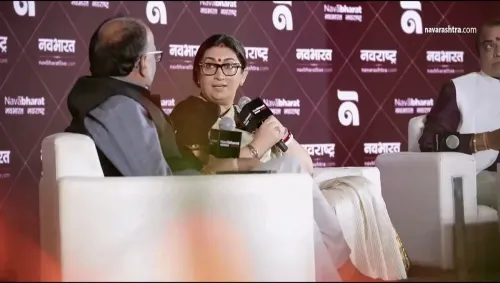
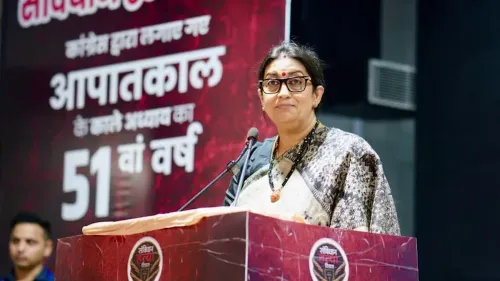
Smriti Irani slams 'Regime Change' call as anarchy plot
Synopsis
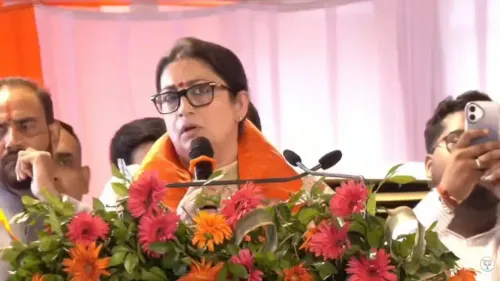
BJP leader Smriti Irani on October 16, 2026 accused opponents of using 'Regime Change' language to mask a conspiracy to create anarchy and seize power, dismissing their campaign as having nothing to do with genuine electoral reform.
Key Takeaways
BJP leader Smriti Irani posted a sharp political attack on October 16, 2026 , targeting unnamed opponents over their use of the phrase 'Regime Change' .
She alleged the opposition's goal is not electoral reform but creating anarchy to seize power — calling it an explicit 'saazish' (conspiracy).
The BJP has a consistent pattern of reframing opposition electoral demands as destabilisation attempts rather than good-faith reform proposals.
The use of 'Regime Change' — a term with strong geopolitical connotations — in a domestic electoral context is what Irani identifies as the key tell of intent.
The Election Commission of India and parliamentary debates on proposed electoral law changes are the forums to watch for how this dispute develops.
The phrase 'Regime Change' — borrowed from the vocabulary of foreign geopolitics — has landed at the centre of India's domestic electoral debate, and BJP leader Smriti Irani is not letting it pass quietly. On Friday, October 16, 2026, Irani fired directly at unnamed opponents, charging that their language exposes an agenda far darker than electoral reform.
In her post, Irani stated in Hindi: 'Regime Change jaise shabdon ke prayog se yeh saaf hai ki unki ladai chunav sudhar ke liye nahin, balki desh mein Anarchy paida karke satta hasil karne ki unki yeh saazish hai.' In plain English: 'The use of phrases like Regime Change makes it clear that their fight is not for electoral reform but a conspiracy to seize power by creating anarchy in the country.'
Why 'Regime Change' is a political lightning rod
The term 'Regime Change' carries loaded freight in global political discourse — historically associated with external interference, coups, or the engineered collapse of elected governments. When that vocabulary surfaces in domestic electoral conversations, it draws immediate attention. Irani's argument is precise: the choice of words, she says, is itself the tell — it reveals intent, not grievance.
BJP figures have consistently reframed opposition demands for changes to electoral processes — whether on voting technology, campaign finance, or institutional oversight — as destabilisation attempts rather than good-faith reform proposals. Irani's post sharpens that framing into an explicit allegation of conspiracy.
A recurring fault line in India's election reform debate
India's electoral architecture has been a contested space for years. Opposition parties have periodically pushed for reviews of electronic voting machines, stricter enforcement of campaign finance rules, and greater autonomy for regulatory institutions. The ruling party has regularly characterised such campaigns as motivated by electoral losses rather than democratic principle — a charge the opposition consistently denies.
What makes Irani's intervention notable is the escalation in language. Moving from 'destabilisation' to 'anarchy' to 'conspiracy to seize power' marks a deliberate rhetorical step-up. It signals that the BJP intends to contest not just the substance of reform demands but the legitimacy of those making them.
What comes next in this political exchange
The immediate question is whether the Election Commission of India or parliamentary committees engage with whatever proposals prompted this exchange. If reform proposals reach formal legislative or regulatory channels, the political temperature around them will only rise. Irani's post ensures the framing battle — 'genuine reform vs. power grab' — is already set before any institutional process begins.
In a democracy, the words politicians choose to describe dissent matter as much as the policies at stake. When 'Regime Change' enters the room, both sides know the argument is no longer just about ballot boxes.
Point of View
Recast the demand as an attack on democracy itself. By zeroing in on the phrase 'Regime Change,' she shifts the debate from the merits of electoral proposals to the character and intent of those proposing them. This framing — reform-as-cover-for-power-grab — has proven durable in Indian political discourse precisely because it requires no engagement with the substance of the reform argument. The escalation to the language of 'anarchy' and 'conspiracy' suggests the BJP anticipates a prolonged and high-decibel confrontation over electoral rules ahead.
NationPress
16 Oct 2026
Frequently Asked Questions
What did Smriti Irani say about 'Regime Change'?
Irani argued that the use of the phrase 'Regime Change' by her opponents makes it clear their real agenda is not electoral reform but a conspiracy to create anarchy in the country and seize power.
Who is Smriti Irani targeting in her post?
Irani does not name a specific individual or party in the post. The research background indicates it is directed at opposition figures who have been calling for changes to India's electoral processes.
Why is the term 'Regime Change' controversial in Indian politics?
'Regime Change' is a phrase typically associated with the engineered or forced removal of a government, often with foreign involvement. Its use in a domestic electoral context is seen as inflammatory and is what Irani says reveals a destabilisation agenda.
What is the BJP's position on opposition demands for election reform?
BJP leaders, including Irani, have consistently argued that opposition calls for electoral reform are motivated by electoral losses and a desire to destabilise the government, rather than a genuine commitment to democratic improvement.
What happens next in India's election reform debate?
Watchers will track whether the Election Commission of India or parliamentary committees formally take up any proposed changes to electoral laws, which would bring this political dispute into an institutional arena.