CM Bhupendra Patel Launches 101 New Rs. 5 Meal Centres for Gujarat Workers
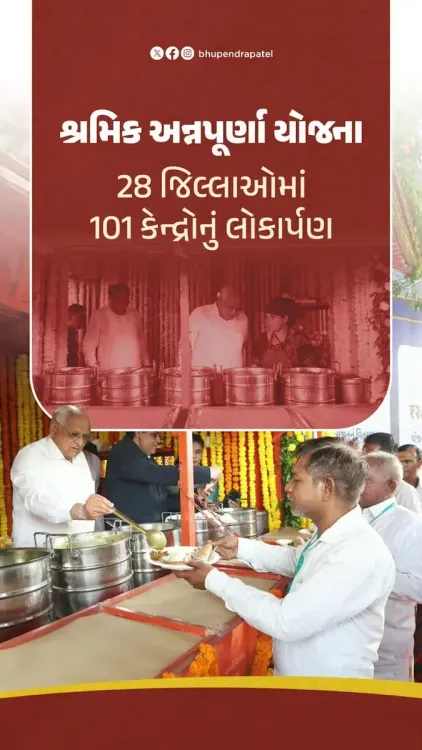
Synopsis
Gujarat CM Bhupendra Patel inaugurated 101 new meal centres under the Shramik Annapurna Yojana on October 16, 2026, completing coverage across all 34 districts with 394 centres offering nutritious meals to workers at Rs. 5 per plate.
Key Takeaways
101 new food distribution centres under the Shramik Annapurna Yojana were inaugurated on October 16, 2026 across 28 districts of Gujarat.
The scheme now covers all 34 districts of Gujarat with a total of 394 centres , achieving full state-wide reach for the first time.
Each meal costs just Rs.
5 and includes rotli, vegetables, pulses, rice, pickle, chilli, and jaggery; weekly sweets like sukhadi and shiro are also provided.
The expansion was framed within the national Seva Sankalp Abhiyan and linked to PM Modi's 'Shramev Jayate' labour dignity principle from 2014 .
The scheme targets informal-sector workers in Gujarat's construction, textile, and manufacturing industries who lack formal social-security coverage.
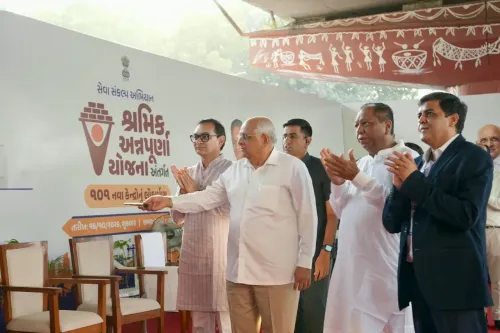
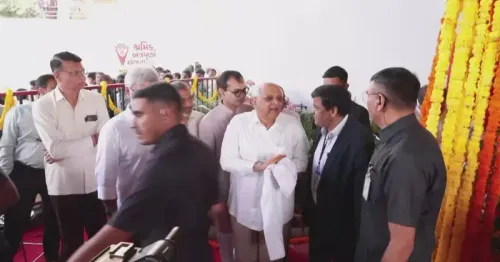
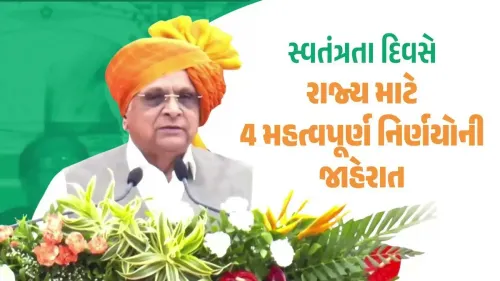
At just Rs. 5 a plate, a full meal of rotli, vegetables, dal, rice, pickle, chilli, and jaggery is now within reach of every labourer across Gujarat — and on Friday, October 16, 2026, Gujarat Chief Minister Bhupendra Patel brought that promise one step closer to universal reality by inaugurating 101 new food distribution centres under the state's Shramik Annapurna Yojana, spanning 28 districts in a single day.
From 293 to 394: How Gujarat Closed the Gap
With today's additions, the Shramik Annapurna Yojana now operates out of 394 centres across all 34 districts of the state — complete geographic coverage for the first time. CM Patel described the moment as one of 'immense joy and satisfaction,' noting in his post that the scheme is 'a small effort to stand beside worker families, to care for their health and dignity.'
The expansion is not merely numerical. Full district coverage means a migrant construction worker in Kutch, a textile hand in Surat, or a chemical-plant daily-wage earner in Vadodara now has a guaranteed, affordable hot meal option within their district — no exceptions.
What Rs. 5 Actually Buys: The Plate in Detail
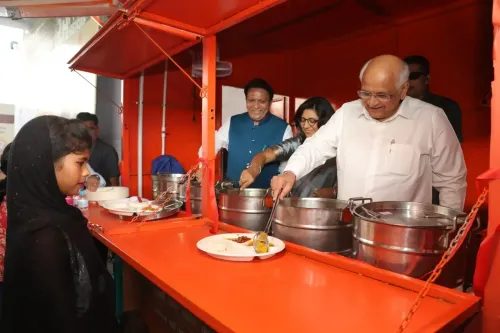
The scheme's menu is deliberately wholesome: rotli, shaak (vegetable), kathol (pulses), bhat (rice), athanu (pickle), mircha (chilli), and gol (jaggery). Once a week, workers also receive traditional sweets — sukhadi (a sesame-jaggery sweet) and shiro (semolina pudding). The weekly sweet component is a small but culturally resonant detail, signalling that the programme aims at dignity, not just bare caloric sustenance.
At a time when informal-sector workers often skip meals or rely on unhygienic roadside options, a state-subsidised, nutritionally balanced plate at Rs. 5 represents a tangible intervention in worker health.
'Shramev Jayate' on the Ground: Modi's Principle Meets State Delivery
CM Patel explicitly framed the inauguration within the ongoing national Seva Sankalp Abhiyan — a service-oriented campaign running across India — and linked the scheme to Prime Minister Narendra Modi's 'Shramev Jayate' philosophy. The phrase, meaning 'Labour is supreme,' was articulated by PM Modi when he revamped the labour welfare framework in 2014, weaving together schemes for worker registration, insurance, and dignity under a single brand.
Gujarat's Shramik Annapurna Yojana is, in that sense, a state-level operational translation of a central philosophy — converting a headline principle into a daily plate of food. The scheme targets the vast informal labour force that powers Gujarat's construction, textile, chemical, and manufacturing sectors but has historically fallen outside formal social-security nets.
A Pattern of Scaling Up Food Security for Informal Workers
The expansion follows Gujarat's incremental approach to subsidised nutrition support for informal-sector workers — adding centres district by district rather than announcing and underdelivering. Reaching full 34-district coverage marks a structural milestone for the programme. Analysts watching the scheme will now focus on participation rates, quality consistency across the new centres, and whether menu expansions or meal-timing adjustments follow as worker demand data comes in.
CM Patel closed his post with a prayer — 'Maa Annapurna sau ne sukhi-swasth rakhe' (May Mother Annapurna keep everyone happy and healthy) — invoking the Hindu goddess of food and nourishment, a culturally grounded coda to what is fundamentally a public-health and labour-welfare story.
Point of View
Named, priceable benefit. The scheme's incremental scaling approach also reflects a disciplined implementation philosophy — expand only when capacity exists — which, if quality holds across the new 101 centres, could become a model for other states grappling with informal-worker food security.
NationPress
16 Oct 2026
Frequently Asked Questions
What is the Shramik Annapurna Yojana in Gujarat?
The Shramik Annapurna Yojana is a Gujarat government scheme that provides nutritious subsidised meals to workers at just Rs. 5 per plate, covering rotli, vegetables, pulses, rice, pickle, chilli, and jaggery, with weekly traditional sweets added as a supplement.
How many Shramik Annapurna Yojana centres are now operational in Gujarat?
As of October 16, 2026, there are 394 Shramik Annapurna Yojana centres operational across all 34 districts of Gujarat, after CM Bhupendra Patel inaugurated 101 new centres on that date.
Who can benefit from the Shramik Annapurna Yojana?
The scheme is designed for labourers and worker families, particularly those in the informal sector such as construction workers, textile workers, and daily-wage earners across Gujarat.
What is the Seva Sankalp Abhiyan mentioned by CM Bhupendra Patel?
The Seva Sankalp Abhiyan is a nationwide service-oriented campaign active across India, within which the Gujarat government's expansion of the Shramik Annapurna Yojana was framed as a concrete welfare delivery effort.
What is 'Shramev Jayate' and how does it relate to this scheme?
'Shramev Jayate,' meaning 'Labour is supreme,' is a labour welfare philosophy articulated by Prime Minister Narendra Modi in 2014. CM Patel linked the Shramik Annapurna Yojana to this principle, calling it a ground-level expression of honouring workers' dignity and health.