Smriti Irani urges citizens to study SIR process independently

Synopsis
BJP leader Smriti Irani on October 16 challenged what she called a misinformation-driven narrative by urging citizens to independently research the Special Intensive Revision electoral roll process, asserting that facts already in the public domain can refute it.
Key Takeaways
Smriti Irani posted on X on October 16, 2026 , urging every citizen to study the SIR process online.
She argued that 'a narrative only holds power over an uninformed public,' framing the appeal as a call for self-education over dependence on political messaging.
The Special Intensive Revision (SIR) is an Election Commission of India exercise to update, verify, and clean voter rolls ahead of elections.
Irani asserted that 'the facts are in the public domain,' directing citizens to official sources rather than party statements.
The post was accompanied by a video, which may offer further documentation or context on the SIR process.
Electoral roll revisions have historically been a flashpoint in Indian political debates, with disputes over voter deletions and additions in key constituencies.
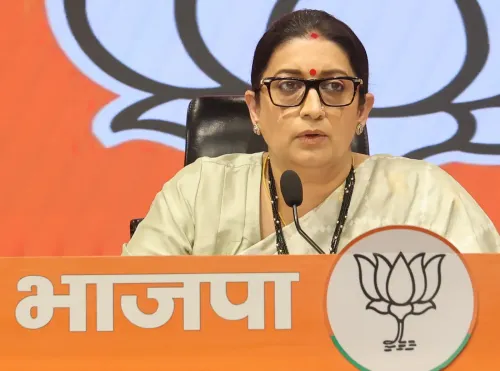
BJP leader Smriti Irani fired a pointed challenge at what she called a power-hungry narrative on Friday, October 16, 2026 — telling every Indian citizen to go online, study the SIR (Special Intensive Revision) process themselves, and form their own judgment. The message was brief, deliberate, and aimed squarely at an informed public.
The challenge Irani is laying down
Irani's post cuts to the chase: 'A narrative only holds power over an uninformed public.' It is a direct call to action — not a press conference, not a party statement — addressed to individual citizens. She names no opponent, cites no specific charge, but the implication is hard to miss: someone, she believes, is running a narrative that cannot survive contact with the facts.
Her remedy is transparency by self-education. 'The facts are in the public domain,' she writes, urging citizens to look up the SIR process online and 'make an informed assessment.' The framing is democratic in instinct — trust the data, not the interpreter.
What the SIR process involves
The Special Intensive Revision (SIR) is an electoral roll exercise conducted by the Election Commission of India, through which voter lists are updated, cleaned, and verified ahead of elections. It involves door-to-door enumeration by Booth Level Officers, addition of newly eligible voters, deletion of duplicate or deceased entries, and correction of errors. The process is governed by established legal provisions and is documented on the Election Commission's official portal.
Debates around voter roll revisions have periodically become politically charged in India, with opposition parties raising concerns about deletions in specific constituencies and ruling parties defending the administrative integrity of the exercise. Irani's post lands squarely in that contested space — without naming the controversy directly.
Why this framing matters in Indian politics
Indian political figures increasingly use X (formerly Twitter) not just to broadcast positions, but to redirect public attention to official data sources — a subtle but significant shift in how governance accountability is argued. By anchoring her message in 'public domain facts' rather than party talking points, Irani is making a transparency argument: the process can withstand scrutiny, so scrutinise it.
The post also carries an attached video — details of which were not available — which may provide additional context or documentation supporting her call for direct citizen engagement with the SIR process.
When facts are publicly accessible, the strongest political move is simply to point people toward them. Irani is betting that the SIR process, examined closely, speaks for itself — and that bet will be tested the moment citizens actually look.
Point of View
' shifting the burden of proof onto those questioning the process. The choice to address citizens directly, rather than political rivals, signals confidence that the SIR documentation can withstand public examination — but it also sidesteps the substantive concerns that typically animate these debates, such as localised deletion patterns or enumeration errors. Whether citizens actually engage with the Election Commission portal will determine whether this remains a rhetorical move or becomes a genuine transparency moment.
NationPress
16 Oct 2026
Frequently Asked Questions
What is the SIR process Smriti Irani is referring to?
The Special Intensive Revision (SIR) is an electoral roll exercise conducted by the Election Commission of India to update voter lists — adding new eligible voters, removing duplicates or deceased entries, and correcting errors — typically before major elections.
Why did Smriti Irani post about the SIR process?
Irani posted to counter what she described as a misleading narrative, urging citizens to independently study the SIR process using publicly available information rather than relying on partisan characterisations.
Where can citizens read about the SIR electoral roll process?
The Election Commission of India publishes details of the Special Intensive Revision process on its official portal, including timelines, procedures, and instructions for Booth Level Officers.
Is the Special Intensive Revision process controversial in India?
Voter roll revision exercises have periodically become politically sensitive in India, with opposition parties sometimes raising concerns about large-scale deletions in specific constituencies, while electoral authorities defend the administrative rigour of the process.
What did Smriti Irani say about narratives and public information?
Irani stated that 'a narrative only holds power over an uninformed public,' and called on every citizen to go online, study the SIR process, and 'make an informed assessment' based on facts already in the public domain.