Ex-CJI Gavai donates ₹11 lakh to CM Fadnavis's drought relief fund
Synopsis
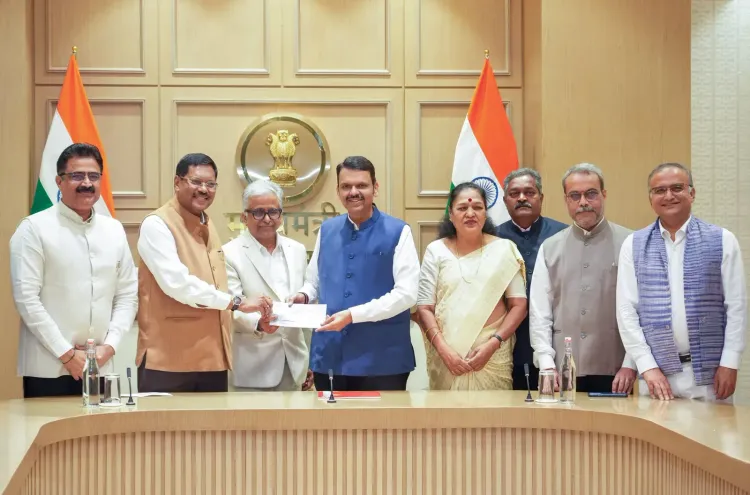
Former Chief Justice of India Bhushan Gavai presented a ₹11 lakh cheque to Maharashtra CM Devendra Fadnavis in Mumbai on behalf of the Bar Council of Maharashtra and Goa, contributing to the Chief Minister's Relief Fund for drought-affected farmers.
Key Takeaways
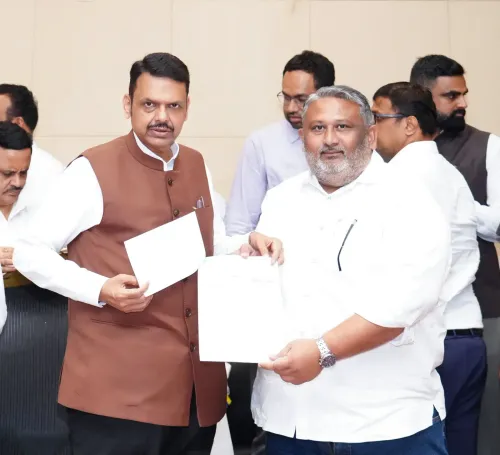
Former Chief Justice of India Bhushan Gavai handed over a cheque of ₹11,00,000 to CM Fadnavis in Mumbai on October 16, 2026 .
The donation was made on behalf of the Bar Council of Maharashtra and Goa , the statutory regulatory body for advocates in both states.
The funds are directed to the Chief Minister's Relief Fund , specifically earmarked for drought-affected farmers .
CM Devendra Fadnavis received the cheque and publicly expressed his gratitude to Justice Gavai and the Bar Council.
The contribution reflects a broader pattern of professional and institutional bodies supporting Maharashtra's recurring drought relief efforts through the state fund.
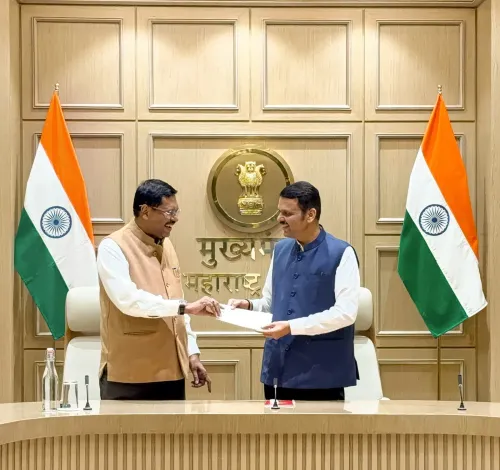
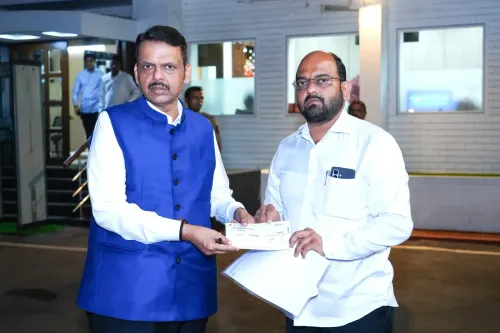
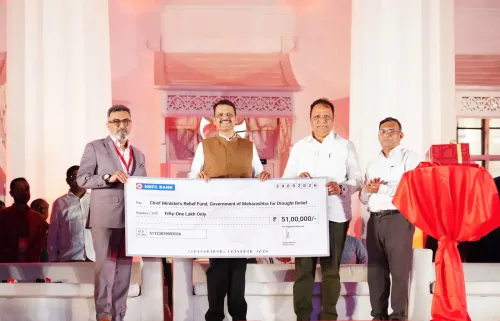
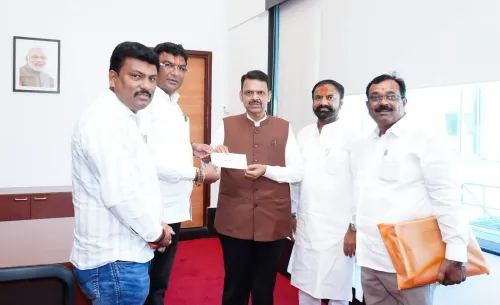
A former Chief Justice of India walked into the Chief Minister's office in Mumbai on Friday, October 16, 2026 — not for a legal matter, but to hand over a cheque for drought-hit farmers. The Chief Minister's Office of Maharashtra announced that former Chief Justice of India Bhushan Gavai, representing the Bar Council of Maharashtra and Goa, presented a donation of ₹11,00,000 to the Chief Minister's Relief Fund for drought-affected farmers, with Chief Minister Devendra Fadnavis personally receiving the contribution and expressing his gratitude.
The cheque, the cause, and who stood behind it
The Bar Council of Maharashtra and Goa — the statutory professional body that regulates advocates across the two states — initiated the donation as a civic gesture toward farmer welfare. Justice Gavai, who served as the Chief Justice of India before demitting the country's top judicial office, presented the cheque on the Council's behalf. The post, shared in Marathi by the Chief Minister's Office, confirmed that 'दुष्काळग्रस्त शेतकऱ्यांच्या मदतीसाठी' — 'for the assistance of drought-affected farmers' — was the stated purpose of the contribution.
Maharashtra's drought relief machinery and why the fund matters
The Chief Minister's Relief Fund is Maharashtra's primary state-level channel for directing emergency support during natural calamities, including the recurring dry spells that batter the state's agrarian heartland. The fund has been operative across successive governments, with drought conditions in multiple districts periodically prompting both institutional and individual contributions. Professional bodies — from legal councils to trade associations — have a history of routing such support through this mechanism, treating it as a direct line to affected communities.
Maharashtra's agricultural districts, particularly in Marathwada and parts of Vidarbha, have faced chronic water stress across multiple crop cycles, making the relief fund a recurring instrument of state policy rather than an ad-hoc response. Every contribution, however symbolic in scale, signals institutional solidarity with a constituency that governments cannot afford to ignore.
The legal fraternity steps into a farmer's crisis
The Bar Council's decision to donate is notable for its optics as much as its quantum. Legal institutions are rarely the first face of agrarian relief — yet the appearance of a former Chief Justice at Varsha, the official CM residence in Mumbai, carrying a cheque for farmers, draws a visible line between Maharashtra's judicial establishment and its rural crisis. CM Fadnavis, who oversees both revenue administration and relief disbursement as head of government, acknowledged the contribution publicly — a gesture that keeps the fund's visibility high and may encourage further institutional donations.
The government's next step will be watched closely: how quickly and transparently this and other contributions are disbursed to the districts where the need is sharpest will ultimately determine whether the fund functions as a lifeline or a ledger entry.
Point of View
Lending institutional legitimacy to the Chief Minister's Relief Fund at a politically sensitive time for Maharashtra's farming communities. For CM Fadnavis, each high-profile contribution amplifies the fund's visibility and implicitly validates the government's relief architecture ahead of potential district-level disbursements. The gesture also reflects a broader pattern in Indian governance where professional bodies use charitable donations to signal civic responsibility and maintain cordial relations with the ruling administration. Scrutiny will inevitably follow on how efficiently the accumulated fund reaches drought-hit districts — where impact, not optics, will matter most.
NationPress
16 Oct 2026
Frequently Asked Questions
Who donated to the Maharashtra CM Relief Fund for drought farmers?
Former Chief Justice of India Bhushan Gavai presented a cheque of ₹11,00,000 to CM Devendra Fadnavis on behalf of the Bar Council of Maharashtra and Goa on October 16, 2026.
What is the Chief Minister's Relief Fund in Maharashtra?
The Chief Minister's Relief Fund is a Maharashtra state fund used to provide financial assistance to people affected by natural calamities such as droughts, floods, and other disasters.
How much did the Bar Council of Maharashtra and Goa donate to drought relief?
The Bar Council of Maharashtra and Goa donated ₹11,00,000 (eleven lakh rupees) to the Chief Minister's Relief Fund for drought-affected farmers.
Who is Bhushan Gavai and what is his role here?
Bhushan Gavai is a former Chief Justice of India who presented the donation cheque to CM Fadnavis in Mumbai on behalf of the Bar Council of Maharashtra and Goa.
Which districts in Maharashtra are affected by drought?
Marathwada and parts of Vidarbha have historically faced the most severe drought conditions in Maharashtra, though the specific districts impacted in October 2026 have not been officially detailed in this announcement.