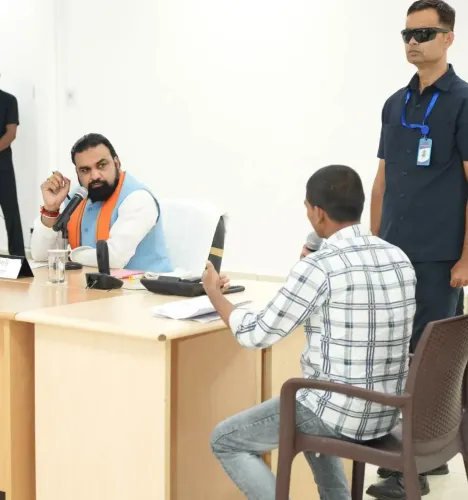
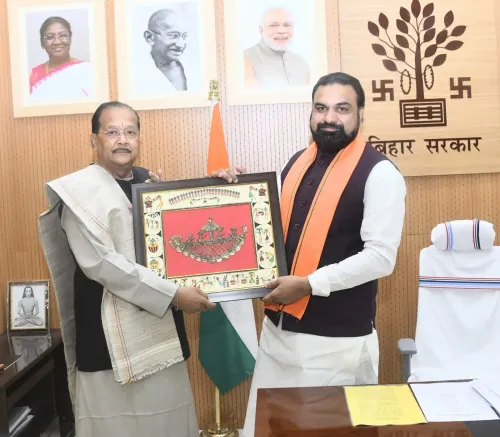
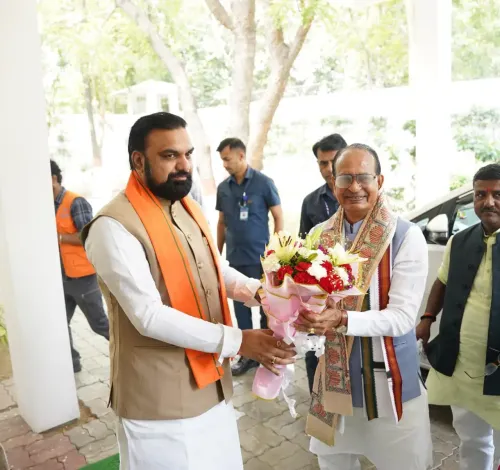
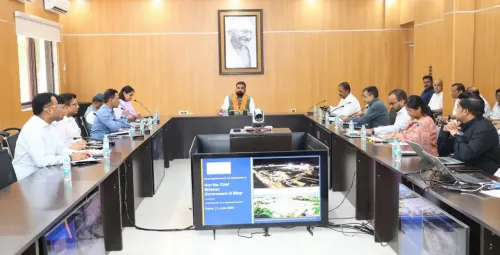
CM Samrat Choudhary hosts Nobel laureate Esther Duflo at Patna residence
Synopsis
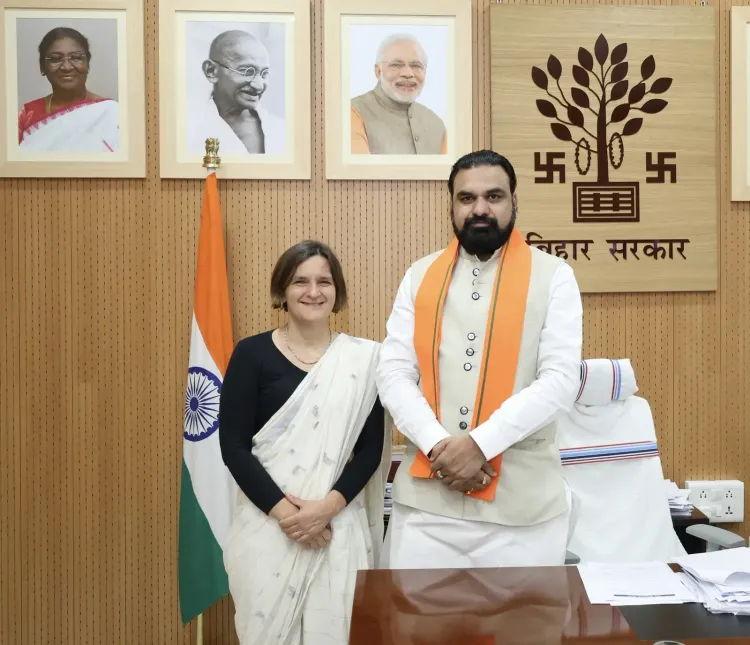
Bihar Chief Minister Samrat Choudhary hosted Nobel economics laureate Prof. Esther Duflo, co-founder of J-PAL, for a courtesy visit at his official Patna residence on 16 October 2026, signalling Bihar's engagement with evidence-based development economics.
Key Takeaways
Bihar CM Samrat Choudhary received Prof.
Esther Duflo at Loksevak Awas , Patna, on 16 October 2026 .
Duflo is the 2019 Nobel Memorial Prize in Economic Sciences laureate and co-founder of J-PAL , a global poverty-research network.
Her work pioneered randomised controlled trials to identify effective poverty-alleviation interventions — directly relevant to Bihar's scale and development challenges.
The post describes the meeting as a courtesy call ( shishtachar mulaqat ); no specific policy outcomes have been confirmed.
Any follow-up on research collaborations between the Bihar government and J-PAL would be a key development to watch.
A Nobel Prize-winning economist walked into the Bihar Chief Minister's official residence in Patna on Friday, 16 October 2026 — and the meeting itself is the story. Bihar Chief Minister Samrat Choudhary received Prof. Esther Duflo, the 2019 Nobel Memorial Prize in Economic Sciences laureate, for a courtesy call at Loksevak Awas, his official residence.
Posting about the visit on X, CM Choudhary wrote: 'Loksevak Awas mein arthshastra mein Nobel Memorial Puraskar se sammanit Prof. Esther Duflo ne shishtachar mulaqat ki' — 'Prof. Esther Duflo, honoured with the Nobel Memorial Prize in Economics, paid a courtesy visit to Loksevak Awas.'Who is Esther Duflo — and why Bihar?
Prof. Esther Duflo is a French-American economist and co-founder of J-PAL (the Abdul Latif Jameel Poverty Action Lab), the global network that pioneered the use of randomised controlled trials to test what actually works in poverty alleviation. She shared the 2019 Nobel Memorial Prize in Economic Sciences with Abhijit Banerjee and Michael Kremer for that experimental approach. Her work has directly informed welfare and education programmes across South Asia — making a visit to one of India's most populous and historically underserved states far from incidental.
Bihar, home to over 130 million people, has been a recurring focus of evidence-based development research precisely because of its scale, its poverty indicators, and its ambitious state-led schemes. Indian state chief ministers have periodically hosted international development economists for exactly these kinds of exchanges — meetings that do not always produce immediate press releases but often seed longer conversations about pilot projects and policy design.
What the meeting signals
The specifics of what was discussed behind closed doors at Loksevak Awas remain unconfirmed. But the framing matters: a sitting Chief Minister hosting a J-PAL co-founder signals at minimum an openness to evidence-driven governance conversations — the kind of rigorous, data-first policy thinking that Duflo has spent her career championing. Any follow-up from the Bihar government or J-PAL India on research collaborations or field trials would sharpen that signal considerably.
For now, the courtesy visit itself places Bihar on the map of states engaging directly with frontier development economics — a quiet, consequential detail.
Point of View
Hosting Duflo at Loksevak Awas is a visible alignment with evidence-based governance at a time when Bihar's development trajectory is closely watched nationally. Whether this stays a photo-op or seeds a formal research partnership will determine its actual policy legacy. The BJP-led state government has political incentive to demonstrate rigorous welfare delivery as Bihar heads deeper into its development agenda.
NationPress
16 Oct 2026
Frequently Asked Questions
Who is Esther Duflo and why did she visit Bihar?
Prof. Esther Duflo is a French-American economist who won the 2019 Nobel Memorial Prize in Economic Sciences for her experimental approach to poverty alleviation; she co-founded J-PAL. She paid a courtesy visit to Bihar Chief Minister Samrat Choudhary at his official residence in Patna on 16 October 2026. The specific purpose of the visit has not been officially detailed.
What is J-PAL and does it work in Bihar?
J-PAL (Abdul Latif Jameel Poverty Action Lab) is a global research network co-founded by Esther Duflo that uses randomised controlled trials to test poverty-reduction policies. It operates extensively across South Asia, and Bihar — given its population size and development indicators — has been a relevant geography for evidence-based welfare research.
What is Loksevak Awas?
Loksevak Awas is the official residence of the Bihar Chief Minister, located in Patna. The name translates to 'public servant's residence.'
What did CM Samrat Choudhary and Esther Duflo discuss?
The specific content of their discussion has not been officially confirmed. CM Choudhary described it as a courtesy call on X. Any formal policy outcomes or research collaborations would require a separate announcement.
Has Bihar previously collaborated with international development researchers?
Bihar, as one of India's most populous states, has attracted attention from development economists studying poverty alleviation and welfare delivery. Indian state governments have periodically hosted Nobel laureates and international researchers, though formal J-PAL collaborations require separate institutional agreements.