Pakistan blasphemy mob attack: 35+ Christian families flee Punjab village after arson
Synopsis
A Christian pharmacist's arrest on blasphemy charges in Punjab's Gharial Kalan village triggered mob arson and the mass displacement of over 35 Christian families — the latest episode in a long pattern of blasphemy-law misuse that rights groups say Pakistan's institutions have repeatedly failed to stop.
Key Takeaways
Kamran Masih , a 40-year-old Christian pharmacist in Gharial Kalan, Punjab, Pakistan , was arrested after being accused of sharing a blasphemous video on WhatsApp.
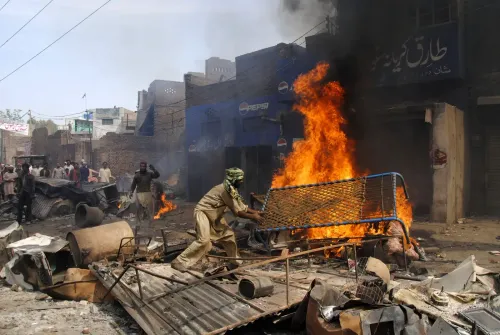
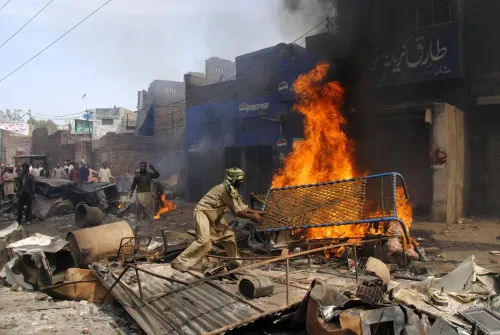
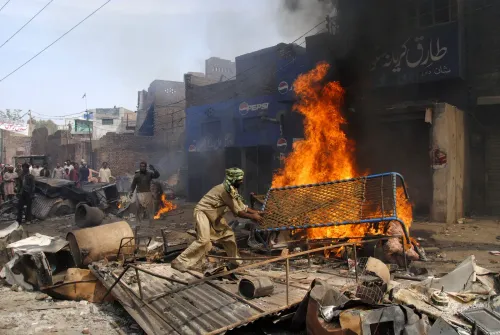
A Muslim mob set fire to both his home and pharmacy following his arrest.
More than 35 Christian families fled the village fearing further mob violence.
The Voice of Pakistan Minority (VOPM) had warned on 22 July of systemic failure to curb blasphemy law misuse against minorities.
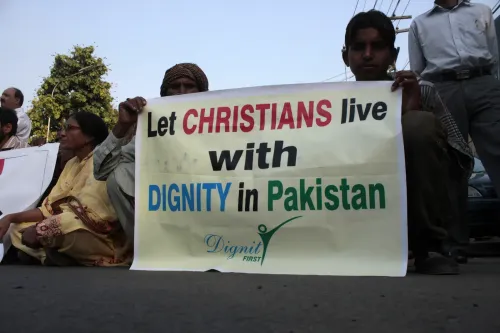
Rights groups and legal experts say the laws are routinely weaponised in personal disputes and disproportionately harm religious minorities.
Whether displaced families can safely return and whether arsonists will face charges remains unresolved.
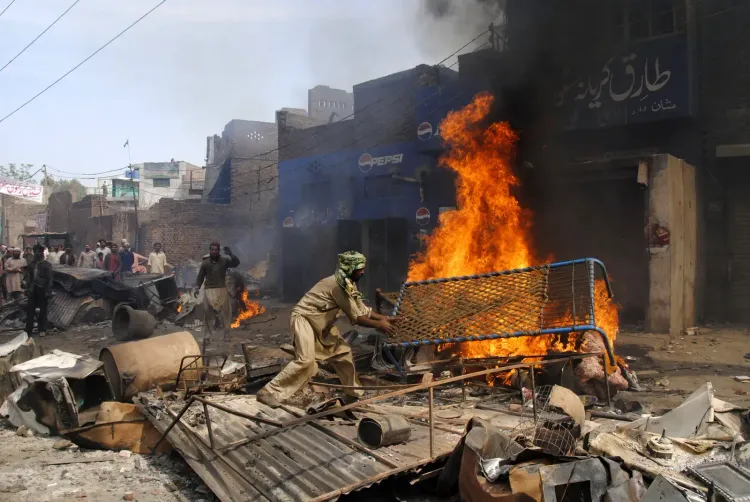
More than 35 Christian families have been forced to flee their homes in Gharial Kalan village, Punjab province, Pakistan, after a Muslim mob set fire to the house and pharmacy of a Christian man accused of blasphemy on 16 October 2026. The incident has reignited alarm over the chronic misuse of Pakistan's blasphemy laws against religious minorities.
The Incident in Gharial Kalan
Police arrested Kamran Masih, a 40-year-old Christian man who operated a small pharmacy in the village, a day before the arson. Local Muslims had accused him of sharing a blasphemous video in WhatsApp groups, according to a source cited by Christian Daily International-Morning Star News. The source, speaking on condition of anonymity, said: 'As word of Masih's arrest spread, his family and other Christians started fleeing the village, fearing a mob attack.'
Dozens of protesters subsequently gathered near Masih's shop and home, setting both buildings ablaze. The violence prompted the broader Christian community in the village to leave en masse, fearing further attacks.
Pattern of Mob Violence and Legal Vulnerability
Human rights organisations and legal experts have long criticised Pakistan's blasphemy provisions, stressing that the laws are vulnerable to misuse in personal disputes and have disproportionately impacted religious minorities, according to reports. The Gharial Kalan episode fits a pattern documented over decades: an accusation spreads rapidly, a mob assembles before courts can examine the facts, and minority communities bear the consequences.
Notably, on 22 July, the Voice of Pakistan Minority (VOPM) — a leading minority rights body — accused Pakistan of failing to curb the misuse of blasphemy laws, citing false allegations, widespread mob violence, and systemic failure to protect minorities.
VOPM's Systemic Critique
The VOPM described blasphemy laws as among Pakistan's most 'controversial issues', pointing to the continued failure of institutions to prevent their misuse. The rights body highlighted the case of Rimsha Masih, a Pakistani Christian girl with Down syndrome, who was accused of desecrating the Quran — allegations later found to be, according to subsequent evidence, 'fabricated'. While she was eventually released, the VOPM noted that 'the damage was already done', with her family facing immense pressure before the courts could fully examine the case.
The VOPM also stated: 'The judiciary and law enforcement agencies have repeatedly been criticised for failing to act strongly against those who misuse blasphemy allegations. When false accusers or those who manipulate religious emotions are not held accountable, it sends a dangerous message that such actions can continue without consequences. This lack of accountability weakens public trust in the legal system.'
Broader Context and What Comes Next
This comes amid sustained international scrutiny of Pakistan's treatment of religious minorities, including Christians, Ahmadis, and Hindus. Rights groups argue that police in many cases protect accusers rather than the accused, and that mob justice frequently precedes any judicial process. The Gharial Kalan arson now joins a long list of such incidents across Punjab — a province that has historically been the epicentre of blasphemy-related violence in Pakistan.
Whether authorities will pursue charges against those who carried out the arson, or whether displaced families will be able to return safely, remains to be seen.
Point of View
However unverified, is sufficient to trigger mob action before any court is involved. The state's failure to prosecute false accusers or arsonists has effectively normalised vigilante violence against minorities. International condemnation arrives reliably after each incident; structural accountability does not. Until Pakistan demonstrates it will hold both false accusers and mob participants legally liable, displaced families like those in Gharial Kalan will have little incentive — or safety — to return home.
NationPress
16 Oct 2026
Frequently Asked Questions
What triggered the mob attack on Christians in Gharial Kalan, Pakistan?
Local Muslims accused Kamran Masih , a Christian pharmacist, of sharing a blasphemous video in WhatsApp groups. Following his arrest, a mob gathered and set fire to his home and pharmacy, prompting over 35 Christian families to flee the village out of fear of further violence.
Who is Kamran Masih?
Kamran Masih is a 40-year-old Christian man who ran a small pharmacy in Gharial Kalan village in Punjab province, Pakistan. He was arrested by police a day before the arson on blasphemy charges related to an allegedly shared WhatsApp video.
How have rights groups responded to Pakistan's blasphemy laws?
Human rights organisations and legal experts have repeatedly criticised Pakistan's blasphemy provisions as being vulnerable to misuse in personal disputes and disproportionately harmful to religious minorities. The Voice of Pakistan Minority (VOPM) specifically accused Pakistan on 22 July of failing to prevent such misuse.
What was the Rimsha Masih case referenced by rights groups?
Rimsha Masih was a Pakistani Christian girl with Down syndrome accused of desecrating the Quran. Subsequent evidence indicated the allegations were fabricated, and she was eventually released — but the VOPM said the case highlighted how quickly an accused person's life is upended before courts examine the facts.
What happens next for the displaced Christian families?
It remains unclear whether the more than 35 displaced Christian families will be able to return safely to Gharial Kalan. Rights groups are watching whether authorities will pursue arson charges against mob participants, which historically has rarely happened in similar cases across Pakistan.