CM Sukhu calls e-governance success a human, not tech, milestone
Synopsis
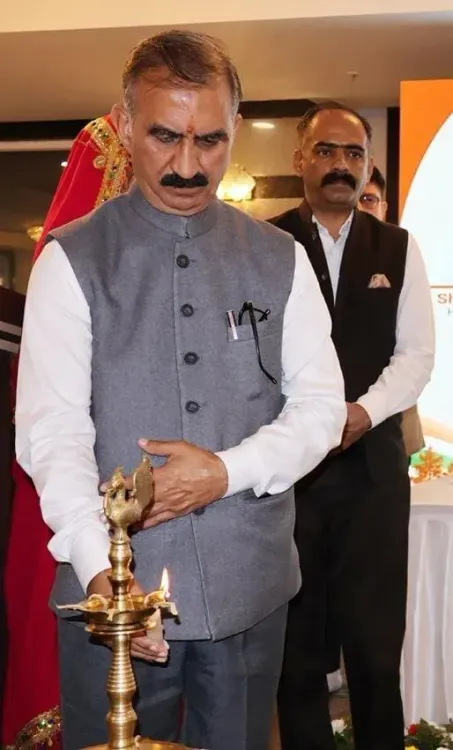
Chief Minister Sukhvinder Singh Sukhu addressed a two-day national conference on administrative reforms in Dharamshala on 16 October 2026, stressing that e-governance success means simpler lives for remote-area citizens — and naming a Single Window Portal, CM Helpline, and Revenue Lok Adalats as Himachal Pradesh's delivery tools.
Key Takeaways
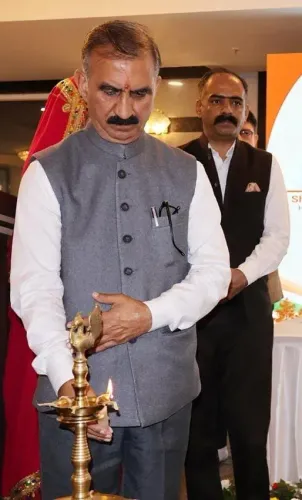
CM Sukhu addressed a two-day national conference on 'Administrative Reforms and e-Governance' in Dharamshala on 16 October 2026 .
He defined e-governance success as simplifying lives of citizens in remote and difficult terrain , not just deploying technology.
The state is using a Single Window Citizen Portal , Chief Minister Helpline , and a Grievance Redressal Portal to ensure officer accountability.
A Revenue Management System and Revenue Lok Adalats are being used to fast-track pending cases of mutation ( intkal ), land partition, and boundary demarcation.
Sukhu's stated governance benchmark: administration must become simple, transparent, and effective for every citizen in Himachal Pradesh.
The initiative builds on the national Digital India (2015) and National e-Governance Plan (2006) frameworks.
In the hills of Dharamshala, a two-day national conference on administrative reforms opened with a pointed message from Himachal Pradesh Chief Minister Sukhvinder Singh Sukhu on Friday, 16 October 2026: the true measure of e-governance is not the sophistication of the technology but whether the person living in a remote mountain village can actually navigate the government — and get results.
Addressing the national conference on 'Administrative Reforms and e-Governance', CM Sukhu laid out a citizen-first framework, saying: 'e-Governance ki vastavik safalta takneek mein nahin, balki aam nagrikon, visheshkar durgam kshetron mein rehne wale logon ka jeevan saral banane mein hai' — ('The real success of e-governance lies not in technology, but in simplifying the lives of ordinary citizens, especially those living in remote areas.')
Three tools Sukhu is betting on for transparent governance
The Chief Minister named three concrete delivery mechanisms his government is deploying: the Single Window Citizen Portal for integrated service access, the Chief Minister Helpline for direct grievance escalation, and a dedicated Grievance Redressal Portal to track and ensure officer accountability. Together, they form the state's push to move public services from the counter to the screen — without leaving rural Himachal behind.
This architecture aligns with a two-decade national trajectory. The National e-Governance Plan, launched in 2006, laid the federal blueprint for electronic service delivery. The Digital India initiative of 2015 accelerated it, pushing states to build last-mile digital connectivity. Himachal's current drive is, in part, a local translation of that national ambition — applied to a state where population is sparse and terrain is formidable.
Land disputes and revenue pendency in the crosshairs
Perhaps the most operationally specific commitment Sukhu made concerned revenue records. Through a Revenue Management System and Revenue Lok Adalats, his government is accelerating the disposal of long-pending cases of intkal (mutation), land partition, and boundary demarcation — three categories that generate the bulk of rural litigation and administrative delays in hilly states.
Land-records pendency has historically been one of the most persistent friction points between citizens and the state in Himachal Pradesh. Digitising and fast-tracking these processes directly addresses a pain point felt in virtually every village panchayat. Quarterly disposal rates from revenue lok adalats will be the clearest early signal of whether the momentum holds.
What 'simplicity, transparency, effectiveness' actually demands
Sukhu closed his address by articulating a three-word governing standard — 'saral, pardarshi, prabhavi' (simple, transparent, effective) — framing it as the benchmark against which every technology intervention in the state should be tested. That is an ambitious yardstick for a state where connectivity, literacy, and last-mile infrastructure remain uneven.
The question now is execution. Integration of the state's portals with central platforms, consistent data on grievance closure rates, and measurable reductions in revenue-case backlogs will tell the real story of whether Dharamshala's conference produces durable reform — or a well-worded aspiration.
Point of View
He is attempting to shift the accountability benchmark from inputs to outcomes. The emphasis on Revenue Lok Adalats is particularly pointed: land disputes are a chronic source of voter grievance in Himachal's rural constituencies, and visible progress there can translate directly into political capital. Whether the state's portals can integrate with central platforms like CPGRAMS or DigiLocker will determine the long-term scalability of this model.
NationPress
16 Oct 2026
Frequently Asked Questions
What was the national conference in Dharamshala about?
The two-day national conference held in Dharamshala on 16 October 2026 focused on 'Administrative Reforms and e-Governance', bringing together policymakers to discuss citizen-centric digital governance and transparent public administration.
What is the Single Window Citizen Portal in Himachal Pradesh?
The Single Window Citizen Portal is a Himachal Pradesh state initiative that integrates delivery of government services, allowing citizens to access multiple public services and file grievances through a single digital platform without visiting multiple offices.
What are Revenue Lok Adalats and how do they help citizens?
Revenue Lok Adalats are special dispute resolution forums in Himachal Pradesh that fast-track long-pending cases related to land mutation (intkal), land partition, and boundary demarcation, helping citizens resolve property and revenue disputes faster outside regular courts.
What is CM Sukhu's vision for e-governance in Himachal Pradesh?
CM Sukhu has stated that real e-governance success means making life easier for ordinary citizens — especially those in remote, difficult-to-reach areas — through transparent, accountable, and citizen-centric administration rather than mere technology deployment.
How does Himachal Pradesh's e-governance drive connect to Digital India?
Himachal Pradesh's push for integrated portals and digital grievance redressal builds on the national Digital India initiative launched in 2015, and the earlier National e-Governance Plan of 2006, adapting their frameworks to the state's specific geography and dispersed rural population.