35+ Christian families flee Pakistan's Punjab after mob torches minority man's home
Synopsis
In Gharial Kalan village in Pakistan's Punjab, a mob torched a Christian man's home and pharmacy over blasphemy accusations — forcing over 35 Christian families to flee in fear. The incident echoes official Pakistani data showing most blasphemy cases in the country are false, yet mob violence precedes any verdict, leaving minorities effectively unprotected.
Key Takeaways
More than 35 Christian families fled Gharial Kalan village in Sheikhupura district, Punjab, Pakistan after a mob torched Kamran Masih's house and pharmacy.
Masih , a 40-year-old father of three, was arrested on Thursday night on blasphemy accusations linked to a WhatsApp video; the exact legal provisions invoked remained unclear.
Pakistani police deployed personnel in the village to protect Christian residents; an investigation is underway.
Official data presented to Pakistan's Senate Functional Committee on Human Rights showed most of 333 blasphemy cases in five years across four provinces were found to be false.
Punjab recorded the highest number under Section 295-C with 116 cases in five years; officials linked most allegations to personal vendettas.
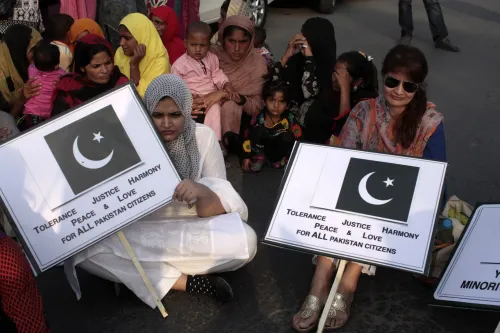
Rights group Voice of Pakistan Minority (VOPM) has accused the state of failing to prevent misuse of blasphemy laws or protect minority communities from mob violence.
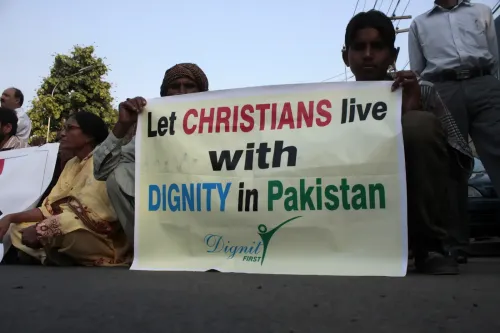
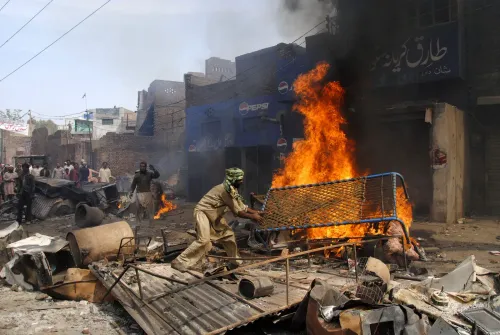
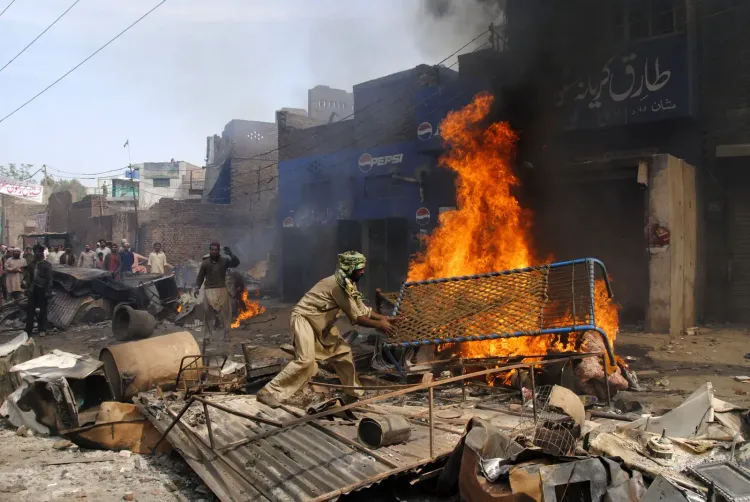
More than 35 Christian families have abandoned their homes in Pakistan's Punjab province following a mob attack in which a group of Muslims set fire to the house and pharmacy of a Christian man accused of blasphemy, according to a report by Christian Daily International-Morning Star News. The incident, which unfolded on 10 October in Gharial Kalan village of Sheikhupura district, has once again drawn attention to the systematic misuse of Pakistan's blasphemy laws against religious minorities.
What Happened in Gharial Kalan
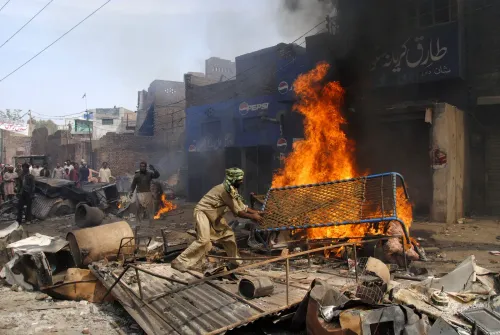
The sequence of events began on Thursday night when local police arrested Kamran Masih, a 40-year-old father of three who operated a small pharmacy in the village, after Muslims in the area accused him of sharing a blasphemous video in WhatsApp groups. News of his arrest spread rapidly through the community. By Friday, dozens of Muslims had gathered outside Masih's shop and his adjacent home to protest, and some members of the crowd proceeded to set both structures on fire.
'As word of Masih's arrest spread, his family and other Christians started fleeing the village, fearing a mob attack,' a source told Christian Daily International-Morning Star News on condition of anonymity. It remained unclear, according to the report, which specific provisions of Pakistan's blasphemy laws had been invoked against Masih.
Police Response and Ground Situation
A large contingent of police personnel was deployed in Gharial Kalan to protect Christian residents and their properties in the aftermath of the attack. An official at the Sheikhupura District police chief's office confirmed that an investigation was underway but declined to elaborate, stating: 'I'm not permitted to share more information due to the sensitivity of the situation.' The displacement of over 35 families — driven by fear of further mob violence — underscores the scale of communal anxiety in the village.
A Pattern of Misuse: What Official Data Shows
The Gharial Kalan incident is part of a broader, documented pattern. According to data presented to Pakistan's Senate Functional Committee on Human Rights, provincial home secretaries and senior police officials confirmed that the majority of the 333 blasphemy cases filed across the country's four provinces over the past five years were found to be false. Punjab recorded the highest number of cases under Section 295-C of the blasphemy law, with 116 cases in five years. Sindh reported 96 cases under Section 295-B and 29 under Section 295-C, while Khyber Pakhtunkhwa logged over 90 cases and Balochistan recorded 28 during the same period.
Provincial officials told the committee that blasphemy allegations were frequently linked to personal vendettas, family disputes, and private conflicts. In many instances, investigations reportedly failed to uncover any evidence supporting the accusations, leading to case dismissals.
Rights Groups Sound the Alarm
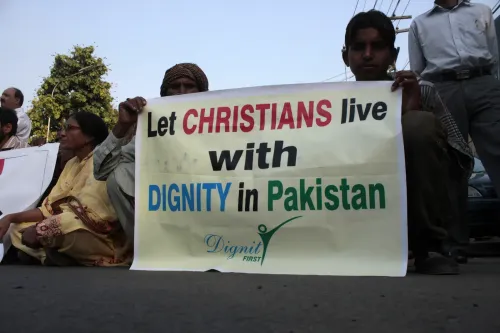
Human rights organisations and legal experts have repeatedly criticised Pakistan's blasphemy laws, warning that they are structurally susceptible to misuse and have disproportionately targeted religious minorities. The Voice of Pakistan Minority (VOPM) has described the laws as among Pakistan's most 'controversial issues', pointing to false allegations, widespread mob violence, and institutional failure to shield minorities from the consequences of such accusations. A leading minority group has separately accused the Pakistani state of failing to curb misuse of these provisions, citing the persistence of mob attacks on accused individuals before any legal verdict is reached.
What Comes Next
The investigation into the arson attack and Masih's arrest is reportedly ongoing. The displacement of over three dozen Christian families signals that normalcy has not returned to Gharial Kalan. Advocacy groups are likely to raise the case internationally, adding pressure on Pakistani authorities to both prosecute the perpetrators of the mob attack and review the use of blasphemy provisions against minority communities. Whether Islamabad will act on parliamentary committee findings that most such cases are fabricated remains to be seen.
Point of View
An arrest that validates the mob's suspicion, and communal violence before any court has ruled. What makes this especially damning is that the Pakistani state's own parliamentary data concedes most such cases are fabricated — yet the institutional reflex is still to arrest the accused rather than restrain the crowd. The gap between what Islamabad acknowledges in committee rooms and what its police do on the ground is where minorities are being destroyed.
NationPress
10 Oct 2026
Frequently Asked Questions
Why did Christian families flee Gharial Kalan in Pakistan?
Over 35 Christian families fled Gharial Kalan village in Sheikhupura district, Punjab, after a Muslim mob set fire to the home and pharmacy of Kamran Masih, a Christian man arrested on blasphemy accusations. The families left fearing further mob violence against the community.
Who is Kamran Masih and what is he accused of?
Kamran Masih is a 40-year-old father of three who ran a small pharmacy in Gharial Kalan village. He was arrested on Thursday night after local Muslims accused him of sharing a blasphemous video in WhatsApp groups. The specific provisions of Pakistan's blasphemy laws invoked against him remained unclear, according to reports.
What do official figures say about blasphemy cases in Pakistan?
Data presented to Pakistan's Senate Functional Committee on Human Rights showed that most of the 333 blasphemy cases filed across four provinces over five years were found to be false. Punjab had the highest count, with 116 cases under Section 295-C alone. Provincial officials confirmed that many allegations were tied to personal feuds and private disputes.
What action has the Pakistani government taken after the Gharial Kalan attack?
Police deployed a large contingent in Gharial Kalan to protect Christian residents and their properties after the arson attack. An investigation is reportedly underway, though a police official declined to share further details citing the sensitivity of the situation.
How have rights groups responded to Pakistan's blasphemy law misuse?
Human rights organisations and the Voice of Pakistan Minority (VOPM) have repeatedly criticised Pakistan's blasphemy laws as among the country's most controversial provisions, warning they are routinely weaponised in personal disputes and disproportionately harm religious minorities. Groups have accused the state of failing to prevent both fabricated accusations and the mob violence that typically follows.