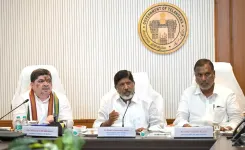
CM Sukhu Launches 'Apna Parivar Sukhi Parivar' for 3 Lakh HP Families
Synopsis
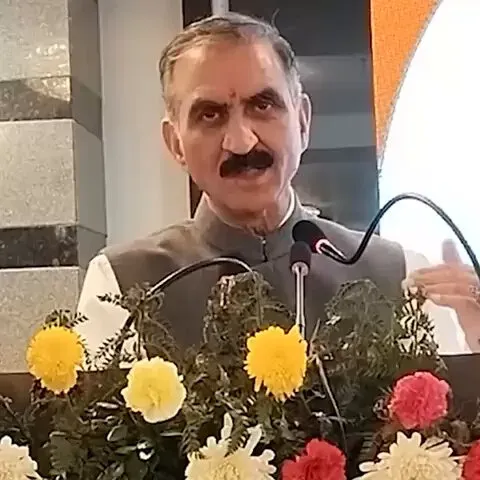
Himachal Pradesh CM Sukhvinder Singh Sukhu announced 'Mukhyamantri Apna Parivar Sukhi Parivar Yojana' on 16 October 2026, promising 3 lakh poor families ₹1,500/month and 300 free electricity units via DBT, with the income eligibility ceiling raised from ₹50,000 to ₹75,000 — above the national benchmark.
Key Takeaways
3 lakh families in Himachal Pradesh will receive ₹1,500 per month in direct cash assistance under the new scheme.
Each eligible household will also get 300 free electricity units per month .
The annual income eligibility ceiling has been raised from ₹50,000 to ₹75,000 , exceeding the national standard of ₹50,000.
Benefits will be delivered through Direct Benefit Transfer (DBT) , e-governance platforms , and Lokmitra Centres across the state.
The scheme is announced by CM Sukhvinder Singh Sukhu , who has led the Congress government in Himachal Pradesh since December 2022 .
The higher income ceiling reflects the state's recognition that national poverty benchmarks do not fully capture Himachal Pradesh's mountain-terrain livelihood realities.
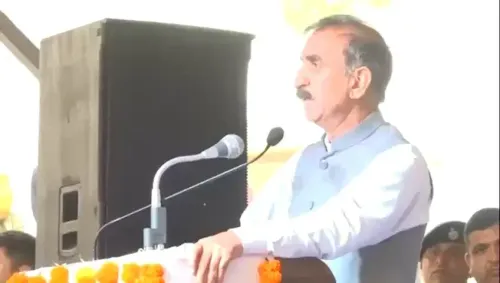
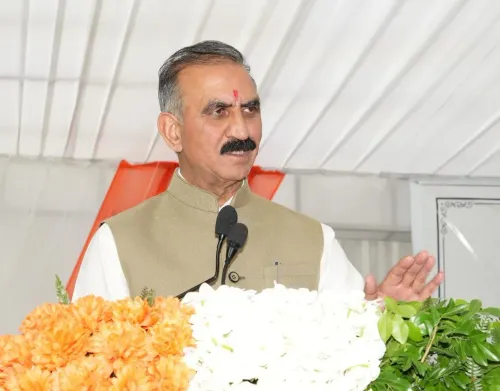
A monthly cash transfer, free electricity, and a wider eligibility net — Himachal Pradesh Chief Minister Sukhvinder Singh Sukhu announced on Friday, 16 October 2026 a new state welfare scheme called 'Mukhyamantri Apna Parivar Sukhi Parivar Yojana' ('Chief Minister — My Family, Happy Family Scheme'), targeting the most economically vulnerable households in the hill state.
What the scheme promises: cash, power, and a broader door
The scheme will deliver ₹1,500 per month in direct cash assistance and 300 free electricity units monthly to 3 lakh (300,000) families across Himachal Pradesh. The cash component will be disbursed through Direct Benefit Transfer (DBT), the national digital payment backbone that routes subsidies straight to bank accounts, cutting out middlemen entirely.
The headline policy decision is the income ceiling. Sukhu is raising the annual income limit for eligibility from ₹50,000 to ₹75,000 — a 50 percent hike that brings an estimated larger cohort of struggling families inside the scheme's perimeter. He pointedly noted that the prevailing income cap across the rest of the country remains at ₹50,000, framing Himachal Pradesh's relaxed threshold as a deliberate, state-specific push beyond the national benchmark.
DBT, e-governance, and Lokmitra Centres as delivery backbone
Implementation will run through three channels: DBT for bank transfers, e-governance platforms, and Lokmitra Centres — the network of citizen-service delivery points that Himachal Pradesh has operated across its hilly districts to bridge the digital-access gap for rural residents. The Lokmitra infrastructure is designed precisely for populations in remote terrain, where physical access to government offices is difficult, making it a logical last-mile conduit for enrolment and grievance redressal.
The Sukhu government, in power since December 2022, has consistently used DBT-linked cash transfers to expand its welfare footprint, following a broader national pattern established since 2013 when the central DBT architecture was first introduced. Himachal Pradesh has also historically run electricity subsidy programmes for lower-income households — the new scheme scales that precedent significantly.
What the eligibility expansion signals
Raising the income ceiling above the national standard is a consequential choice. In a state defined by its mountainous geography, seasonal livelihoods, and limited industrial base, a household earning just over ₹50,000 a year may still face genuine energy poverty and food insecurity. By pegging the limit at ₹75,000, the state government is explicitly acknowledging that the national poverty line does not map cleanly onto Himachal Pradesh's cost-of-living and livelihood realities.
The questions that will define the scheme's success are now practical: how quickly will beneficiary lists be finalised, when will the first DBT disbursements hit accounts, and what will the annual budget outlay look like in upcoming state budget documents? The assembly will be the first stress-test for those numbers.
Three lakh families, a higher income bar, free power, and a direct cash line to the bank. CM Sukhu has drawn a clear line between what Himachal Pradesh is willing to guarantee its poorest households and what the rest of the country currently offers — the delivery apparatus will now have to match the promise.
Point of View
Arriving less than four years into a first term in a state with high public expectations of its government, the announcement serves both a social and an electoral signalling function. The reliance on DBT and Lokmitra Centres reflects the pragmatic consensus around digitised delivery that transcends party lines nationally, but the 50 percent income ceiling hike is a distinctly political act. The real test will be fiscal: whether upcoming budget allocations can sustain cash and power subsidies at this scale without crowding out the state's capital expenditure in an already tight revenue environment.
NationPress
16 Oct 2026
Frequently Asked Questions
What is Mukhyamantri Apna Parivar Sukhi Parivar Yojana?
'Mukhyamantri Apna Parivar Sukhi Parivar Yojana' is a new welfare scheme announced by Himachal Pradesh CM Sukhvinder Singh Sukhu that will provide ₹1,500 per month in cash and 300 free electricity units monthly to 3 lakh poor families in the state.
Who is eligible for Himachal Pradesh's new welfare scheme?
Families with an annual income of up to ₹75,000 will be eligible — a threshold the CM has raised from the earlier ₹50,000 limit, which remains the national standard, to bring more needy households into the scheme.
How will the ₹1,500 monthly benefit be paid to families?
The cash assistance will be disbursed through Direct Benefit Transfer (DBT) directly into beneficiaries' bank accounts, with enrolment and services also available through Lokmitra Centres and e-governance platforms across Himachal Pradesh.
How many free electricity units will families get under this scheme?
Each eligible family will receive 300 free electricity units per month under the 'Mukhyamantri Apna Parivar Sukhi Parivar Yojana'.
Why is Himachal Pradesh setting a higher income limit than the national standard?
CM Sukhu has raised the income ceiling to ₹75,000 annually — above the national benchmark of ₹50,000 — arguing that more needy families in the state should be able to access the scheme's benefits, acknowledging the particular livelihood challenges in Himachal Pradesh's hilly terrain.