CM Rekha Gupta Gifts 1,400 Bicycles to Delhi Girls on Navratri
Synopsis
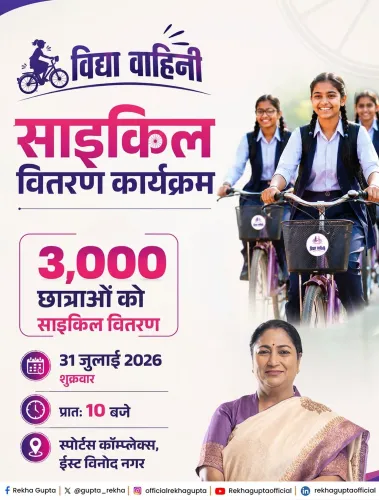
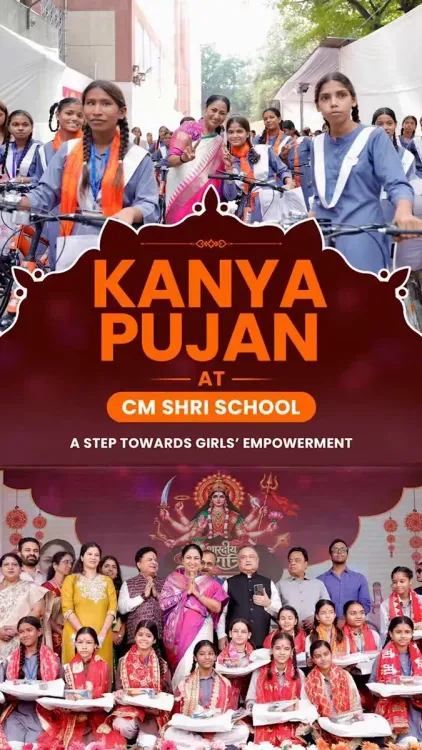
On Shardiya Navratri 2026, Delhi Chief Minister Rekha Gupta distributed 1,400 bicycles to girls in the capital during Kanya Pujan celebrations, linking cultural tradition with a concrete mobility intervention aimed at improving girls' education access.
Key Takeaways
1,400 bicycles were distributed to Delhi girls by CM Rekha Gupta on October 16, 2026 , during Shardiya Navratri .
The initiative was paired with Kanya Pujan , the Navratri ritual of honouring young girls as symbols of the divine feminine.
CM Gupta posted: 'Betiyon Ka Samman Karoge to Desh Aage Badhega' — 'If you honour daughters, the nation will move forward.' Bihar's Mukhyamantri Balika Cycle Yojana (2006) established the precedent for bicycle distribution improving girls' school enrolment in India.
The move aligns with the Central government's Beti Bachao Beti Padhao scheme, launched in 2015 , to promote the girl child's education and welfare.
Any scale-up of the scheme or school retention data from Delhi will indicate the initiative's real-world impact beyond the festival occasion.
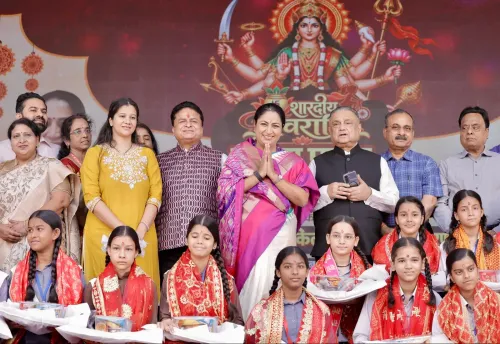
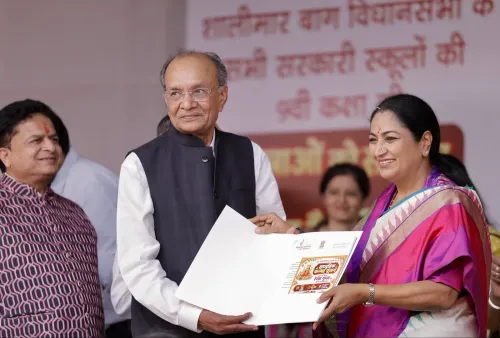
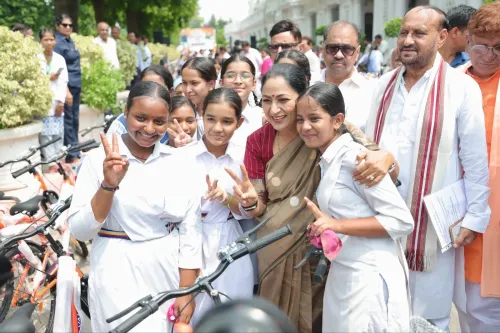
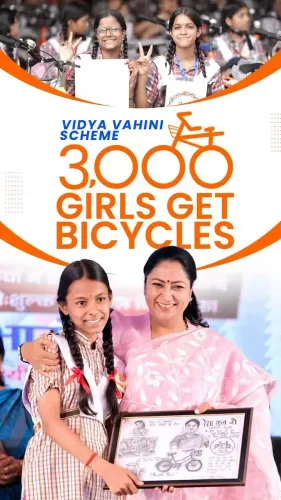
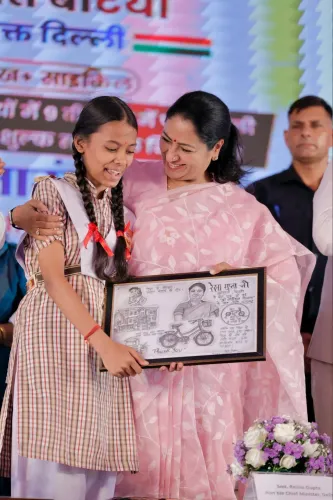
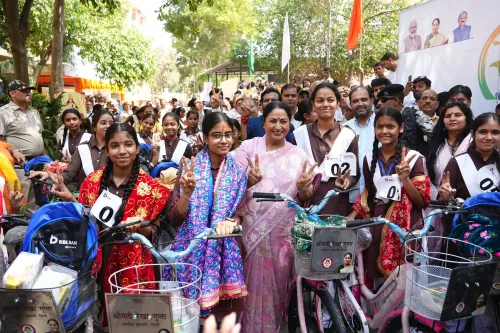
A festival of faith and a gesture of mobility converged on Friday, October 16, 2026, as Delhi Chief Minister Rekha Gupta marked Shardiya Navratri by distributing 1,400 bicycles to girls in the capital — pairing the ancient ritual of Kanya Pujan with a tangible push for their independence.
Sharing the moment on X, CM Gupta framed the initiative with a pointed declaration: 'Betiyon Ka Samman Karoge to Desh Aage Badhega' — 'If you honour daughters, the nation will move forward.' The message wove together two distinct threads: the spiritual reverence of Navratri and the practical arithmetic of access — a bicycle, in many parts of India, is the difference between a girl who reaches school and one who does not.
Kanya Pujan and the symbolism of two-wheeled freedom
Kanya Pujan is a Navratri tradition in which young girls are worshipped as embodiments of the divine feminine — fed, honoured, and sent off with gifts. By anchoring a bicycle distribution to this ritual, the Delhi government leaned into a well-worn but effective political grammar: wrapping welfare in cultural legitimacy. The girls receiving the cycles were not just beneficiaries of a scheme; they were, at least symbolically, receiving an offering.
The bicycle-for-girls model has a documented track record in India. Bihar's Mukhyamantri Balika Cycle Yojana, launched in 2006, is among the most cited examples — credited with a measurable rise in girls' secondary school enrolment and a drop in early dropout rates in rural districts. Delhi's move draws from the same playbook, applied now to an urban and peri-urban context where distance, safety, and family reluctance still keep girls off campuses.
Where this fits in Delhi's girl-child agenda
The initiative runs alongside the Central government's flagship Beti Bachao Beti Padhao scheme, launched in 2015, which targets child sex ratio improvement and girls' education access. State-level distributions like this one are often co-branded with or supported under that broader umbrella, channelling federal momentum into local, visible action. Delhi — dense, surveilled, and politically contested — offers a different terrain than Bihar's villages, but the core barrier remains: mobility means agency.
Whether the 1,400 cycles form the first tranche of a larger rollout, or represent the full scope of this Navratri initiative, will likely become clearer in the coming days. School retention data for Delhi girls, and any follow-up announcement on scheme scale-up, will be the real test of impact beyond the optics of a festival moment.
For now, the signal is unmistakable — on a day the city worshipped its daughters, it also handed them wheels.
Point of View
And tying girls' mobility to Kanya Pujan is a deliberate fusion of those narratives. With the Beti Bachao Beti Padhao scheme now over a decade old, state-level actions like this serve as visible proof-of-commitment markers, especially in an electorally sensitive urban capital. The real policy test will be whether the distribution translates into measurable retention gains or remains a symbolic, one-cycle gesture.
NationPress
16 Oct 2026
Frequently Asked Questions
What did Delhi CM Rekha Gupta announce on Navratri 2026?
Delhi Chief Minister Rekha Gupta distributed 1,400 bicycles to girls in Delhi on October 16, 2026 , during Shardiya Navratri , pairing the gesture with the Kanya Pujan ritual.
What is Kanya Pujan and why is it significant?
Kanya Pujan is a traditional Navratri ritual in which young girls are worshipped as incarnations of the goddess — fed, honoured, and given gifts — symbolising reverence for the divine feminine.
Why do state governments distribute bicycles to girls in India?
Bicycles address a key barrier to girls' education: physical distance and mobility. Bihar's Mukhyamantri Balika Cycle Yojana (2006) demonstrated that free cycles can significantly improve girls' secondary school enrolment and reduce dropout rates.
What is the Beti Bachao Beti Padhao scheme?
Beti Bachao Beti Padhao is a Central government scheme launched in 2015 to improve the child sex ratio and promote education access for girls across India.
Will Delhi expand the bicycle scheme for girls beyond Navratri 2026?
No official announcement on a larger rollout has been made yet. Follow-up announcements and school retention data from Delhi will indicate whether this Navratri distribution is the start of a broader scheme.