Jal Shakti Minister Paatil Reviews NRCD River Plans
Synopsis
Union Jal Shakti Minister C. R. Paatil chaired a detailed review of NRCD schemes on October 16, 2026, with the Wildlife Institute of India presenting scientific assessments of aquatic biodiversity and river health across India's major rivers.
Key Takeaways
Paatil reviewed National River Conservation Directorate (NRCD) programmes under the Jal Shakti Ministry on October 16, 2026 .
The Wildlife Institute of India (WII) , based in Dehradun , presented its ongoing scientific assessments of aquatic biodiversity and ecological health across major Indian rivers.
The ministry's stated priorities span river cleanliness, natural ecological balance, and aquatic biodiversity conservation — going beyond traditional pollution abatement.
The Namami Gange programme , launched in 2014 , expanded NRCD's mandate to include ecosystem restoration alongside engineering-based pollution control.
WII assessment reports, once released, could inform budgetary allocations or scheme changes in the next Union Budget or parliamentary session.
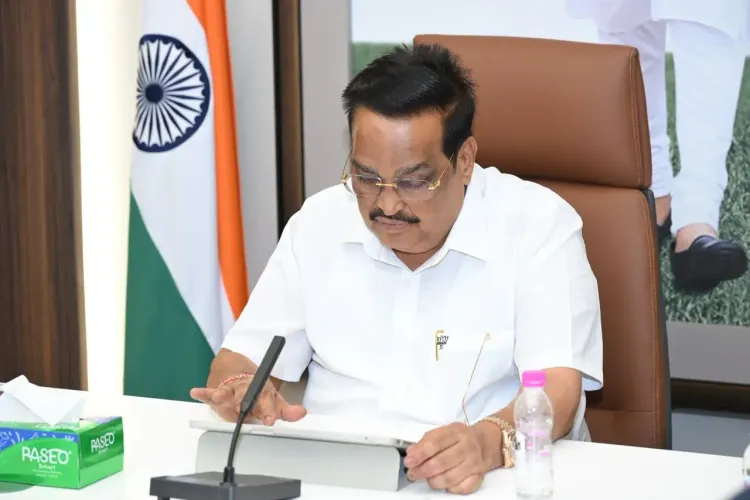
India's rivers are getting a scientific reckoning. On Friday, October 16, 2026, Union Jal Shakti Minister C. R. Paatil chaired a detailed review of the National River Conservation Directorate (NRCD) — the nodal body under his ministry responsible for river pollution abatement and ecosystem restoration — and signalled that aquatic biodiversity is now front and centre of the government's conservation agenda.
WII Steps In with Science
The review meeting was not just an administrative audit. The Wildlife Institute of India (WII), the Dehradun-based scientific body, delivered a presentation on its ongoing collaborative work with the Jal Shakti Ministry. WII is currently conducting systematic scientific assessments across stretches of India's major rivers — mapping aquatic biodiversity, evaluating ecological conditions, and diagnosing overall river health. The goal: generate hard data to drive effective conservation decisions, not just policy intentions.
Paatil posted in Hindi, stating that 'the cleanliness of the country's rivers, their natural ecological balance, and the conservation of aquatic biodiversity is our primary priority.' The minister added that the ministry is 'committed to preserving the natural character, ecological balance, and biodiversity of rivers alongside their cleanliness' — a framing that deliberately widens the mandate beyond sewage treatment.
From Pipes to Ecosystems: NRCD's Expanding Brief
The NRCD was historically focused on engineering-led pollution abatement — intercepting drains, setting up sewage treatment plants, managing ghats. That mandate expanded significantly after the Namami Gange programme was launched in 2014, which folded biodiversity conservation and river ecosystem restoration into the mainstream policy framework. The current review reflects that evolution: the ministry is now asking not just 'is the water clean?' but 'is the river alive?'
The shift matters enormously for species like the Gangetic river dolphin, freshwater turtles, and migratory fish populations whose habitats depend on maintaining natural river flows and sediment dynamics — factors that infrastructure-heavy conservation models often overlook. WII's scientific assessments are positioned to fill precisely that knowledge gap.
PM Modi's River Vision as the Policy Frame
Paatil explicitly anchored the review in Prime Minister Narendra Modi's leadership, stating that the Jal Shakti Ministry remains committed under his 'visionary guidance' to keeping India's rivers 'clean, healthy, and vibrant.' That phrase — swachh, swasth aur jīvant (clean, healthy, and vibrant) — sets a three-dimensional benchmark that integrates water quality, ecological health, and biological activity.
What comes next will define whether today's review translates into action. The WII assessment reports on major rivers, once finalised, could feed directly into budgetary allocations or scheme modifications in the next Union Budget or parliamentary session. The science is being gathered. The political signal has been sent.
Point of View
With WII's biodiversity assessments giving the government a defensible, data-driven basis for future conservation spending. Anchoring the review to PM Modi's vision is a familiar political framing, but the substantive inclusion of WII as a scientific partner marks a genuine institutional shift. The real test will come when WII's reports land: whether they trigger meaningful scheme revisions and budget commitments, or remain shelved as advisory inputs. For a ministry that also oversees large dam and irrigation infrastructure, balancing ecological health against water-use demands will be the defining tension going forward.
NationPress
16 Oct 2026
Frequently Asked Questions
What is the National River Conservation Directorate (NRCD)?
The NRCD is a directorate under India's Jal Shakti Ministry responsible for implementing river pollution abatement and conservation schemes across the country, including biodiversity and ecosystem restoration mandates expanded after the Namami Gange programme in 2014.
What did C. R. Paatil announce about river conservation in October 2026?
On October 16, 2026, Jal Shakti Minister C. R. Paatil chaired a detailed review of NRCD programmes and received a presentation from the Wildlife Institute of India on scientific assessments of aquatic biodiversity and ecological health in India's major rivers.
What role does the Wildlife Institute of India play in river conservation?
The Wildlife Institute of India (WII), based in Dehradun, is conducting scientific assessments of aquatic biodiversity, ecological conditions, and river health across stretches of India's major rivers in collaboration with the Jal Shakti Ministry, to guide evidence-based conservation decisions.
What is the Namami Gange programme?
Namami Gange is a flagship river rejuvenation programme launched in 2014 that expanded India's river conservation approach from engineering-focused pollution control to include ecological restoration, natural flow preservation, and biodiversity conservation.
What are the next steps after the NRCD review meeting?
The WII's scientific assessments of major rivers, once completed and published, are expected to inform potential budgetary allocations or modifications to existing conservation schemes in India's next Union Budget or parliamentary session.