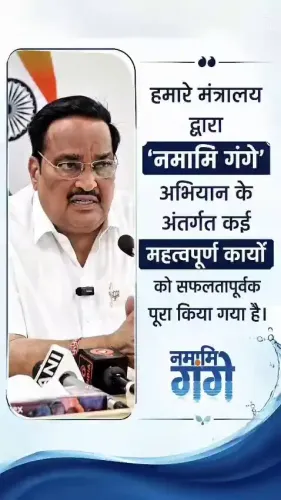
Jal Shakti Minister Paatil hails Ganga revival in Kashi
Synopsis
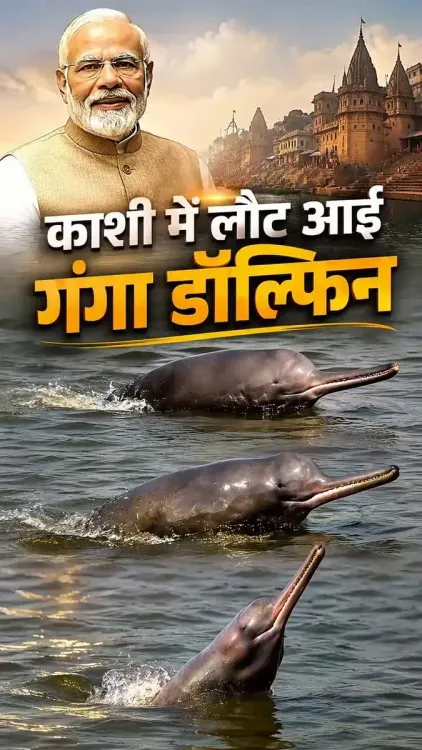
Union Jal Shakti Minister C. R. Paatil has highlighted the return of Ganga dolphins, turtles and rare fish to Varanasi's ghats, calling it the finest outcome of the Rs 20,000-crore Namami Gange mission launched under PM Modi in 2014.
Key Takeaways
Paatil , Union Minister of Jal Shakti, announced on 18 June 2026 that aquatic life has returned to the Ganga at Varanasi after years of absence.
Species reportedly sighted near Banaras ghats include Ganga dolphins , turtles and several rare fish species.
The Namami Gange programme was approved in 2014 with an outlay of Rs 20,000 crore to intercept sewage and restore the river ecosystem.
Stopping untreated sewage from flowing directly into the Ganga is cited as the key intervention behind the ecological recovery.
The Ganga river dolphin is India's National Aquatic Animal and a Schedule-I protected species, making its sighting a significant ecological indicator.
Independent biodiversity audits and the next Namami Gange annual progress report will be critical to verifying the claims.
Union Jal Shakti Minister C. R. Paatil on Thursday, 18 June 2026, highlighted what he called the most beautiful outcome of the Namami Gange mission — the return of aquatic life to the Ganga at Varanasi (Kashi), crediting the programme's sewage-interception work under Prime Minister Narendra Modi.
Context
Posting in Hindi, Minister Paatil wrote: 'क्या आप जानते हैं कि काशी में हमारी गंगा मैया अब इतनी निर्मल हो चुकी हैं कि यहाँ सालों बाद जलीय जीव वापस लौट आए हैं?' ('Did you know that our Ganga Maiya in Kashi has become so pure that aquatic life has returned here after many years?'). He described sightings of Ganga dolphins, turtles and several rare fish species near the ghats of Banaras, attributing the change to stopping untreated sewage from flowing directly into the river.
Paatil framed the development not merely as water purification but as the revival of 'our entire nature and ecosystem,' closing with the invocation 'Har Har Mahadev' — a phrase associated with Varanasi's Shaivite identity and frequently used in political communication about the city.
Policy Backdrop
The Namami Gange programme was approved by the Union Cabinet in 2014 with an outlay of Rs 20,000 crore, later expanded under the Jal Shakti Ministry that Paatil now heads. Its mandate covers sewage infrastructure, river-surface cleaning, and biodiversity monitoring across the Ganga basin — a significant upgrade from earlier efforts.
India's first major river-cleaning push, the Ganga Action Plan Phase-I, was launched in 1985 to intercept sewage at Varanasi and other towns. The National Ganga River Basin Authority, constituted in 2009, shifted the approach toward basin-wide pollution control before Namami Gange consolidated these efforts. The emphasis on visible ecological indicators — dolphin sightings in particular — has become a signature metric for the programme's communication strategy.
Varanasi holds special significance in this policy story: it is the parliamentary constituency of Prime Minister Modi and has been a primary site for Namami Gange interventions, including the construction and upgrading of sewage treatment plants along the riverfront.
Stakeholders and Impact
Residents of Varanasi and the millions of pilgrims who visit the city's ghats annually stand to benefit most directly from improved river quality. The return of the Ganga river dolphin — a Schedule-I protected species under the Wildlife Protection Act and India's National Aquatic Animal — is widely used as a biological indicator of river health, since the species is sensitive to pollution and reduced water flow.
Beyond Varanasi, the broader Ganga basin supports the livelihoods of an estimated 40 crore people across several states. Fishermen, farmers dependent on riverine groundwater, and communities practising ritual bathing all have a direct stake in the river's ecological condition. Biodiversity recovery, if sustained and independently verified, would represent a measurable return on the programme's infrastructure investment.
What's Next
Attention will now turn to the next Namami Gange annual progress report and any parliamentary scrutiny of third-party biodiversity audits for the Ganga main stem. Independent ecological assessments will be critical to substantiating the claims of species return that the Minister has highlighted. The government's ability to present verified data on dolphin populations and water-quality indices will shape the programme's credibility as it enters its second decade.
With the Jal Shakti Ministry positioning ecological revival as the centrepiece of Namami Gange's narrative, the pressure to back visible milestones with rigorous, publicly available monitoring data is set to intensify.
Point of View
Targeting both the devout and the environmentally conscious voter simultaneously. By foregrounding dolphin and turtle sightings rather than sewage-treatment capacity figures, the Jal Shakti Ministry is pivoting Namami Gange's communication from engineering metrics to living proof of impact, a harder claim to dispute in the public arena. The choice of Varanasi — PM Modi's own constituency — as the showcase site is politically deliberate, reinforcing the government's narrative of transformative delivery in its most symbolically charged urban constituency. The credibility of this narrative, however, now rests on whether independent ecological monitoring data can substantiate the sightings at scale.
NationPress
19 Sept 2026
Frequently Asked Questions
What is the Namami Gange mission and what has it achieved?
Namami Gange is a flagship central programme approved in 2014 with an outlay of Rs 20,000 crore to clean and rejuvenate the Ganga river through sewage infrastructure, river-surface cleaning and biodiversity monitoring. Union Jal Shakti Minister C. R. Paatil has cited the return of Ganga dolphins, turtles and rare fish to Varanasi's ghats as one of its most visible outcomes.
Why are Ganga dolphins significant to river health?
The Ganga river dolphin is India's National Aquatic Animal and a Schedule-I protected species under the Wildlife Protection Act. Because it is highly sensitive to pollution and reduced water flow, its presence is used as a biological indicator that water quality has improved significantly.
What role has Varanasi played in the Namami Gange programme?
Varanasi has been a primary site for Namami Gange interventions, including the construction and upgrading of sewage treatment plants along its riverfront. It is also the parliamentary constituency of Prime Minister Narendra Modi, giving the city heightened political and symbolic importance in the programme's narrative.
Who is C. R. Paatil and what ministry does he head?
C. R. Paatil is the Union Minister of Jal Shakti and a senior BJP leader who previously served as BJP Gujarat state president. His ministry is responsible for implementing river-rejuvenation schemes including Namami Gange.
How can the claims of aquatic life returning to the Ganga be verified?
Independent biodiversity audits and the next Namami Gange annual progress report are the primary mechanisms for verification. Parliamentary questions on third-party ecological monitoring of the Ganga main stem are also expected to test the government's data.