Jal Shakti Minister Paatil Holds Major Water Dept Review
Synopsis
Union Jal Shakti Minister C. R. Paatil on October 23 held a wide-ranging review with Department of Water Resources HoDs, ordering time-bound, quality-driven project execution and reaffirming the government's commitment to water security in partnership with states.
Key Takeaways
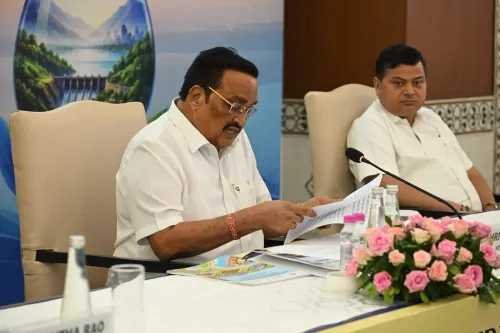
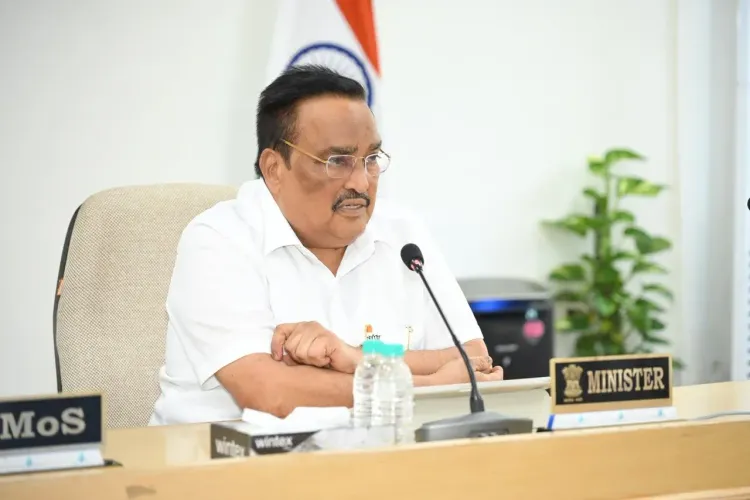
Paatil chaired a detailed review meeting with Heads of Departments of the Department of Water Resources, River Development and Ganga Rejuvenation on October 23, 2026 .
The minister directed all departmental work to be completed in a time-bound, quality-driven, and results-oriented manner.
The review covered current activities, progress of ongoing projects, and future action plans across the department's portfolio.
The Ministry of Jal Shakti , formed in May 2019 , merged water resources and drinking water functions to enable integrated governance.
Key flagship missions under the ministry include Namami Gange (launched 2014) and Jal Shakti Abhiyan (launched 2019).
Paatil reaffirmed the government's commitment to working with state governments to ensure water security and proper resource management.
India's water future got a hard look on Friday, October 23, 2026, when Union Jal Shakti Minister C. R. Paatil convened a wide-ranging review meeting with the Heads of Departments (HoDs) of the Department of Water Resources, River Development and Ganga Rejuvenation — drilling into current activities, project timelines, and future action plans in one sitting.
What the Minister demanded in the room
Paatil's directive was unambiguous: every task must be completed in a 'time-bound, quality-driven, and results-oriented manner' — समयबद्ध, गुणवत्तापूर्ण एवं परिणामोन्मुखी. The review covered ongoing projects across the department's portfolio and laid out forward-looking action plans. No soft deadlines, no vague intent.
The minister reinforced the government's commitment to working in lockstep with state governments to ensure 'proper management of water resources and water security.' In India's federal water governance framework, that coordination is everything — rivers cross state lines, aquifers respect no administrative boundary, and without state buy-in, central schemes stall.
Jal Shakti's policy architecture and where this fits
The Ministry of Jal Shakti was carved out in May 2019 by merging the erstwhile Ministry of Water Resources, River Development and Ganga Rejuvenation with the Ministry of Drinking Water and Sanitation — a structural bet that unified water supply and water management under one roof would produce faster, integrated results. That institutional logic is precisely what Wednesday's meeting operationalises: a single minister pulling every departmental thread at once.
Underpinning the review are two flagship missions. The Namami Gange programme, launched in 2014, remains the government's most visible river-conservation commitment — targeting pollution abatement, biodiversity restoration, and riverfront development along the Ganga basin. The Jal Shakti Abhiyan, rolled out in 2019, extended the government's reach into grassroots water conservation and groundwater recharge across states.
Modi's 'Viksit Bharat' framing and water security
Paatil explicitly anchored the review to Prime Minister Narendra Modi's vision, stating the government is 'continuously working' to realise goals of water conservation, efficient water management, and the Viksit Bharat — 'Developed India' — resolve. That framing is deliberate: successive BJP governments have positioned water security not as a welfare concern but as a structural pillar of national development. Scarcity costs GDP. Pollution undermines public health. Floods devastate infrastructure. Water is economy.
With a parliamentary session on the horizon, follow-up state coordination meetings and mid-term progress reports on river development and Ganga projects are expected to emerge as the next pressure points for the ministry.
One ministerial review meeting is a routine event. A pattern of them — with departments held to time-bound, outcome-specific mandates — is how policy actually moves.
Point of View
The minister is applying the same administrative pressure BJP governments have used to push flagship schemes past planning stages into measurable delivery. The explicit link to PM Modi's 'Viksit Bharat' framing reflects a broader political strategy to position water security as a development dividend, not just a welfare obligation. With state coordination identified as a priority, the real test will be whether inter-governmental friction over water-sharing and project implementation can be navigated in the coming months.
NationPress
23 Oct 2026
Frequently Asked Questions
What did C. R. Paatil's Jal Shakti review meeting on October 23 cover?
The meeting reviewed current activities and ongoing project progress of the Department of Water Resources, River Development and Ganga Rejuvenation, and set time-bound, results-oriented directives for all pending work.
What is the Ministry of Jal Shakti and when was it formed?
The Ministry of Jal Shakti was formed in May 2019 by merging the Ministry of Water Resources, River Development and Ganga Rejuvenation with the Ministry of Drinking Water and Sanitation to unify India's water governance.
What is the Namami Gange programme?
Namami Gange is an integrated conservation mission launched in 2014 for the Ganga river basin, targeting pollution abatement, biodiversity restoration, and riverfront development.
What is Jal Shakti Abhiyan?
Jal Shakti Abhiyan is a campaign launched in 2019 to promote water conservation and groundwater management across Indian states, driven by the central government in partnership with state administrations.
Why does the Jal Shakti Ministry coordinate with state governments on water projects?
Water resources in India are a concurrent subject — rivers cross state boundaries and groundwater levels vary regionally — making state-centre coordination essential for effective implementation of conservation and management schemes.