Jal Shakti Minister Paatil Vows Water Diversion Work Done in 2 Years
Synopsis
Union Jal Shakti Minister C. R. Paatil on June 9, 2026 pledged to complete a water diversion project within one-and-a-half to two years, acknowledging that unfavourable terrain poses significant challenges but asserting the work will be delivered on schedule.
Key Takeaways
Union Jal Shakti Minister C.
Paatil announced on June 9, 2026 that a water diversion project will be completed in one-and-a-half to two years .
The minister explicitly acknowledged that the geographical conditions are not favourable for diverting water at the project site.
The Ministry of Jal Shakti , formed in 2019 , is the nodal body overseeing river development and water diversion in India.
India's river interlinking agenda traces back to the National Water Development Agency established in 1982 , with a Supreme Court directive in 2002 pushing for faster implementation.
Key beneficiaries include drought-prone farmers and water-scarce states dependent on redirected river flows for irrigation.
Completion within the stated timeline would fall between late 2027 and mid-2028 , ahead of the next general election cycle.
Union Jal Shakti Minister C. R. Paatil on Tuesday, June 9, 2026, declared that a water diversion infrastructure project will be completed within the next one-and-a-half to two years, even though the terrain poses significant geographical challenges to redirecting water flows.
Context
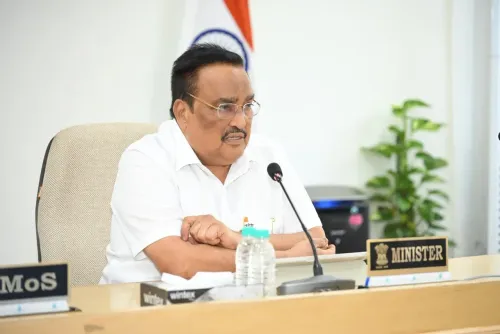
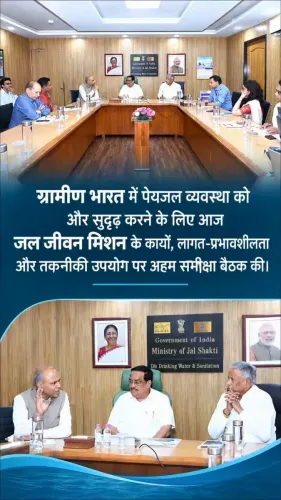
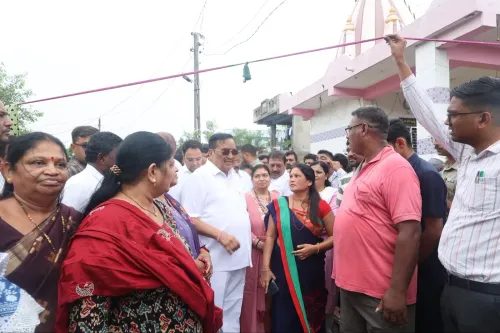
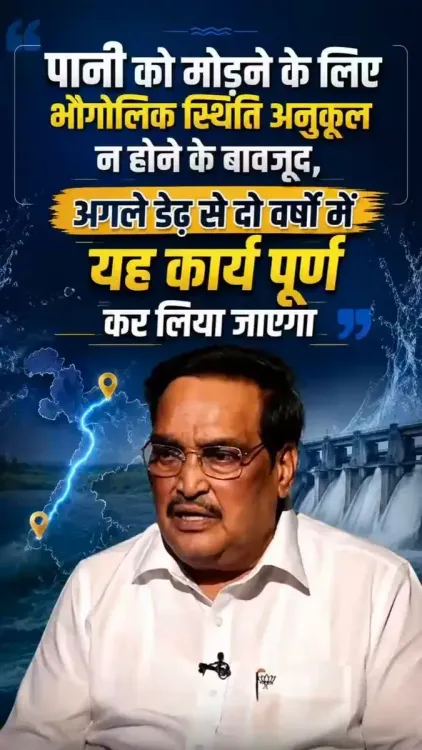
In a post on X, Minister Paatil stated — 'pani ko modne ke liye bhaugolik sthiti anukul na hone ke bavajood' ('despite the geographical conditions not being favourable for diverting water') — that the work will nonetheless be completed within the stipulated window. The post was accompanied by a video, the contents of which provide additional visual context to the announcement. The minister did not name the specific project, rivers, or states involved in the post.
The statement signals a firm political commitment to pushing through a technically demanding water infrastructure task against natural topographic constraints. Such declarations from the Jal Shakti Ministry carry weight, as the ministry is the nodal body for all river development, irrigation, and national water policy in India.
Policy Backdrop
The Ministry of Jal Shakti was formed in 2019 by merging the erstwhile ministries of water resources and drinking water and sanitation, consolidating India's water governance under a single umbrella. The ministry oversees the country's most ambitious water infrastructure agenda, including river interlinking and diversion schemes.
India's pursuit of large-scale river diversion dates to the 1980s, when the National Water Development Agency was established in 1982 to assess the feasibility of linking river basins. A landmark Supreme Court order in 2002 directed the central government to accelerate implementation of such projects. Since then, successive governments have advanced individual river-link components despite persistent topographic, environmental, and inter-state hurdles.
The broader National River Linking Project envisions transferring surplus water from flood-prone basins to deficit ones through a network of canals and tunnels, with the twin goals of expanding irrigated agriculture and mitigating floods and droughts simultaneously.
Stakeholders and Impact
The primary beneficiaries of water diversion infrastructure are drought-prone farming communities and water-scarce states that depend on monsoon-fed rivers for irrigation and drinking water. Completing such a project within two years would directly affect agricultural productivity and rural livelihoods in the targeted region.
Geographical obstacles to water diversion — such as unfavourable gradients, hard-rock terrain, or the absence of natural elevation differentials — typically require costly tunnelling or pumping infrastructure, raising both engineering complexity and project expenditure. Minister Paatil's acknowledgement of these constraints, paired with a firm timeline, suggests that engineering solutions and funding are already being mobilised.
What's Next
Observers will watch for progress updates on the specific river-link component referenced by the minister, as well as related budgetary allocations or environmental and inter-state clearances in upcoming parliamentary sessions. If the one-and-a-half to two-year deadline holds, completion would fall between late 2027 and mid-2028 — a period that coincides with the run-up to the next general election cycle, giving the project added political salience.
The ministry's ability to deliver on this timeline against acknowledged geographical odds will be closely tracked as a test of the Jal Shakti framework's capacity to execute complex, terrain-challenged water infrastructure at scale.
Point of View
The minister pre-empts criticism while framing any completion as an achievement against the odds. The statement fits a broader pattern of the Jal Shakti Ministry using defined timelines to build accountability and public visibility around water infrastructure. How the ministry navigates inter-state negotiations and environmental clearances in the coming months will determine whether this pledge becomes a governance milestone or a political liability.
NationPress
24 Oct 2026
Frequently Asked Questions
What did Jal Shakti Minister C. R. Paatil announce about water diversion?
Minister C. R. Paatil announced on June 9, 2026 that a water diversion project will be completed within one-and-a-half to two years, despite unfavourable geographical conditions at the site.
Which project is C. R. Paatil referring to in his water diversion post?
The minister did not name a specific project or rivers in the post, so the exact scheme cannot be confirmed. The announcement relates to water diversion infrastructure under the Jal Shakti Ministry's broader mandate.
What is the National River Linking Project in India?
The National River Linking Project aims to transfer surplus water from flood-prone river basins to water-deficit ones through canals and tunnels, supporting irrigation and flood control across India.
When was the Ministry of Jal Shakti formed?
The Ministry of Jal Shakti was formed in 2019 by merging the ministries of water resources and drinking water and sanitation into a single body overseeing India's water policy.
Why is water diversion difficult in certain parts of India?
Unfavourable terrain — such as hard rock, flat gradients, or the absence of natural elevation differentials — makes it costly and technically complex to redirect river flows, often requiring tunnelling or pumping solutions.