Paatil Champions Namami Gange as Historic Ganga Mission

Synopsis
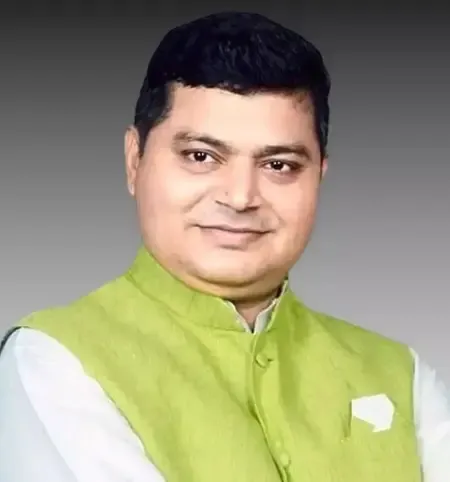
Union Jal Shakti Minister C. R. Paatil invoked Namami Gange as a grand campaign to restore the Ganga's purity under PM Modi's leadership, reaffirming the Rs 20,000-crore programme as a flagship mission linking river conservation with national prosperity.
Key Takeaways
Union Jal Shakti Minister C.
Paatil publicly championed the Namami Gange programme on June 9, 2026 , calling it a 'maha-abhiyan' to restore the Ganga's cleanliness and sanctity.
He credited Prime Minister Narendra Modi with leading what he termed a historic mission of conservation, rejuvenation and purification of the river.
The Namami Gange programme was approved by the Union Cabinet in May 2015 with an outlay of Rs 20,000 crore .
The Ministry of Jal Shakti administers the scheme across basin states including Uttarakhand, Uttar Pradesh, Bihar, Jharkhand and West Bengal.
Paatil's post used the phrase 'स्वच्छ गंगा, समृद्ध भारत' — 'Clean Ganga, Prosperous India' — framing environmental restoration as a driver of national prosperity.
Next-phase funding and state-level progress on sewage treatment plants remain key benchmarks to watch for the programme.
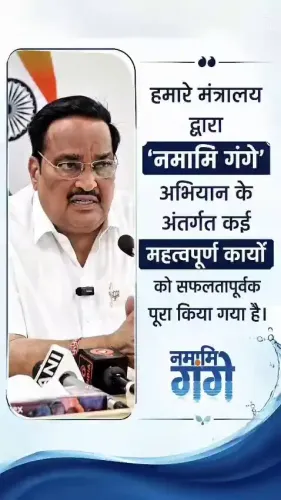
Union Jal Shakti Minister C. R. Paatil on Tuesday, June 9, 2026 invoked the Namami Gange programme as a 'maha-abhiyan' — a grand campaign — to restore the cleanliness and sanctity of the Ganga, crediting Prime Minister Narendra Modi with leading what he described as a historic mission of conservation, rejuvenation and purification of the river.
In the post, Paatil wrote: 'माँ गंगा की स्वच्छता और पवित्रता को लौटाने का महा-अभियान: नमामि गंगे!' — 'The grand campaign to restore the cleanliness and purity of Mother Ganga: Namami Gange!' — and closed with the phrase 'स्वच्छ गंगा, समृद्ध भारत', meaning 'Clean Ganga, Prosperous India.'
Context
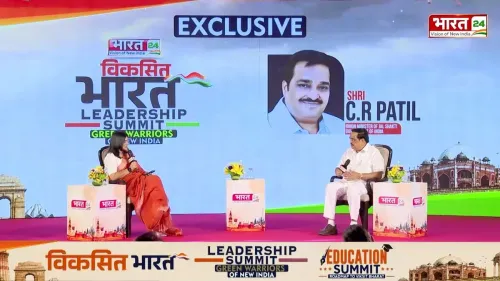
The post comes from the minister who heads the Ministry of Jal Shakti, the nodal authority responsible for implementing Namami Gange across the river's basin states. Paatil, a senior BJP leader and former Gujarat state party president, has consistently positioned the programme as a centrepiece of the government's environmental and cultural agenda. The accompanying video, shared on his official X account, underscores the ministry's continued outreach on river rejuvenation.
Policy Backdrop
The Namami Gange programme was approved by the Union Cabinet in May 2015 with an initial outlay of Rs 20,000 crore, making it one of the largest river conservation initiatives in India's history. It subsumed and significantly scaled up earlier efforts, including the Ganga Action Plan Phase-I launched in 1986 and the National Ganga River Basin Authority constituted in 2009. The programme's mandate spans sewage treatment infrastructure, riverfront development, biodiversity conservation and public awareness campaigns across basin states.
The Ministry of Jal Shakti administers the scheme and coordinates with state governments on the construction and operationalisation of sewage treatment plants — a key metric for measuring the programme's pollution-abatement progress. The dual framing of environmental restoration and cultural reverence for the Ganga has been a consistent communication thread since the programme's inception.
Stakeholders and Impact
The Ganga basin is home to hundreds of millions of residents across states including Uttarakhand, Uttar Pradesh, Bihar, Jharkhand and West Bengal. Farmers dependent on the river for irrigation, pilgrims who visit its ghats, and urban communities relying on it as a drinking-water source all stand as primary stakeholders in the programme's outcomes. The scheme's success is therefore measured not only in ecological indicators but also in the lived experience of communities along the river's course.
Paatil's public communication reinforces the government's narrative that the Ganga's revival is inseparable from India's broader prosperity — a framing captured in his closing line, 'Clean Ganga, Prosperous India.' This positions environmental policy as a driver of economic and social well-being rather than a standalone conservation goal.
What's Next
Parliamentary and budgetary discussions on next-phase funding for Namami Gange are expected to draw attention to state-level progress on sewage treatment capacity and riverfront projects. The ministry's sustained public messaging signals that the programme will remain a flagship political and policy priority. Observers will watch whether the current phase of infrastructure rollout translates into measurable improvements in water quality data along the river's main stem.
Point of View
His amplification signals that the scheme remains a priority narrative heading into budget and parliamentary cycles. The framing also reflects a broader pattern in which centrally sponsored river-basin programmes are positioned as civilisational projects, making it harder for opposition parties to critique them on purely technocratic grounds. Analysts will note that sustained ministerial messaging often precedes either a new funding announcement or a push to showcase on-ground progress data.
NationPress
26 Oct 2026
Frequently Asked Questions
What is the Namami Gange programme?
Namami Gange is a central government flagship programme approved in May 2015 with an outlay of Rs 20,000 crore to conserve, rejuvenate and clean the Ganga river through sewage treatment infrastructure, biodiversity conservation and public awareness campaigns.
Who is C. R. Paatil and what is his role in Namami Gange?
C. R. Paatil is the Union Minister of Jal Shakti and a senior BJP leader. His ministry is the nodal authority responsible for implementing and overseeing the Namami Gange programme across basin states.
What does 'Swachh Ganga, Samridh Bharat' mean?
The Hindi phrase means 'Clean Ganga, Prosperous India.' It is the central government's slogan linking Ganga river restoration with India's broader economic and social well-being.
Which states are covered under the Namami Gange programme?
The programme covers states across the Ganga basin, primarily Uttarakhand, Uttar Pradesh, Bihar, Jharkhand and West Bengal, focusing on sewage treatment, riverfront development and pollution abatement.
What came before Namami Gange?
Earlier efforts included the Ganga Action Plan Phase-I launched in 1986 and the National Ganga River Basin Authority constituted in 2009. Namami Gange subsumed and significantly scaled up these initiatives from 2015 onwards.