Jal Shakti Minister Paatil hails Ganga revival at Kashi

Synopsis
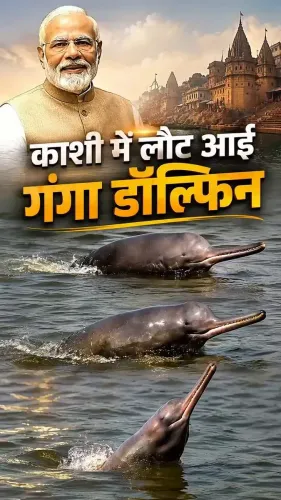
Union Jal Shakti Minister C. R. Paatil on 17 June 2026 highlighted the return of Ganga dolphins, turtles, and rare fish near Varanasi ghats, crediting the Namami Gange mission's sewage-interception work under PM Modi for the river's ecological revival.
Key Takeaways
Paatil , Union Jal Shakti Minister, posted on 17 June 2026 about the ecological recovery of the Ganga at Varanasi .
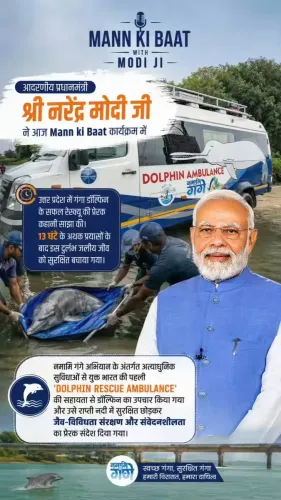
The minister cited the return of Ganga dolphins , turtles, and rare fish species near Banaras ghats as evidence of river rejuvenation.
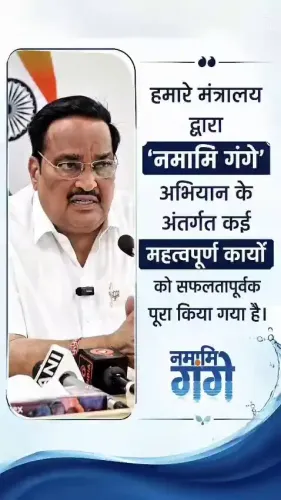
He attributed the revival to sewage-interception infrastructure built under the Namami Gange mission of the Jal Shakti Ministry .
The Namami Gange programme was approved in May 2015 with an outlay of Rs 20,037 crore , replacing earlier Ganga Action Plans dating to 1986 .
The National Mission for Clean Ganga (NMCG) is the implementing agency responsible for monitoring and executing river-rejuvenation projects.
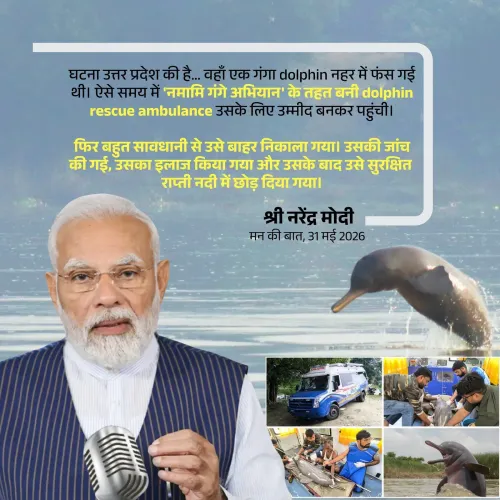
The Ganga river dolphin is India's national aquatic animal and an endangered species, making its sighting a key ecological indicator.
Union Jal Shakti Minister C. R. Paatil on Wednesday, 17 June 2026 highlighted the ecological revival of the Ganga at Varanasi (Kashi), attributing the return of aquatic life to the Namami Gange mission led under Prime Minister Narendra Modi. The minister said the river's waters have become clean enough after years of sewage-interception work that rare species — including the Ganga dolphin, turtles, and several rare fish species — have been sighted near the city's famous ghats once again.
Context
Paatil's post, written in Hindi, asks: 'Kya aap jaante hain ki Kashi mein hamari Ganga Maiya ab itni nirmal ho chuki hain ki yahaan saalon baad jaleey jeev wapas laut aaye hain?' ('Did you know that our Ganga Maiya in Kashi has now become so pure that aquatic creatures have returned after many years?'). The minister credited the Namami Gange mission of the Jal Shakti Ministry as the driving force behind this transformation, calling it the mission's 'most beautiful result.'
He specifically pointed to the interception of sewage that had previously flowed directly into the river as the key intervention enabling biodiversity recovery near Banaras ghats. The post concluded with a spiritual flourish — 'Nirmal Ganga hi Kashi ka asli shringar hai! Har Har Mahadev!' ('A clean Ganga is Kashi's true adornment! Har Har Mahadev!') — underscoring the cultural and religious dimension of the river's rejuvenation.
Policy Backdrop
The Namami Gange programme was approved by the Union Cabinet in May 2015 with an initial outlay of Rs 20,037 crore, replacing the earlier Ganga Action Plan phases launched in 1986 and 1993. The programme shifted from piecemeal river-cleaning efforts to an integrated, basin-level mission-mode approach, with the National Mission for Clean Ganga (NMCG) — operating under the Jal Shakti Ministry — serving as the implementing agency.
Varanasi, one of the most densely populated cities on the river's banks in Uttar Pradesh, has been a focal point for sewage treatment plant construction and sewage-interception infrastructure under the programme. The city's ghats, central to Hindu religious life, had long been exposed to untreated sewage discharge, making the reported return of aquatic species a significant marker of progress for the mission's stated ecological goals.
Stakeholders and Impact
The revival, if sustained, carries direct implications for Varanasi's fishing communities and riverfront livelihoods, which depend on a healthy river ecosystem. Biodiversity researchers and conservation groups monitoring the Ganga river dolphin — listed as an endangered species and designated India's national aquatic animal — have long used dolphin sightings as a barometer of river health.
Residents of the city and the millions of pilgrims who visit Kashi's ghats annually also stand to benefit from improved water quality. The Jal Shakti Ministry oversees both the Namami Gange programme and the broader Jal Jeevan Mission, positioning the ministry at the centre of India's water security and river-health agenda.
What's Next
The National Mission for Clean Ganga is expected to release its next annual report covering biodiversity monitoring parameters and the status of remaining sewage treatment plants sanctioned for the Uttar Pradesh stretch of the river. Independent ecological assessments of species populations near Varanasi will be closely watched to corroborate the on-ground recovery that the minister's post describes.
The broader question is whether the gains in water quality and biodiversity at Kashi can be replicated consistently across the entire Ganga main stem and its tributaries — the next frontier for the mission as it moves beyond its initial infrastructure-heavy phase toward long-term ecological monitoring and maintenance.
Point of View
Emotionally resonant narrative — anchoring a central government scheme in the sacred geography of Kashi, a constituency that carries enormous political and cultural weight for the BJP. By foregrounding biodiversity recovery rather than engineering metrics, the ministry pivots Namami Gange's communication from bureaucratic progress reports to a story of ecological and spiritual renewal. The timing, over a decade after the programme's 2015 launch, suggests the government is now confident enough in on-ground outcomes to move from promise to proof. Whether independent ecological data fully corroborates the scale of recovery described will determine how durable this narrative proves to be.
NationPress
19 Sept 2026
Frequently Asked Questions
What is the Namami Gange mission and what has it achieved at Varanasi?
Namami Gange is a flagship central sector scheme approved in May 2015 with an outlay of Rs 20,037 crore to rejuvenate the Ganga through pollution abatement, biodiversity conservation, and riverfront development. At Varanasi, sewage-interception projects have been a key focus, and Union Jal Shakti Minister C. R. Paatil has highlighted the return of aquatic species including Ganga dolphins near the city's ghats as a sign of ecological recovery.
Have Ganga dolphins returned to Varanasi?
Union Jal Shakti Minister C. R. Paatil stated on 17 June 2026 that Ganga dolphins, turtles, and rare fish species have been sighted near Banaras ghats following sewage-interception work under the Namami Gange mission. Independent ecological verification of the scale and frequency of these sightings is awaited.
What is the Ganga river dolphin and why is it significant?
The Ganga river dolphin is India's national aquatic animal and is classified as an endangered species. Its presence in a river stretch is widely used by conservationists as a key indicator of water quality and overall ecosystem health, making reported sightings near Varanasi a significant ecological signal.
Who is C. R. Paatil and what ministry does he head?
C. R. Paatil is a senior BJP leader, former BJP Gujarat state president, and currently serves as Union Minister of Jal Shakti. His ministry oversees the Namami Gange mission and the Jal Jeevan Mission, placing him at the centre of India's water security and river-rejuvenation policy.
What is the National Mission for Clean Ganga?
The National Mission for Clean Ganga (NMCG) is the implementing agency under the Jal Shakti Ministry responsible for planning, financing, and monitoring all projects under the Namami Gange programme, including sewage treatment plants and biodiversity monitoring along the Ganga and its tributaries.