Shekhawat Hails Ganga's Ecological Revival Under Namami Gange

Synopsis
Union Culture and Tourism Minister Gajendra Singh Shekhawat has declared that the Ganga's revival under Namami Gange now extends to ecology — with dolphins returning, fish populations rising, and over 205 lakh fish fingerlings cultivated — marking a shift from cleanliness metrics to biodiversity outcomes.
Key Takeaways
Union Minister Gajendra Singh Shekhawat posted on 25 June 2026 highlighting the ecological revival of the Ganga river under the Namami Gange mission.
More than 205 lakh fish fingerlings have been cultivated as part of aquatic species conservation efforts under the programme.
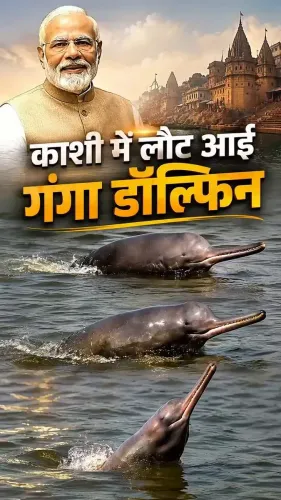
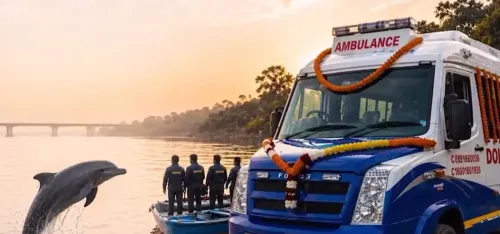
Gangetic dolphins — a Schedule I protected species and key river-health indicator — are being sighted again in the river.
Namami Gange was launched in 2015 and is implemented by the National Mission for Clean Ganga under the Ministry of Jal Shakti.
The government is now measuring river health through ecological and biodiversity indicators, not just water-quality or infrastructure metrics.
The Ganga model is being extended to other rivers, including the Yamuna and the Narmada .
Union Culture and Tourism Minister Gajendra Singh Shekhawat on Thursday, 25 June 2026, highlighted the ecological transformation of the Ganga, citing the return of aquatic life, rising fish populations, dolphin sightings, and the cultivation of more than 205 lakh fish fingerlings as evidence that the river's revival has moved well beyond mere cleanliness.
Context
Posting in Hindi on X, Shekhawat wrote: 'गंगा सिर्फ साफ नहीं हुई है… गंगा में जीवन लौट आया है' ('The Ganga has not merely been cleaned… life has returned to the Ganga'). He pointed to locations where aquatic life had once been in crisis, saying fish numbers are now growing, dolphins are being spotted again, and biodiversity is being revived. The post was accompanied by a video.
Shekhawat framed the Namami Gange mission not as a cleanliness drive alone but as, in his words, 'a resolve for the renaissance of life, prosperity and nature in the uninterrupted flow of the Ganga.' The statement marks a deliberate shift in the government's communication — from infrastructure metrics to ecological outcomes.
Policy Backdrop
Namami Gange was approved by the Union Cabinet in 2014 and formally launched in 2015 as an umbrella mission combining earlier Ganga cleaning programmes. It is implemented by the National Mission for Clean Ganga (NMCG), the nodal agency under the Ministry of Jal Shakti, which coordinates with basin states including Uttarakhand, Uttar Pradesh, Bihar, and West Bengal.
The mission has progressively integrated ecological indicators — such as aquatic species counts and minimum environmental flows — alongside the sewage treatment and industrial effluent enforcement that defined its early years. The cultivation of more than 205 lakh fish fingerlings and the conservation of aquatic species cited by Shekhawat reflect this broader, ecology-first framing that the government has adopted in the current phase of the programme.
Similar river-rejuvenation frameworks have since been extended to the Yamuna and the Narmada, suggesting that the Ganga model is being treated as a template for national river policy.
Stakeholders and Impact
The most direct beneficiaries of improved aquatic biodiversity are riverine fishing communities across the Ganga basin, for whom fish populations and water quality are tied directly to livelihoods. The return of the Gangetic dolphin — a Schedule I protected species and a key indicator of river health — is particularly significant, as the animal had faced severe habitat stress due to pollution and reduced water flows.
Conservationists and ecologists have long argued that biological indicators such as dolphin presence and fish diversity are more reliable measures of river health than chemical water-quality parameters alone. The government's decision to lead with these metrics signals a maturing of its public accountability framework for the mission.
What's Next
Attention will now turn to the National Mission for Clean Ganga's next annual water-quality and biodiversity status report, which is expected to provide independently compiled data on aquatic species recovery across the basin. Any parliamentary discussion on extending Namami Gange funding beyond its current phase will also test how broadly the ecological-revival narrative has taken hold across party lines. The government's ability to sustain minimum environmental flows — particularly during lean seasons — remains a critical variable in determining whether the biodiversity gains cited by Shekhawat prove durable.
Point of View
Metrics that carry greater emotional and ecological resonance with the public. As Namami Gange approaches a potential funding-extension decision, anchoring the narrative in biodiversity outcomes strengthens the political case for continued investment. The invocation of 'renaissance' and 'uninterrupted flow' also taps into the river's cultural and religious weight, blending ecological governance with civilisational identity — a recurring feature of BJP-era environmental messaging. Whether these gains are independently verified and sustained will determine if the narrative holds beyond the political moment.
NationPress
24 Sept 2026
Frequently Asked Questions
What is the current status of the Namami Gange mission?
Namami Gange, launched in 2015, is in an active phase focused on ecological outcomes including aquatic biodiversity recovery, with the government citing over 205 lakh fish fingerlings cultivated and the return of Gangetic dolphins as indicators of progress.
Are dolphins returning to the Ganga river?
Union Minister Gajendra Singh Shekhawat stated on 25 June 2026 that dolphins are being sighted again in the Ganga, describing it as a sign of reviving biodiversity under the Namami Gange programme.
What are fish fingerlings and why are they important for the Ganga?
Fish fingerlings are juvenile fish cultivated and released into rivers to restore fish populations; the government says more than 205 lakh fingerlings have been cultivated under Namami Gange's aquatic species conservation efforts.
Who is responsible for implementing Namami Gange?
The National Mission for Clean Ganga (NMCG), a nodal agency under the Ministry of Jal Shakti, is responsible for implementing Namami Gange and coordinating with basin states including Uttarakhand, Uttar Pradesh, Bihar and West Bengal.
What did Gajendra Singh Shekhawat say about the Ganga in June 2026?
Shekhawat said the Ganga has not merely been cleaned but that life has returned to it, pointing to growing fish numbers, dolphin sightings, biodiversity revival, and the cultivation of over 205 lakh fish fingerlings as evidence.