India's first Dolphin Rescue Ambulance: PM Modi praises landmark wildlife move
Synopsis
India quietly launched its first Dolphin Rescue Ambulance — a mobile ICU for river dolphins — and it took a dramatic 13-hour rescue in Uttar Pradesh to bring it to national attention. PM Modi's Mann Ki Baat spotlight on 31 May could turn this single vehicle into a national model for aquatic wildlife intervention under the Clean Ganga mission.
Key Takeaways
PM Modi highlighted India's first Dolphin Rescue Ambulance in Mann Ki Baat on 31 May .
The vehicle functions as a mobile intensive care unit with oxygen support, designed for distressed river dolphins.
It was launched under the National Mission for Clean Ganga .
A 13-hour rescue operation in Uttar Pradesh saw a stranded Ganga River dolphin treated and released into the Rapti River .
Modi said saving the Ganga dolphin means 'preserving the biodiversity of the Ganga' as a whole.
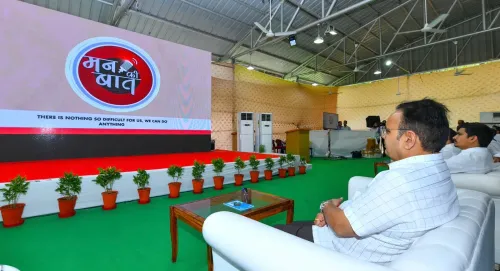
Prime Minister Narendra Modi on 31 May spotlighted India's first-ever Dolphin Rescue Ambulance during his monthly radio address Mann Ki Baat, calling the initiative 'truly remarkable' and urging citizens — especially the youth — to embrace conservation as a personal responsibility. The announcement drew widespread attention to a quiet but significant milestone in India's aquatic wildlife protection efforts.
The Rescue That Sparked National Attention
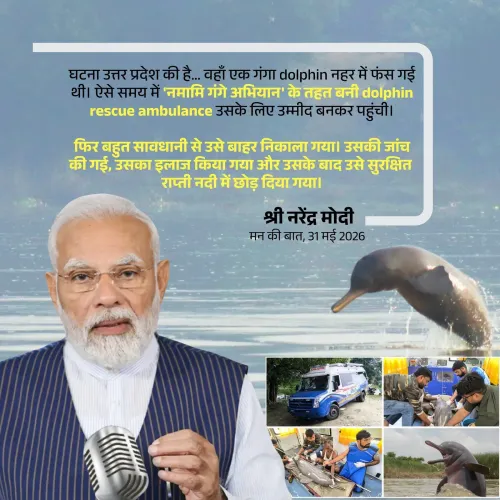
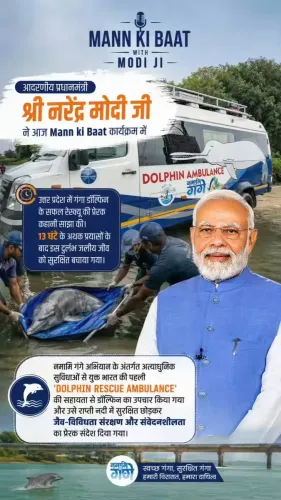
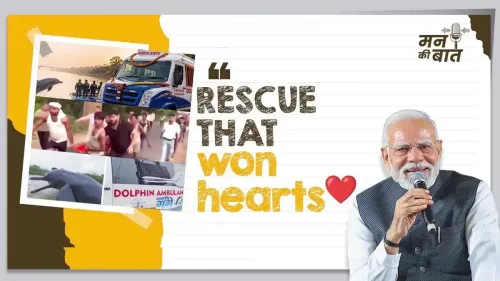
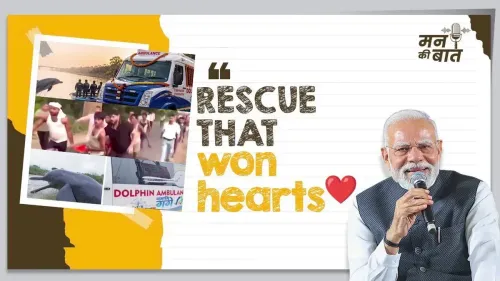
The Prime Minister described a video that has been circulating widely online, documenting a 13-hour rescue operation in Uttar Pradesh in which a Ganga River dolphin was retrieved from shallow waters, given medical treatment, and released back into the Rapti River. 'In a sense, a life returned home once again,' Modi said, reflecting on the operation's outcome.
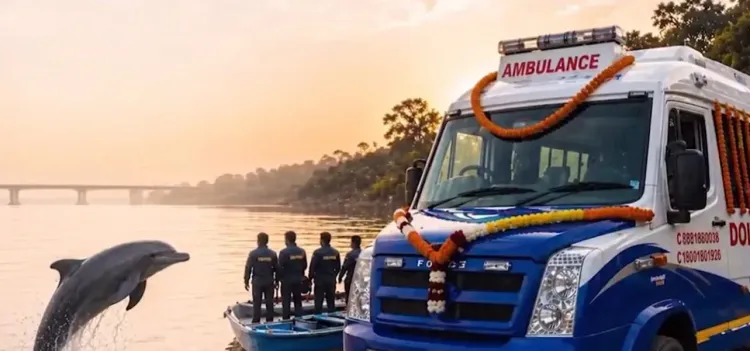
The rescue was made possible by the specialised ambulance vehicle, which functions as a mobile intensive care unit — equipped with oxygen support systems and facilities tailored to the physiological needs of river dolphins. By bringing advanced care directly to remote riverbanks, response teams can now act immediately rather than wait for transport logistics that historically proved fatal for distressed large aquatic mammals.
What the Dolphin Rescue Ambulance Does
'Friends, this Dolphin Rescue Ambulance is truly remarkable; it has been designed to function as a mobile hospital. It is equipped with facilities to ensure the dolphin's safety, as well as oxygen support systems — meaning that if a dolphin is injured, gets trapped in a canal, or becomes cut off from the main river, immediate assistance can be provided,' PM Modi said during his address.
The vehicle was launched under the National Mission for Clean Ganga and is intended to dramatically improve survival rates for the Gangetic river dolphin, a Schedule I protected species under India's Wildlife Protection Act and the country's national aquatic animal.
Ecological Significance
Modi underscored the broader environmental stakes of protecting river dolphins. 'When we save the Ganga Dolphin, we are not merely saving a single species; we are preserving the biodiversity of the Ganga,' he stated. River dolphins are considered indicator species — their health reflects the overall condition of the river ecosystem they inhabit, making their conservation a proxy for the health of the Ganga itself.
Notably, the Gangetic dolphin population had declined sharply through the late 20th century due to habitat degradation, pollution, and accidental entanglement in fishing nets. Conservation efforts under the Clean Ganga mission have reportedly begun to stabilise numbers in certain stretches, though the species remains vulnerable.
Mann Ki Baat as a Conservation Platform
By featuring the Dolphin Rescue Ambulance in Mann Ki Baat, the Prime Minister has amplified its visibility far beyond the conservation community. The programme, which reaches millions of listeners across India each month, has previously been used to highlight grassroots environmental initiatives. This inclusion positions the ambulance as a potential blueprint for similar mobile rescue infrastructure for other endangered aquatic species across Indian river systems.
With the National Mission for Clean Ganga continuing its multi-front approach to river rejuvenation, the Dolphin Rescue Ambulance signals a shift toward active, technology-aided wildlife intervention — a model that conservationists say could be replicated for other river basins in the years ahead.
Point of View
But the real question is scale. One mobile ICU for a river system spanning thousands of kilometres is a proof of concept, not a solution. The Gangetic dolphin's recovery depends on parallel action on pollution, sand mining, and fishing practices — areas where progress under the Clean Ganga mission has been uneven. Modi's Mann Ki Baat spotlight is valuable for public awareness, but conservationists will be watching whether the ambulance model gets replicated and funded at the scale the species actually needs.
NationPress
20 Sept 2026
Frequently Asked Questions
What is India's Dolphin Rescue Ambulance?
India's Dolphin Rescue Ambulance is the country's first mobile intensive care unit designed specifically for distressed Gangetic river dolphins. Launched under the National Mission for Clean Ganga, it carries oxygen support systems and medical facilities to remote riverbanks, enabling immediate treatment without the delays of conventional transport.
What happened during the Uttar Pradesh dolphin rescue?
A Ganga River dolphin was found stranded in shallow waters in Uttar Pradesh. Over a 13-hour operation, the rescue team used the specialised ambulance to extract, treat, and safely release the dolphin back into the Rapti River.
Why did PM Modi highlight this in Mann Ki Baat?
PM Modi used his 31 May Mann Ki Baat episode to spotlight the initiative as an example of innovative wildlife conservation and to encourage India's youth to connect with nature. He called the ambulance 'truly remarkable' and described it as a vital asset for national biodiversity.
Why are Ganga dolphins important to conserve?
The Gangetic river dolphin is India's national aquatic animal and a Schedule I protected species. As an indicator species, its health reflects the overall ecological condition of the Ganga river system. Saving dolphins, as Modi noted, means preserving the broader biodiversity of the river.
How does the Dolphin Rescue Ambulance improve survival rates?
By bringing a fully equipped mobile hospital directly to the site of distress, the ambulance eliminates the transport delays that previously proved fatal for injured or stranded river dolphins. Oxygen support and on-site medical care can be administered immediately upon arrival at remote riverbanks.