PM Modi Hails India's First Dolphin Rescue Ambulance in UP
Synopsis
Prime Minister Narendra Modi on 31 May 2026 highlighted India's first Dolphin Rescue Ambulance, deployed in Uttar Pradesh, after it recently rescued a Ganges river dolphin — a move he called vital to preserving nature's heritage for future generations under Project Dolphin and Namami Gange.
Key Takeaways
PM Modi on 31 May 2026 publicly commended India's first Dolphin Rescue Ambulance for a recent successful rescue in Uttar Pradesh .
The Ganges river dolphin is listed under Schedule I of India's Wildlife Protection Act , making it among the most legally protected species in the country.
Project Dolphin was announced by PM Modi in 2020 to create a dedicated conservation framework modelled on Project Tiger .
The Namami Gange programme, launched in 2015 , includes an explicit biodiversity conservation vertical alongside river-cleaning mandates.
Roll-out of rescue ambulance units in Bihar and West Bengal is being watched as the next step in scaling the initiative.
A first Project Dolphin population census is expected by 2027 , serving as a baseline for measuring conservation outcomes.
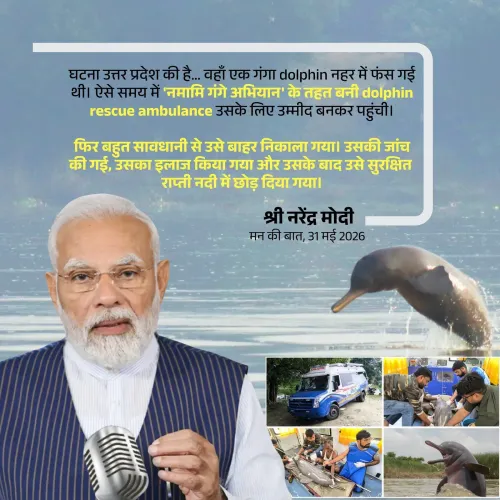
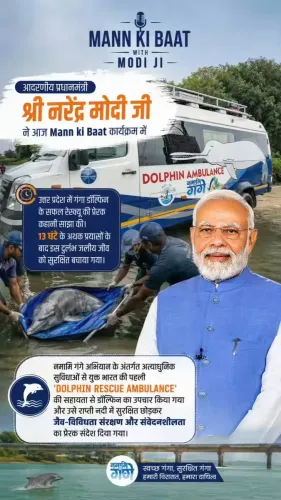
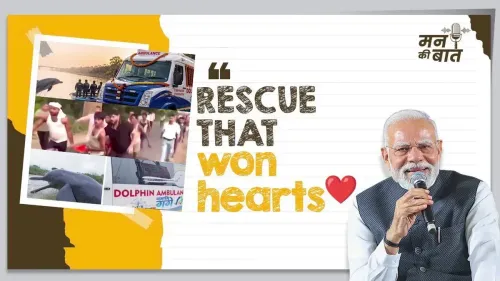
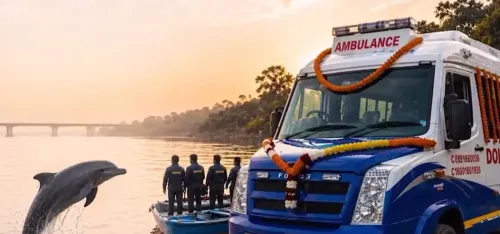
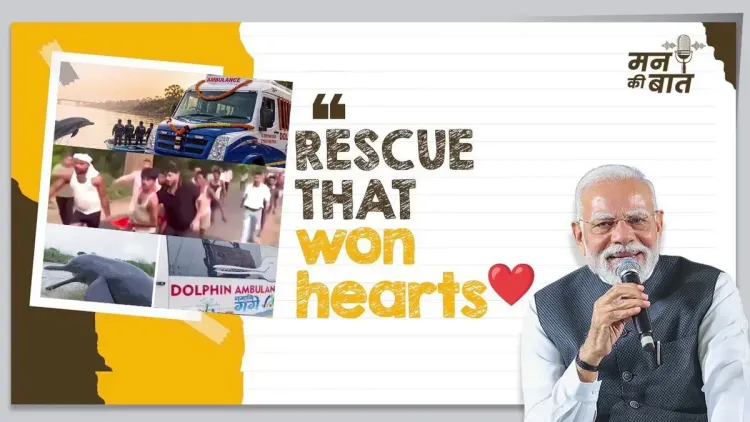
Prime Minister Narendra Modi on Sunday, 31 May 2026, highlighted India's first Dolphin Rescue Ambulance deployed in Uttar Pradesh, praising its recent successful rescue of a Ganges river dolphin and calling the effort a step toward preserving an irreplaceable natural heritage for future generations.
In a post on X, PM Modi wrote: 'Ganga Dolphin ki raksha kar hum ek prajati ko sanrakshit karne ke saath hi aane wali peedhiyon ke liye prakriti ki amulya dharohar ko bhi bacha rahe hain' — 'By protecting the Ganges dolphin, we are not only conserving a species but also safeguarding nature's priceless heritage for generations to come.' He specifically noted that the country's first Dolphin Rescue Ambulance 'has recently rescued a Ganges dolphin in Uttar Pradesh.'
Context
The Ganges river dolphin — locally known as susu — is a critically endangered freshwater cetacean found exclusively in the Ganga-Brahmaputra-Meghna river system. It is listed under Schedule I of India's Wildlife Protection Act, affording it the highest level of legal protection. Habitat loss, entanglement in fishing nets, and river pollution have historically driven down its numbers.
Uttar Pradesh hosts some of the most important stretches of Ganges dolphin habitat. The deployment of a dedicated rescue vehicle in the state represents a shift from passive conservation policies toward active, on-ground intervention capacity.
Policy Backdrop
PM Modi announced Project Dolphin in 2020 during a National Board for Wildlife meeting, envisioning a framework modelled on the successful Project Tiger — but focused on aquatic mammals in river basins. The initiative was designed to create a coordinated national response to the species' decline.
This builds on the Namami Gange programme, launched in 2015, which integrated a biodiversity and species conservation vertical alongside its primary mandate of river pollution abatement and physical cleaning of the Ganga. Earlier efforts — the Ganga Action Plan Phase I (1985) and Phase II (1993) — first acknowledged the need to protect aquatic biodiversity in the river basin, though their focus remained largely on sewage treatment.
The Dolphin Rescue Ambulance extends this policy arc by creating dedicated operational response infrastructure at the state level, moving conservation from policy documents into field action.
Stakeholders and Impact
The rescue ambulance directly benefits riverine biodiversity by enabling rapid response to live strandings — situations where dolphins become trapped in shallow water, irrigation channels, or fishing enclosures. Without timely intervention, stranded dolphins face near-certain death.
Fisher communities along the Ganga are both stakeholders and frontline informants in such rescue operations, as they are typically the first to spot distressed animals. Strengthening rescue infrastructure also reinforces the ecological health of the river, which sustains livelihoods for millions living along its banks in Uttar Pradesh, Bihar, and West Bengal.
What's Next
Conservation observers are watching for the roll-out of similar rescue units in Bihar and West Bengal, the two other major Ganges dolphin states. A first comprehensive population census under Project Dolphin is expected to yield results by 2027, which will serve as the baseline for measuring the programme's long-term impact.
The Prime Minister's public spotlight on the ambulance rescue signals continued political priority for the integrated river-basin conservation model — and may accelerate state-level replication of the Uttar Pradesh deployment across the broader Gangetic plain.
Point of View
The communication shifts the story from intent to execution, a politically useful distinction ahead of Project Dolphin's first census in 2027. The ambulance also represents a devolution of conservation infrastructure to the state level, which could accelerate replication in Bihar and West Bengal if the Uttar Pradesh model is formally evaluated. Taken together, it signals that aquatic biodiversity is being positioned as a measurable deliverable of the Namami Gange programme, not merely an aspirational add-on.
NationPress
15 Oct 2026
Frequently Asked Questions
What is India's Dolphin Rescue Ambulance?
India's Dolphin Rescue Ambulance is the country's first specialised vehicle designed to respond to live strandings and facilitate the rehabilitation of Ganges river dolphins, currently deployed in Uttar Pradesh.
What is Project Dolphin India?
Project Dolphin is a species recovery initiative announced by Prime Minister Narendra Modi in 2020, designed to create a dedicated national conservation framework for aquatic mammals — particularly the Ganges river dolphin — modelled on the successful Project Tiger programme.
Why is the Ganges river dolphin endangered?
The Ganges river dolphin faces threats from habitat loss, entanglement in fishing nets, river pollution, and reduced water flow. It is listed under Schedule I of India's Wildlife Protection Act, giving it the highest legal protection.
What is the Namami Gange programme?
Namami Gange is a flagship central government programme launched in 2015 for the rejuvenation of the Ganga river. It combines pollution abatement and physical cleaning with a dedicated biodiversity and species conservation component.
Where is the Ganges river dolphin found in India?
The Ganges river dolphin is found in the Ganga-Brahmaputra-Meghna river system, with key habitats in Uttar Pradesh, Bihar, and West Bengal. Uttar Pradesh hosts the first operational Dolphin Rescue Ambulance unit.