Jal Shakti Minister Paatil highlights Namami Gange Dolphin Rescue Ambulance
Synopsis
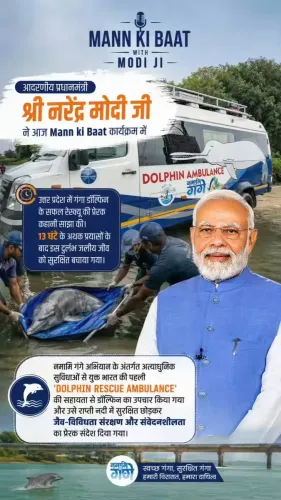
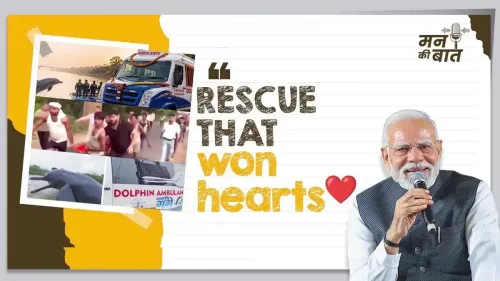
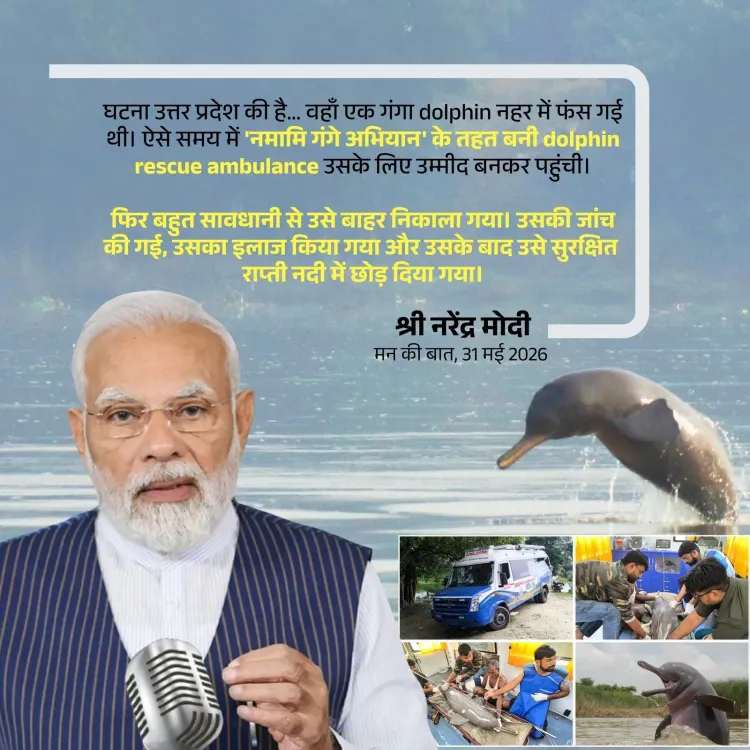
Union Jal Shakti Minister C. R. Paatil has highlighted a Dolphin Rescue Ambulance deployed in Uttar Pradesh under the Namami Gange Abhiyan that rescued a canal-stranded Gangetic dolphin, treated it, and released it into the Rapti river — showcasing the programme's active wildlife emergency response capacity.
Key Takeaways
Union Jal Shakti Minister C.
Paatil shared the rescue on 31 May 2026 , framing it within PM Modi's vision of holistic Ganga ecosystem protection.
A Dolphin Rescue Ambulance under the Namami Gange Abhiyan in Uttar Pradesh rescued a dolphin stranded in a canal.
The rescued dolphin was treated on-site and released into the Rapti river , a major Ganga tributary.
The ambulance is equipped with oxygen supply systems and specialised stretchers for field stabilisation of aquatic animals.
The Namami Gange programme , approved in 2014 , now includes active species rescue infrastructure alongside its core pollution-abatement mandate.
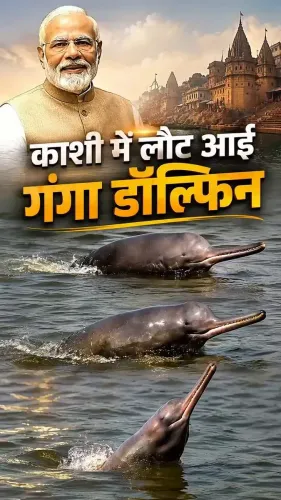
The Gangetic dolphin is India's national aquatic animal and a key bioindicator of Ganga river health.
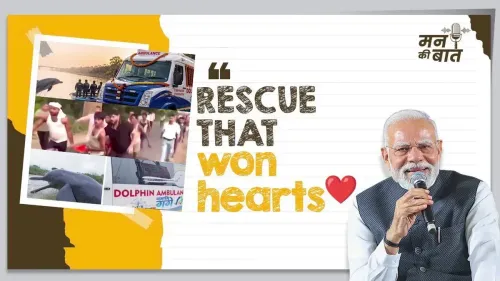
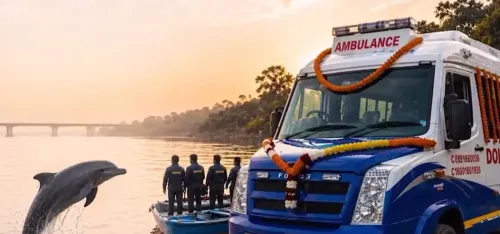
Union Jal Shakti Minister C. R. Paatil on Sunday, 31 May 2026, shared details of a dedicated Dolphin Rescue Ambulance deployed in Uttar Pradesh under the Namami Gange Abhiyan, highlighting how the mobile unit successfully rescued a stranded dolphin from a canal, treated it, and released it into the Rapti river.
Context
Minister Paatil opened his post with a quote attributed to Prime Minister Narendra Modi: 'जब हम गंगा Dolphin को बचाते हैं, तो हम सिर्फ एक प्रजाति को नहीं बचाते, हम गंगा की जैव विविधता और नदी के पूरे जीवन तंत्र को बचाते हैं' ('When we save the Ganga Dolphin, we do not save just one species — we save the biodiversity of the Ganga and the entire life system of the river'). The minister used the quote to frame the rescue operation as part of a broader civilisational commitment to river conservation.
According to the post, the ambulance responded to a dolphin trapped in a canal in Uttar Pradesh, provided on-site medical care, and facilitated the animal's safe return to the Rapti river — a major Ganga tributary flowing through the state.
Policy Backdrop
The Namami Gange programme was approved by the Union Cabinet in 2014 with dedicated components for pollution control and aquatic biodiversity conservation. Over the years, the programme has expanded beyond sewage treatment infrastructure to include species-specific emergency response assets, of which the Dolphin Rescue Ambulance is a notable example.
The Gangetic dolphin — India's national aquatic animal — is listed as an endangered species. Embedding mobile veterinary units into the Namami Gange framework represents a shift from passive habitat protection toward active rescue and rehabilitation, integrating wildlife response with river-basin management.
Minister Paatil, as the Union Minister of Jal Shakti, holds policy oversight of the Namami Gange programme and has consistently amplified its biodiversity components alongside its pollution-abatement work.
Stakeholders and Impact
The Dolphin Rescue Ambulance is described in the post as equipped with oxygen supply systems and specialised stretchers, enabling field stabilisation of injured or stranded animals before transport. Wildlife rescue teams and riverine communities along the Ganga basin are the primary beneficiaries of such infrastructure.
Conservation ecologists have long argued that the Gangetic dolphin serves as a bioindicator of river health — its presence and population trends reflect the overall ecological condition of the Ganga system. Operational rescue units therefore carry significance beyond individual animals, signalling institutional investment in ecosystem monitoring.
The post also served as a public call to action, with Minister Paatil urging citizens — 'आइए, हम सब मिलकर इस अमूल्य धरोहर को बचाने का संकल्प लें!' ('Come, let us all together pledge to protect this invaluable heritage!') — to join the conservation effort.
What's Next
Attention will now turn to whether similar mobile rescue units will be expanded to other Ganga-basin states and whether the next phase of the Namami Gange programme will include dedicated budgetary allocations for mobile veterinary infrastructure. The operationalisation of the Uttar Pradesh ambulance is likely to serve as a model for replication across other states with significant dolphin habitats, including Bihar and West Bengal. Policymakers and wildlife officials will also be watched for any announcement of a formal Gangetic dolphin population census linked to the programme's outcomes.
Point of View
Anchoring a ground-level rescue operation to Prime Minister Modi's broader rhetorical frame on Ganga conservation. By foregrounding the ambulance's technical capabilities — oxygen systems, specialised stretchers — the ministry signals that Namami Gange has evolved from a civil-infrastructure programme into a multi-dimensional ecological intervention. The Gangetic dolphin, as India's national aquatic animal, carries high symbolic weight, making each publicised rescue a reputational asset for the programme ahead of any review of its next phase. The call to citizen action at the end of the post also reflects a consistent BJP communications strategy of converting government achievements into participatory national narratives.
NationPress
25 Sept 2026
Frequently Asked Questions
What is the Namami Gange Dolphin Rescue Ambulance?
The Namami Gange Dolphin Rescue Ambulance is a mobile veterinary unit deployed in Uttar Pradesh under the Namami Gange Abhiyan. It is equipped with oxygen supply systems and specialised stretchers to rescue, treat, and rehabilitate stranded or injured Gangetic dolphins before releasing them back into the river.
Where was the rescued dolphin released?
According to Union Jal Shakti Minister C. R. Paatil's post, the dolphin was rescued from a canal in Uttar Pradesh and subsequently released into the Rapti river, a major tributary of the Ganga.
What is the Namami Gange Abhiyan?
Namami Gange is a flagship central government programme approved by the Union Cabinet in 2014 for the rejuvenation of the Ganga river. It covers pollution abatement, sewage treatment, and aquatic biodiversity conservation, including species rescue infrastructure.
Why is the Gangetic dolphin important?
The Gangetic dolphin is India's national aquatic animal and is classified as an endangered species. It serves as a bioindicator of river health, meaning its population and condition reflect the overall ecological state of the Ganga river system.
Who is C. R. Paatil?
C. R. Paatil is the Union Minister of Jal Shakti and a senior BJP leader. He is responsible for policy oversight of the Namami Gange programme and related river conservation and water resource initiatives.