Jal Shakti Minister Paatil calls water security key to Viksit Bharat
Synopsis
Union Jal Shakti Minister C. R. Paatil on 19 June 2026 published an article linking Jal Jeevan Mission, Namami Gange, Swachh Bharat Mission, Jal Sanchay Jan Bhagidari, and river interlinking to India's Viksit Bharat 2047 goal, urging citizens to join water conservation efforts.
Key Takeaways
Union Jal Shakti Minister C.
Paatil published an article on 19 June 2026 framing water security as central to the Viksit Bharat 2047 vision.
Five schemes were highlighted: Jal Jeevan Mission , Swachh Bharat Mission , Jal Sanchay Jan Bhagidari , Namami Gange , and river interlinking .
Namami Gange was launched in 2014 with an outlay of Rs 20,000 crore for Ganga conservation and pollution abatement.
Jal Jeevan Mission , announced in the 2019 Union Budget , targets universal functional household tap connections in rural India.
Paatil urged citizens to participate in groundwater recharge, wastewater reuse, and sustainable water management.
Updated Jal Jeevan Mission coverage data and a possible cabinet note on river interlinking are key policy developments to watch.
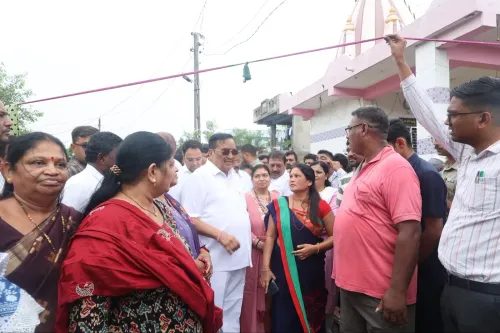
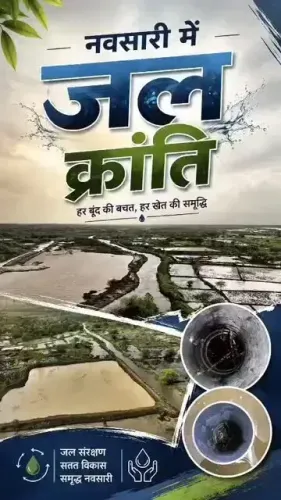
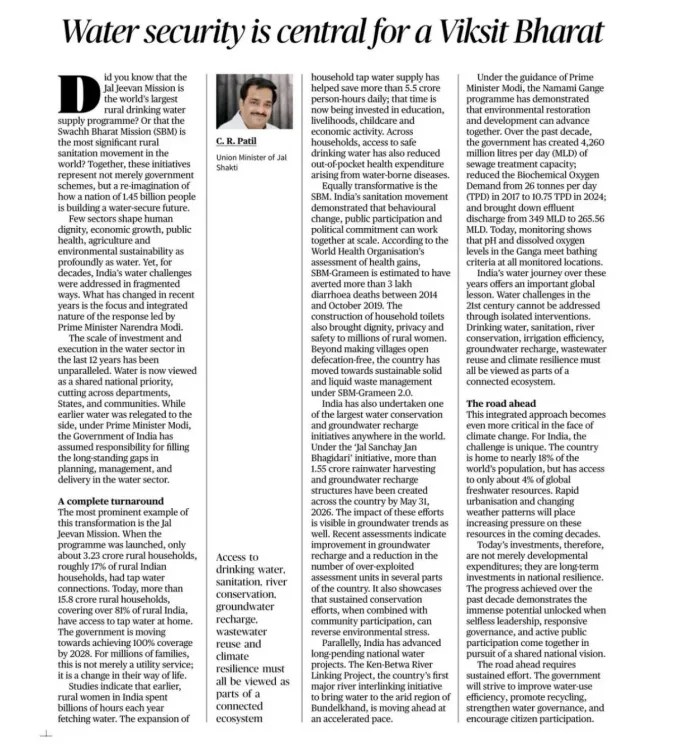
Union Jal Shakti Minister C. R. Paatil on Friday, 19 June 2026 published an article outlining how flagship water programmes under Prime Minister Narendra Modi are reshaping India's water sector, and called on citizens to actively participate in conservation efforts toward a water-secure nation by 2047.
Context
In a post on X, Minister Paatil wrote that 'water security is central to building a Viksit Bharat.' He cited five central initiatives — Jal Jeevan Mission, Swachh Bharat Mission, Jal Sanchay Jan Bhagidari, Namami Gange, and river interlinking — as evidence of a transformative shift in national water policy under Prime Minister Modi's leadership. The minister urged readers to contribute to groundwater recharge, wastewater reuse, and sustainable water management.
The post accompanied an authored article by Paatil, making it an unusual instance of a cabinet minister directly engaging the public through long-form policy writing rather than official press releases alone.
Policy Backdrop
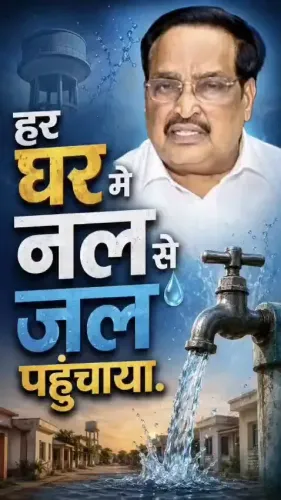
Jal Jeevan Mission, announced in the 2019 Union Budget, aims to provide functional household tap connections to every rural home in India. The scheme represents the government's most ambitious push yet toward universal rural water access, targeting millions of households across the country.
Namami Gange was launched in 2014 as an integrated conservation mission for the river Ganga with an outlay of Rs 20,000 crore, covering pollution abatement, riverfront development, and ecological restoration. Swachh Bharat Mission, also launched in 2014, initially targeted the elimination of open defecation and has since expanded its sanitation mandate. The National Perspective Plan for river interlinking, formulated in 2002, proposes transferring surplus water from water-rich river basins to deficit regions — a proposal that successive governments have revisited but not fully executed.
The newer Jal Sanchay Jan Bhagidari initiative reflects a community-participation model, embedding water conservation as a civic responsibility rather than a purely governmental function — a policy direction Paatil explicitly endorsed in his appeal to citizens.
Stakeholders and Impact
The programmes cited by Paatil collectively affect three broad groups: rural households seeking reliable tap water, farmers dependent on groundwater and irrigation infrastructure, and urban local bodies tasked with wastewater treatment and reuse. Climate-induced water stress — including erratic monsoons and falling groundwater tables across several states — has made policy coherence across these groups increasingly urgent.
The minister's emphasis on wastewater reuse and groundwater recharge signals growing governmental acknowledgement that supply-side infrastructure alone cannot deliver water security. Demand-side management and community stewardship are now formally part of the policy vocabulary at the Union level.
What's Next
Observers will watch for updated Jal Jeevan Mission coverage data expected in the next Economic Survey, which will offer a clearer picture of actual household tap connections against stated targets. Any cabinet note formalising priority links under the river interlinking project would mark a significant policy step. A proposed revision to the National Water Policy is also pending parliamentary discussion, which could codify the community-participation and wastewater-reuse principles Paatil has championed publicly.
With 2047 set as the horizon for a 'Viksit Bharat,' the water sector's performance — particularly groundwater sustainability and rural coverage — will be a measurable indicator of whether that broader development vision is on track.
Point of View
Bundling five distinct schemes under a single 'water security' umbrella. The move signals that the ruling dispensation views water infrastructure as a politically salient deliverable — not merely a development metric — particularly given rural voter dependence on these programmes. By personally calling for citizen participation in groundwater recharge and wastewater reuse, Paatil is also quietly acknowledging that government spending alone cannot close India's water gap. The framing of community participation as a civic duty, rather than a policy gap-filler, is a rhetorical shift worth tracking as the National Water Policy revision approaches Parliament.
NationPress
19 Sept 2026
Frequently Asked Questions
What is Jal Jeevan Mission and what is its target?
Jal Jeevan Mission is a central government scheme announced in the 2019 Union Budget to provide functional household tap connections to every rural home in India, targeting universal rural water access across millions of households.
What is Namami Gange and how much has been allocated to it?
Namami Gange is a flagship integrated conservation programme for the river Ganga launched in 2014 with an outlay of Rs 20,000 crore, covering pollution abatement, ecological restoration, and riverfront development.
What is Viksit Bharat 2047?
Viksit Bharat 2047 is the Indian government's development roadmap targeting a fully developed nation by the centenary of independence in 2047, linking infrastructure creation — including water security — with long-term sustainability goals.
What is Jal Sanchay Jan Bhagidari?
Jal Sanchay Jan Bhagidari is a community-participation initiative under the Jal Shakti Ministry that encourages citizens to actively engage in water conservation and storage at the local level.
What is the National River Linking Project in India?
The National River Linking Project, based on a National Perspective Plan formulated in 2002, proposes transferring surplus water from water-rich river basins to water-deficit regions through a network of canals and reservoirs; it remains under policy consideration.