Sitharaman pitches India's urban plans at World Bank-IMF meet
Synopsis
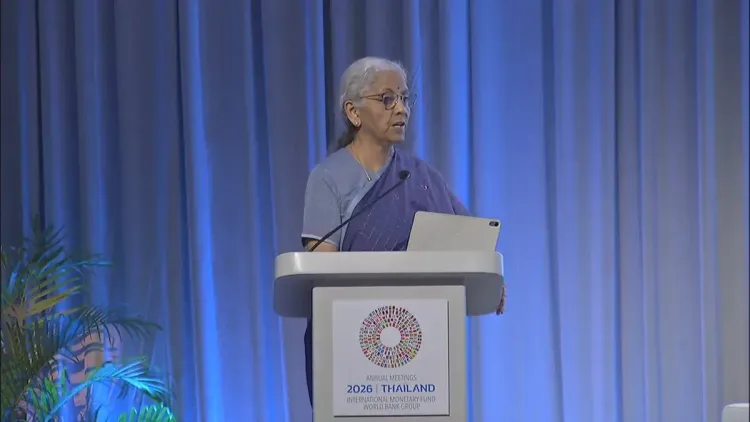
Union Finance Minister Nirmala Sitharaman addressed the World Bank-IMF Annual Meetings in Bangkok on October 16, 2026, pitching India's urban programmes — including the Smart Cities Mission and AMRUT — as a framework for mobilising global private capital into city and water infrastructure.
Key Takeaways
Nirmala Sitharaman delivered a keynote at the World Bank-IMF Annual Meetings in Bangkok, Thailand on October 16, 2026 .
Her address focused on the theme: 'Working Together to Make Cities Investable — Mobilising Private Capital for Urban and Water Infrastructure'.
India's Smart Cities Mission (launched 2015 , covering 100 cities ) and AMRUT 2.0 (expanded 2021 ) form the policy backbone behind the pitch.
The address signals a strategic push to co-finance Indian urban infrastructure with global institutional and private capital.
Watch for follow-up investment commitments, new PPP frameworks, or urban financing announcements in the upcoming Union Budget.
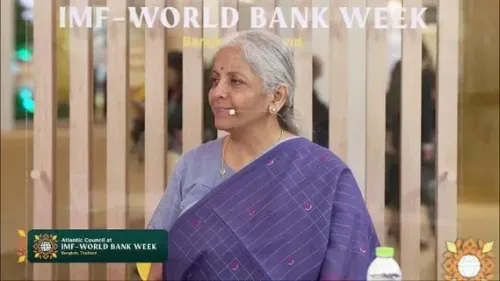
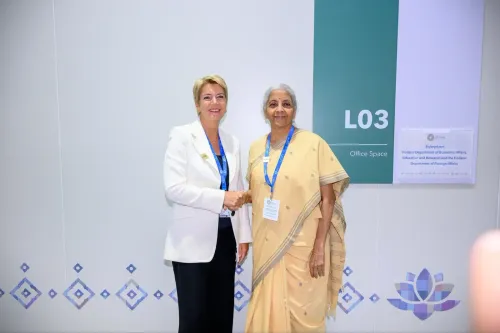
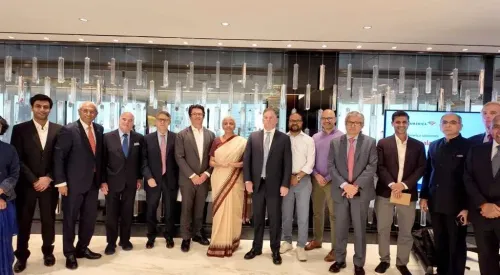
From the sidelines of the World Bank-IMF Annual Meetings in Bangkok, Thailand, Union Finance Minister Nirmala Sitharaman stepped onto a global stage on Friday, October 16, 2026, to make a direct pitch: India's cities are open for private capital, and the architecture to absorb it is already in place.
The pitch in Bangkok — and what it signals
Sitharaman delivered a keynote address under the theme 'Working Together to Make Cities Investable — Mobilising Private Capital for Urban and Water Infrastructure' — a formulation that does more than announce intent. It frames India's urban challenge as an investment opportunity, not a fiscal burden. The address was shared by her office as a video, marking one of the more substantive Indian interventions at this year's annual meetings of the two Bretton Woods institutions.
The World Bank-IMF Annual Meetings have long served as a high-visibility arena where finance ministers lay out domestic priorities to an audience of multilateral lenders, sovereign funds, and institutional investors. India has used the platform repeatedly to spotlight urban programmes and signal appetite for public-private partnerships.
The programmes behind the promise
The urban infrastructure story Sitharaman carried to Bangkok has been years in the making. The Smart Cities Mission, launched in 2015, targeted 100 cities for technology-led sustainable development. The AMRUT scheme — also from 2015 — focused on water supply, sewerage, and urban mobility, and was expanded as AMRUT 2.0 in 2021 with a sharper emphasis on universal water coverage.
Together, these programmes represent the structural scaffolding that government officials argue makes Indian cities 'investable' — a word the keynote theme uses deliberately, signalling that the policy environment, not just the need, is now investor-ready.
Why private capital — and why now
Urban local bodies across India have historically struggled to raise market financing, dependent instead on central transfers and state budgets. The push to mobilise private capital reflects a recognised gap: the scale of infrastructure demand in Indian cities outpaces what public budgets alone can fund. Municipal bond markets remain thin; land-value capture mechanisms are underdeveloped. Sitharaman's Bangkok address essentially argues that the next phase of Indian urbanisation must be co-financed by global institutional money.
The audience — multilateral institutions, development finance bodies, and the private-sector observers who attend annual meetings — is precisely the room where those commitments begin to take shape.
What follows the keynote
The real test arrives in the follow-through: whether the address produces concrete investment commitments, new PPP frameworks, or financing vehicles announced in the months ahead — potentially as early as the next Union Budget. Bangkok may be the launch pad; the landing zone is back home, in the balance sheets of urban local bodies and the pipelines of infrastructure funds watching India's cities closely.
Point of View
The government argues continuity and policy depth to sceptical global capital. The choice of the World Bank-IMF Annual Meetings as the venue signals urgency: India needs multilateral endorsement and private co-financing to close a yawning urban infrastructure gap that public budgets cannot fill alone. If the speech translates into concrete deal flow or new financing instruments, it will mark a genuine shift; if it does not, it risks becoming another well-crafted pitch without a term sheet.
NationPress
16 Oct 2026
Frequently Asked Questions
What did Nirmala Sitharaman say at the World Bank-IMF Annual Meetings 2026?
Sitharaman delivered a keynote address in Bangkok on the theme of making Indian cities investable by mobilising private capital for urban and water infrastructure, highlighting programmes like the Smart Cities Mission and AMRUT.
Where are the World Bank-IMF Annual Meetings 2026 being held?
The 2026 World Bank-IMF Annual Meetings are being held in Bangkok, Thailand.
What is India's Smart Cities Mission?
The Smart Cities Mission is a central government programme launched in 2015 to develop 100 selected cities with sustainable infrastructure, technology-driven services, and improved urban livability.
What is AMRUT 2.0 and how does it relate to urban infrastructure?
AMRUT 2.0, expanded in 2021 from the original 2015 scheme, focuses on ensuring universal water supply, improved sewerage systems, and urban mobility across Indian cities as part of the government's urban development agenda.
Why is India trying to attract private capital for urban infrastructure?
India's urban infrastructure needs far exceed what public budgets can fund alone; attracting private and institutional capital through public-private partnerships is seen as essential to bridge the gap and accelerate city development.