Smriti Irani: Modi's Leadership Awakens Duty, Not Just Rights

Synopsis
Senior BJP leader Smriti Irani on June 19, 2026, declared that PM Modi's leadership is defined by awakening duty and collective responsibility among citizens — extending a decade-long BJP narrative that pairs constitutional rights with active civic obligation.
Key Takeaways
BJP leader Smriti Irani posted on June 19, 2026 , framing PM Modi's governance as centred on awakening collective duty alongside rights.
Article 51A of the Constitution, added by the 42nd Amendment of 1976 , provides the constitutional basis for the duties-alongside-rights framework Irani invokes.
The BJP has consistently promoted a duties-and-collective-responsibility narrative since 2014 , exemplified by campaigns such as the Swachh Bharat Mission .
Irani's former portfolios — Women and Child Development and Minority Affairs — give her articulation of the duty-first frame particular political resonance.
Analysts will watch future parliamentary debates and party manifestos for potential new citizen-responsibility schemes anchored in constitutional duties.
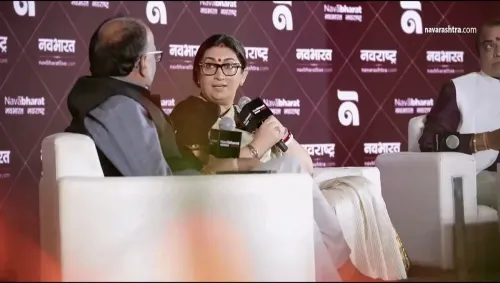
Senior BJP leader and former Union Minister Smriti Irani on Friday, June 19, 2026, took to X to assert that Prime Minister Narendra Modi's governance philosophy transcends the conferral of rights, framing it instead as a movement to awaken duty and collective responsibility among Indian citizens.
Context
Irani's post stated plainly: 'PM Modi's leadership is not just about rights, but about awakening duty and collective responsibility.' The remark positions the Prime Minister's decade-plus tenure as a deliberate effort to rebalance the relationship between the state and the citizen — moving beyond entitlement frameworks toward active civic participation. Irani, who has served as a senior voice of the BJP on constitutional and social values, regularly articulates such positions for the party.
Policy Backdrop
The philosophical underpinning Irani invokes has a firm constitutional basis. Article 51A of the Indian Constitution, introduced through the 42nd Constitutional Amendment of 1976, codified Fundamental Duties alongside the existing chapter on Fundamental Rights — establishing that citizenship carries obligations as much as entitlements. The BJP-led government since 2014 has drawn on this provision repeatedly in its public messaging.
The Swachh Bharat Mission, launched in October 2014, was among the earliest flagship programmes to explicitly invoke individual and collective responsibility — asking citizens not merely to demand clean public spaces but to actively maintain them. That campaign set a template: governance framed as a shared project between the state and the people, with duty as the connective tissue.
Stakeholders and Impact
The audience for this messaging is broad. For BJP supporters, the framing reinforces a long-standing ideological strand that roots civic virtue in duty rather than demand. For the wider Indian electorate, it represents a continuing effort by the ruling party to shape the terms of the rights-versus-responsibilities debate ahead of future electoral cycles. Constitutional scholars and opposition voices have at times questioned whether emphasis on duties risks diluting the primacy of enforceable rights — a tension that sits at the heart of this rhetorical contest.
Irani's standing as a former minister who has helmed portfolios touching women's welfare, child development, and minority affairs lends her articulation of this theme a specific weight: these are sectors where citizens have historically asserted rights against the state, making the duty-first framing politically pointed.
What's Next
With the BJP consistently weaving the duties narrative into speeches, campaigns, and policy launches, observers will watch for whether upcoming parliamentary debates or party manifestos formalise new citizen-responsibility schemes anchored in Article 51A. Irani's post, brief as it is, signals that this ideological line remains live and central to the party's governance communication as India moves deeper into the second half of the decade.
Point of View
And that Modi's leadership corrects this imbalance. The framing draws on a constitutional tradition — Article 51A — but weaponises it politically by implying that previous governments were rights-heavy and duty-light. What makes this moment notable is the timing: duty-centric rhetoric tends to intensify when the party is shaping the ideological ground ahead of electoral contests or major policy announcements. The post is therefore less a news event in itself and more a signal that this narrative thread is being kept warm for imminent use.
NationPress
19 Sept 2026
Frequently Asked Questions
What did Smriti Irani say about PM Modi's leadership?
Smriti Irani posted on June 19, 2026, that PM Modi's leadership is 'not just about rights, but about awakening duty and collective responsibility' among Indian citizens.
What is Article 51A and why is it relevant here?
Article 51A lists Fundamental Duties of Indian citizens and was added to the Constitution by the 42nd Amendment in 1976. It provides the constitutional foundation for the BJP's argument that rights must be balanced with civic obligations.
How long has the BJP promoted the duty-over-rights narrative?
Since 2014, when the BJP-led government came to power, campaigns such as the Swachh Bharat Mission have explicitly invoked individual and collective responsibility, making duty-centric messaging a consistent feature of the party's governance communication.
Who is Smriti Irani?
Smriti Irani is a senior BJP leader and former Union Minister who held the portfolios of Women and Child Development and Minority Affairs. She is a prominent party voice on constitutional values and social policy.
What should we watch for after this statement?
Observers will monitor upcoming parliamentary debates and BJP manifestos for new citizen-responsibility schemes or policy proposals formally anchored in Article 51A's Fundamental Duties framework.