CM Rekha Gupta Slams AAP Over Punjab Drug Violence Deaths
Synopsis
Delhi Chief Minister Rekha Gupta condemned the AAP government in Punjab on October 16, citing the murders of Parvinder Singh Jhota and Bikramjit Singh, and a coerced poisoning in Dirba, demanding an impartial probe and strict action against accused officials including an AAP MLA.
Key Takeaways
Delhi CM Rekha Gupta issued a sharp attack on the Bhagwant Mann AAP government over drug-related deaths in Punjab on October 16, 2026 .
Three incidents were cited: the murder of anti-drug activist Parvinder Singh Jhota , the killing of Bikramjit Singh in Gurdaspur , and a father consuming poison under pressure in Dirba .
Parvinder Singh's father has levelled serious allegations against the AAP government and one of its sitting MLAs.
Gupta demanded an impartial investigation, strict action against the guilty, and guaranteed protection for those who oppose the drug mafia.
The AAP had won Punjab's 2022 elections on a central promise of eliminating the drug trade — a promise the BJP now says has been broken.
Gupta called for a future government capable of 'breaking the nexus between drug mafia and its political patrons.'
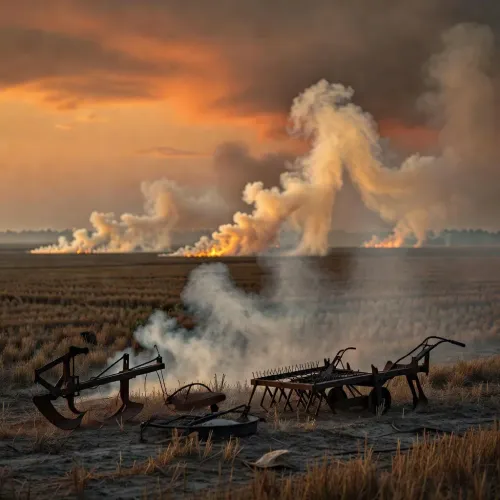
Three deaths. Three families shattered. And one sharp political indictment from Delhi Chief Minister Rekha Gupta, who on Friday, October 16, 2026, demanded accountability from the Bhagwant Mann-led AAP government in Punjab over a string of drug-related killings and coerced deaths that she says expose a catastrophic failure of governance.
Three Cases, One Accusation
CM Gupta's post names three incidents that have shaken Punjab. Parvinder Singh Jhota, who had raised his voice against the drug trade, was murdered. Bikramjit Singh lost his life in Gurdaspur. And in Dirba, a father allegedly consumed poison under pressure — a detail that cuts to the bone about how far the narcotics menace has reached into ordinary households.
Gupta did not stop at grief. She wrote — translated from Hindi — 'Aakhir kitne gharon ke chirag bujhenge, tab Kejriwal gang ki neend khulegi?' ('How many more home fires must go out before the Kejriwal gang wakes up?'). The rhetorical force was deliberate: this is not a policy critique. It is a political indictment.
Parvinder Singh's Father Levels Charges Against AAP MLA
The charge that carries the most immediate weight: Parvinder Singh Jhota's father has reportedly levelled serious allegations against the AAP government and one of its sitting MLAs, accusing them of complicity or wilful inaction in his son's death. CM Gupta is calling for an impartial investigation and 'strict action against the guilty' — language that, in the Indian political context, is a demand aimed squarely at the ruling dispensation.
She also underlined what she sees as the state's primary duty: ensuring the safety of those who dare stand up to the drug mafia. Her verdict on the Mann government is blunt — it has 'failed again and again' on this count.
AAP's 2022 Promise and the Accountability Gap
The political sting in Gupta's attack is inseparable from history. The Aam Aadmi Party swept Punjab's 2022 assembly elections on a platform built almost entirely around one promise: breaking the back of the drug trade. It was the central, emotional pitch — to the mothers, the farmers, the young. Four years on, BJP leaders like Gupta argue the promise has curdled into a scandal.
Punjab's drug problem is not a new wound. It has bled across multiple governments for over two decades, and each ruling party has faced accusations of political protection for narcotics networks. But the AAP's explicit anti-drug mandate makes the current opposition pressure uniquely acute: the higher the promise, the sharper the accountability.
'AAP's Vessel of Sins Is Full'
CM Gupta's closing line — 'AAP ke paap ka ghada bhar chuka hai' ('AAP's vessel of sins is now full') — is the kind of phrase that travels. It signals that the BJP intends to make Punjab drug violence a sustained drumbeat heading into the next electoral cycle in the state.
She called for a government that will 'break the nexus between the drug mafia and its political patrons, bring criminals within the grip of the law, and secure the future of Punjab's youth.' The framing is as much a campaign plank as it is a governance demand.
Punjab's young are watching. So, increasingly, is the rest of India.
Point of View
She moves the narrative from abstract governance failure to specific criminal accountability — a far more potent frame. The timing matters: with Punjab assembly elections on the horizon, the BJP is laying down a political predicate, establishing drug-violence as the test by which the AAP government will be judged. The AAP faces a structural vulnerability here — the higher the 2022 promise, the harder it is to defend 2026 ground realities.
NationPress
16 Oct 2026
Frequently Asked Questions
Who is Parvinder Singh Jhota and why was he killed?
Parvinder Singh Jhota was reportedly an activist who raised his voice against the drug trade in Punjab. Delhi CM Rekha Gupta cited his murder as evidence of the state government's failure to protect those who stand up to the drug mafia. The specific circumstances of his death have not been independently verified.
What did Rekha Gupta say about the AAP government in Punjab?
CM Rekha Gupta accused the Bhagwant Mann-led AAP government of repeatedly failing to protect people who oppose drug networks. She demanded an impartial investigation into three specific incidents, strict action against the guilty, and called for a government that can break the alleged nexus between the drug mafia and political patrons.
What was AAP's promise on drugs in Punjab?
The Aam Aadmi Party made eliminating the drug mafia and protecting Punjab's youth from substance abuse the central promise of its successful 2022 Punjab assembly election campaign. The BJP has repeatedly cited drug violence to argue the promise has not been fulfilled.
What is the Dirba poisoning case Rekha Gupta mentioned?
In her October 16 post, CM Gupta referred to a case in Dirba where a father allegedly consumed poison under pressure — framing it as another consequence of the drug menace and state inaction. Specific details of this incident require verification from Punjab authorities.
Is Rekha Gupta the Chief Minister of Delhi?
Yes. Rekha Gupta is the Chief Minister of Delhi and a senior BJP leader. She has frequently used her platform to criticise the AAP government, both in Delhi's political context and — as in this post — in Punjab, where AAP holds state power under Chief Minister Bhagwant Mann.