CM Dhami releases ₹331 cr for Uttarakhand urban bodies, approves Pithoragarh road
Synopsis
CM Pushkar Singh Dhami approved ₹328.28 crore for Uttarakhand's urban local bodies as the Q3 2026-27 grant using Fifth Finance Commission figures, ₹3 crore for three non-elected bodies, and ₹72.63 lakh for a CC road in Pithoragarh's Kuniya Gram Sabha.
Key Takeaways
₹328 crore 27 lakh 80 thousand released to urban local bodies as the third instalment (October–December 2026) of FY 2026-27, based on Fifth State Finance Commission allocations. ₹3 crore approved for three non-elected bodies covering the second half-year (October 2026 – March 2027).
Bridging disbursements are made in anticipation of the Sixth State Finance Commission's formal recommendations, which are still pending. ₹72.63 lakh sanctioned for a cement-concrete road from Tapdi Ghat to Golmanu Primary School in Kuniya Gram Sabha, Didihat, Pithoragarh.
First instalment of ₹43.578 lakh (60 per cent of project cost) has already been released via government order.
Devolution to urban local bodies is a constitutional obligation under the 74th Amendment , Articles 243I and 243Y.
Municipal services across Uttarakhand's towns will stay funded this quarter — and a remote Kumaon village will finally get a paved road — after Chief Minister Pushkar Singh Dhami approved a clutch of financial releases on Friday, 16 October 2026. The decisions, announced by the Chief Minister's Office of Uttarakhand, funnel hundreds of crores to urban local bodies while writing a small but consequential cheque for a hill community in Pithoragarh district.
₹328 crore to keep urban local bodies running this quarter
With the Sixth State Finance Commission's formal recommendations still pending, CM Dhami approved the release of ₹328 crore 27 lakh 80 thousand to urban local bodies as the third instalment (October–December 2026) of financial year 2026-27. The disbursement is pegged to the allocation figures used under the Fifth State Finance Commission — a standard bridging mechanism Indian states use to prevent a funding gap while a new commission finalises its devolution formula.
Urban local bodies — nagar nigams, nagar palikas and nagar panchayats — depend on these quarterly flows to pay sanitation workers, maintain street lighting, and run basic civic infrastructure. A delay here ripples quickly into service failures on the ground. The approval ensures continuity until the Sixth Commission's revised formula takes effect.
Three non-elected bodies get ₹3 crore for the October–March half-year
Alongside the main instalment, the Chief Minister cleared a separate release of ₹3 crore to three non-elected bodies covering the second half-yearly instalment of 2026-27 (October 2026 to March 2027). Non-elected urban bodies in Uttarakhand typically include development authorities and notified area committees that provide civic services in areas not yet constituted as full municipal councils.
A concrete road for Kuniya village, deep in the Kumaon hills
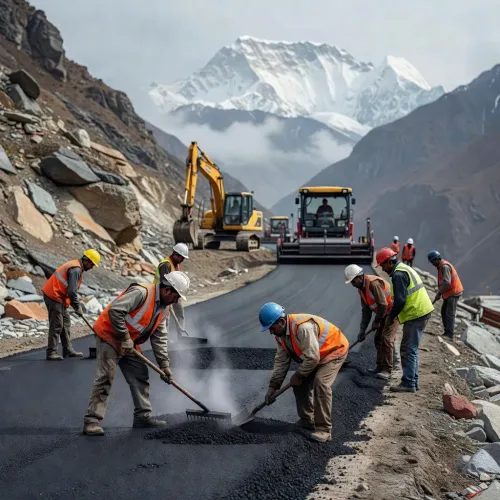
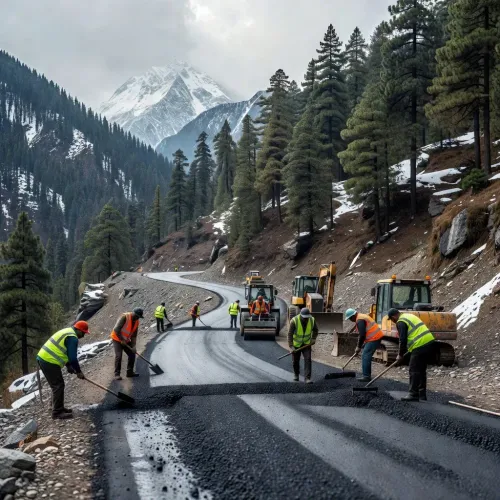
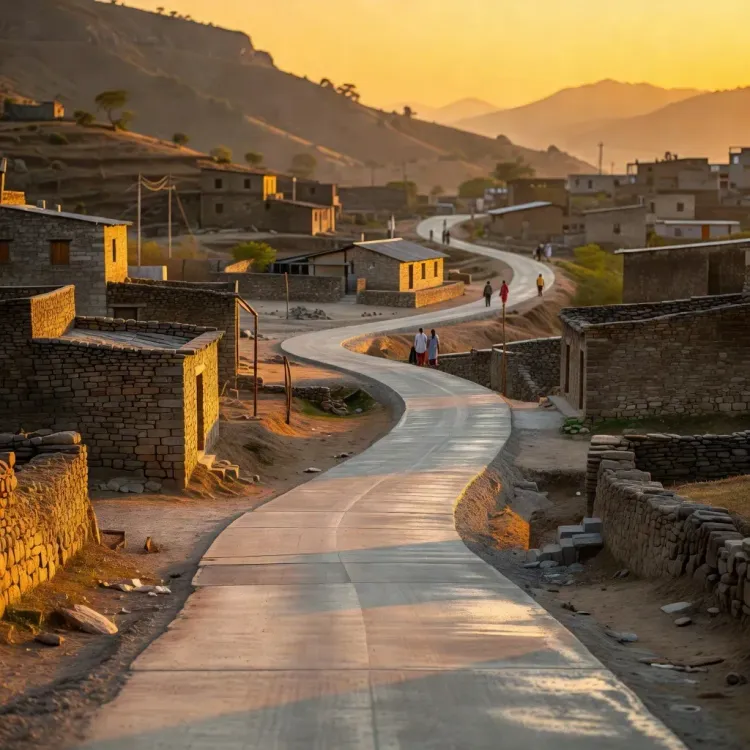
The most tangible announcement for ordinary residents comes from Didihat assembly constituency in Pithoragarh. Under the Mukhyamantri Ghoshna (Chief Minister's Announcement) scheme, Dhami granted financial and administrative approval for a cement-concrete (CC) road from Tapdi Ghat to Golmanu Primary School in Kuniya Gram Sabha. The total sanction is ₹72.63 lakh.
Construction gets an immediate push: a government order has been issued releasing the first instalment of ₹43.578 lakh, calculated at 60 per cent of the total project cost. Pithoragarh is one of Uttarakhand's most remote districts, bordering Nepal and Tibet, where even short stretches of all-weather road can transform access to schools, markets and emergency services for scattered hill communities.
The constitutional machinery behind the money
Uttarakhand has constituted successive State Finance Commissions since the state's formation in 2000, as required by the 74th Constitutional Amendment — the landmark reform that mandated fiscal devolution to urban local bodies across India. Articles 243I and 243Y of the Constitution require each state to set up a finance commission every five years to recommend how state revenues should be shared downward. The current bridging release under the Fifth Commission's figures is textbook procedure: keep the plumbing flowing while the sixth commission finalises its blueprint.
The aggregate cleared on Friday — ₹331 crore-plus across urban bodies and the Didihat road project — is routine in scale for a quarter-close state release, but it signals that the Dhami administration is keeping the devolution calendar on track ahead of what could be a revised formula from the Sixth Commission.
Point of View
The state avoids the service paralysis that has historically plagued municipal bodies in transition periods between commissions. The Didihat road sanction, small in rupee terms, fits a wider pattern of hill-state CMs using discretionary announcement schemes to signal responsiveness to remote constituencies — particularly in border districts like Pithoragarh where connectivity is both a development and a strategic priority. Cumulatively, these actions strengthen the Dhami administration's 'governance delivery' narrative ahead of any future electoral cycle.
NationPress
16 Oct 2026
Frequently Asked Questions
Why did Uttarakhand release urban body funds based on the Fifth Finance Commission instead of the Sixth?
The Sixth State Finance Commission's recommendations are still pending. States routinely use the previous commission's figures as a bridge to ensure municipal bodies continue receiving funds without interruption until the new devolution formula is finalised.
What is the total amount released to urban local bodies in Uttarakhand for October–December 2026?
CM Pushkar Singh Dhami approved ₹328 crore 27 lakh 80 thousand for urban local bodies as the third quarterly instalment of FY 2026-27, plus ₹3 crore for three non-elected bodies for the October 2026 to March 2027 half-year.
What is the CC road project approved in Pithoragarh?
A cement-concrete road from Tapdi Ghat to Golmanu Primary School in Kuniya Gram Sabha, Didihat assembly constituency, Pithoragarh district, has been sanctioned for ₹72.63 lakh under the Chief Minister's Announcement scheme, with a first instalment of ₹43.578 lakh already released.
What is a State Finance Commission and why does it matter for urban local bodies?
A State Finance Commission is a constitutional body set up every five years under Articles 243I and 243Y of the Indian Constitution. It recommends how state revenues should be shared with panchayats and urban local bodies, directly determining the funds available to municipalities for services and salaries.
How does the 74th Constitutional Amendment relate to urban body funding in Uttarakhand?
The 74th Constitutional Amendment mandated fiscal devolution to urban local bodies across India and required each state to constitute a Finance Commission every five years. Uttarakhand has followed this framework since its formation in 2000, releasing funds through successive state finance commissions.