Anurag Thakur at IIT Ropar: India's Deep-Tech Rise
Synopsis
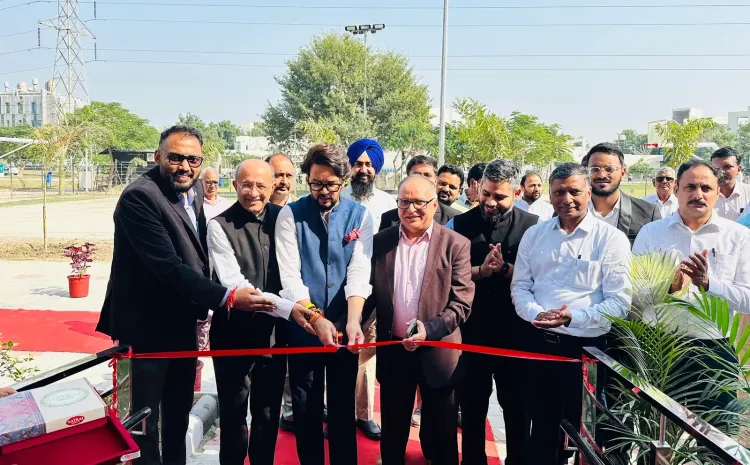
BJP MP Anurag Thakur addressed the INNOpreneur 2026 summit at IIT Ropar on November 3, citing 600+ startups, indigenous defence drone development, and India's first innovation-driven PhD programme as markers of the institution's deep-tech rise.
Key Takeaways
BJP MP Anurag Thakur addressed the INNOpreneur 2026 summit at IIT Ropar on November 3, 2026 .
IIT Ropar's ecosystem reportedly includes over 600 startups and active work on indigenous defence drone systems .
The institution has launched what it describes as India's first innovation-driven PhD programme .
Thakur linked the milestones to PM Modi 's vision of democratising technology and fostering inclusive growth.
IIT Ropar was established in 2008 and has grown into a significant node in India's national innovation and defence-tech ecosystem.
The event reflects the government's ongoing strategy of integrating IITs with Startup India and Atmanirbhar Bharat policy goals.
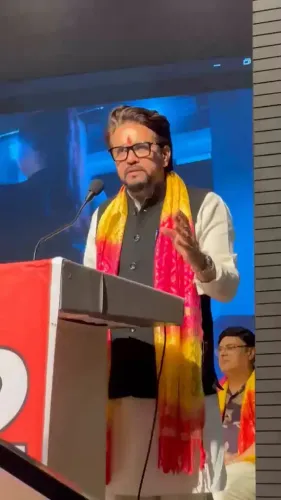
From a campus that barely existed two decades ago, BJP MP Anurag Thakur stood at IIT Ropar on Tuesday, November 3, 2026 to address the INNOpreneur 2026 summit — and the numbers he cited told a story of an institution that has grown well beyond its origins as a greenfield technical campus in Punjab.
Thakur pointed to three markers of IIT Ropar's emergence as an innovation hub: a startup ecosystem of over 600 startups, active work on indigenous defence drone systems, and the launch of what the institution describes as India's first innovation-driven PhD programme. Speaking at the summit, he framed these milestones within PM Narendra Modi's stated vision of 'democratising technology and fostering inclusive growth.'
IIT Ropar's journey from new campus to startup launchpad
IIT Ropar was established in 2008 as part of a nationwide expansion of premier technical institutions, one of several second-generation IITs set up to extend quality engineering education beyond the original campuses. In the years since, successive national policy frameworks have pushed IITs to function not just as teaching universities but as active nodes in India's innovation economy.
The Startup India initiative, launched in 2016, created formal structures — incubators, seed funds, regulatory fast-tracks — that institutions like IIT Ropar could plug into. The Atmanirbhar Bharat Abhiyan, announced in 2020, added a defence and manufacturing dimension, encouraging academic institutions to contribute to reducing India's dependence on imported defence technology. IIT Ropar's drone research appears to sit squarely within that second thrust.
Why an innovation-driven PhD matters in the deep-tech race
The claimed first-of-its-kind PhD programme is notable because traditional doctoral research in India has historically been assessed on publications rather than real-world deployment. A programme explicitly structured around innovation — integrating startup development, product commercialisation, or applied research with the doctorate itself — would represent a structural shift in how India's top technical institutions measure and reward research impact.
If it scales, the model has implications well beyond Ropar: it signals a potential template for how IITs can align postgraduate research directly with national deep-tech priorities, from semiconductors to defence systems to climate technology.
The larger pattern: IITs as engines of national tech ambition
India's bet on academic institutions as deep-tech anchors is not accidental. The country's IIT network has been systematically integrated into policy goals across two consecutive governments, with funding, mandates, and partnerships designed to close the gap between laboratory research and market-ready products. Defence drones are a particularly urgent frontier — India has moved aggressively to develop indigenous unmanned aerial systems after years of sourcing such technology from abroad.
Thakur's visit and address at INNOpreneur 2026 reinforces that political visibility at these events is deliberate: it signals continued government attention to the innovation pipeline even as the electoral calendar moves on.
Six hundred startups, a drone programme, and a PhD first — whether IIT Ropar's ambitions deliver at scale will be the real test of whether India's deep-tech story is infrastructure or outcome.
Point of View
Reinforcing the party's positioning on technology-led growth ahead of future electoral cycles. The specific focus on indigenous defence drones connects academic milestones to the Atmanirbhar Bharat narrative, where self-reliance in defence manufacturing is a high-visibility policy goal. The claimed 'first' innovation-driven PhD programme, if it replicates, could meaningfully shift how India's university research pipelines are structured — but the proof will lie in commercialisation outcomes, not launch headlines. Politically, anchoring the deep-tech story in Punjab-based institutions also carries regional optics in a state the BJP has contested closely.
NationPress
3 Nov 2026
Frequently Asked Questions
What is the INNOpreneur 2026 summit at IIT Ropar?
INNOpreneur 2026 is an innovation and entrepreneurship summit hosted by IIT Ropar, where leaders from government and academia discuss India's deep-tech and startup ecosystem. BJP MP Anurag Thakur addressed the event on November 3, 2026.
How many startups does IIT Ropar have?
According to BJP MP Anurag Thakur's address at INNOpreneur 2026, IIT Ropar's ecosystem includes over 600 startups, though this figure has not been independently verified.
What is India's first innovation-driven PhD programme?
IIT Ropar has launched what it describes as India's first innovation-driven PhD programme, which is designed to integrate real-world product development and commercialisation with doctoral research, rather than measuring output purely by publications.
What is IIT Ropar's role in indigenous defence drones?
IIT Ropar is reportedly advancing indigenous defence drone systems as part of India's broader Atmanirbhar Bharat push to reduce dependence on imported defence technology, with academic research being channelled into applied defence applications.
What is the Startup India initiative mentioned by Anurag Thakur?
Startup India is a flagship government initiative launched in 2016 under PM Narendra Modi to build a supportive ecosystem for startups, including incubators, seed funds, and regulatory simplifications. It forms a key part of the policy backdrop that institutions like IIT Ropar operate within.