Anurag Thakur reaffirms Modi govt's commitment to Indian youth

Synopsis
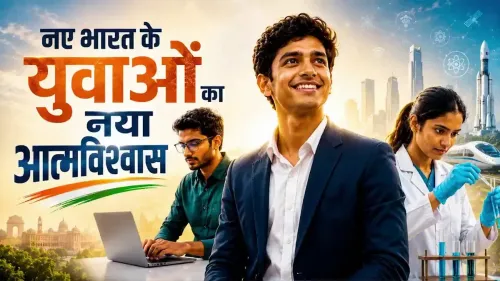
BJP MP Anurag Thakur on 23 July 2026 reaffirmed the Modi government's unwavering commitment to India's youth, highlighting fast-track courts against paper-leak mafias, exemplary punishment for offenders, and economic opportunities through Startup India and innovation as pillars of the government's youth-first governance philosophy.
Key Takeaways
BJP MP Anurag Thakur posted on 23 July 2026 reaffirming the Modi government's commitment to India's youth.
The post cited fast-track courts and exemplary punishment for those involved in question paper leaks as key enforcement tools. 'Sustained action against the mafias' was highlighted as part of the government's intent to protect examination integrity.
Startup India , launched in 2016 , was referenced as a flagship scheme enabling youth-led innovation and entrepreneurship.
The message was addressed directly to 'every young Indian,' framing the Modi government as a guarantor of youth rights and future opportunity.
Central legislation on examination integrity and further fast-track proceedings are being watched as possible next steps.
BJP MP Anurag Thakur on Thursday, 23 July 2026, took to X to reaffirm the Narendra Modi government's commitment to the welfare, rights, and future of India's youth, citing fast-track courts, action against examination mafias, and opportunities through innovation and entrepreneurship as pillars of this commitment.
Context
Thakur, a Lok Sabha MP from Hamirpur, Himachal Pradesh and former Union Minister for Information and Broadcasting as well as Youth Affairs and Sports, stated that 'the progress of the youth and the protection of their future and rights are at the core of the governance philosophy of the Narendra Modi Government.' He added that 'this commitment remains unchanged,' signalling continuity of policy direction amid ongoing public discourse around examination integrity and youth employment.
The post specifically highlighted three enforcement mechanisms: fast-track courts, exemplary punishment for those involved in question paper leaks, and 'sustained action against the mafias' — a phrase widely used in political discourse to describe organised networks that compromise competitive examinations in India.
Policy Backdrop
The Modi government has since 2014 consistently framed India's youth as central to the country's demographic dividend. The Startup India initiative, launched in 2016, remains a flagship programme aimed at promoting innovation, entrepreneurship, and funding access for young founders across the country.
Fast-track courts were expanded under criminal law amendments from 2018 onward to expedite trials in serious offences, including those affecting public examinations and recruitment processes. Thakur's post implicitly connects these judicial mechanisms to the government's broader promise of protecting merit-based opportunity for competitive exam aspirants.
Examination integrity has emerged as a recurring concern in India's public discourse, with allegations of organised paper-leak networks affecting recruitment and entrance examinations at both state and central levels. The government's stated response has centred on deterrent punishment and institutional reform.
Stakeholders and Impact
The primary stakeholders are India's millions of competitive exam aspirants — a constituency that spans engineering, medical, civil services, and defence recruitment examinations. Any erosion of examination integrity directly affects the career prospects of young Indians from economically diverse backgrounds.
Thakur's message — 'To every young Indian: your future matters. Modi Government stands firmly with you' — is addressed squarely at this demographic. The framing combines economic enablement through schemes like Startup India with a law-and-order assurance around examination systems, reflecting a dual-track approach to youth policy.
What's Next
Observers are watching for the possible introduction of central legislation specifically addressing examination integrity in an upcoming parliamentary session. State-level fast-track proceedings related to paper-leak cases are also expected to continue, with the central government's political messaging likely to track these enforcement actions closely.
As India's youth population — one of the largest in the world — continues to seek economic and educational opportunity, the government's ability to deliver on both enforcement and enablement promises will remain a key political and policy benchmark in the months ahead.
Point of View
Unified narrative. The timing and tone suggest an effort to shore up the government's credibility with competitive exam aspirants, a politically significant and vocal constituency. By invoking fast-track courts and anti-mafia action alongside Startup India, the BJP is attempting to address both aspiration and grievance simultaneously. This dual framing has been a consistent feature of the party's youth outreach since 2014 and is likely to intensify as the government approaches key legislative sessions where examination integrity laws may be tabled.
NationPress
22 Oct 2026
Frequently Asked Questions
What did Anurag Thakur say about the Modi government and youth?
Anurag Thakur stated that the progress and protection of India's youth are at the core of the Modi government's governance philosophy, highlighting fast-track courts, action against paper-leak mafias, and opportunities through Startup India and innovation.
What are fast-track courts and how do they relate to paper leaks in India?
Fast-track courts are specialised judicial bodies expanded under criminal law amendments from 2018 onward to expedite trials in serious offences. In the context of Thakur's post, they are cited as a mechanism for delivering swift, exemplary punishment to those involved in question paper leaks.
What is the Startup India scheme mentioned in Thakur's post?
Startup India is a flagship government initiative launched in 2016 to promote innovation, entrepreneurship, and funding access for young founders, and is one of the key programmes the Modi government references when highlighting its commitment to youth empowerment.
Who is Anurag Thakur and what is his political background?
Anurag Thakur is a BJP Lok Sabha MP from Hamirpur, Himachal Pradesh, and a former Union Minister for Information and Broadcasting as well as Youth Affairs and Sports, making youth policy a central part of his political portfolio.
What could be the next steps on examination integrity in India?
Observers are watching for possible central legislation specifically targeting examination integrity in an upcoming parliamentary session, along with continued state-level fast-track court proceedings related to paper-leak cases.