Anurag Thakur Hails Wangchuk's Fast End, Vows Exam Reform
Synopsis
BJP MP Anurag Thakur welcomed Ladakhi activist Sonam Wangchuk ending his fast after talks with J P Nadda and Dr Jitendra Singh, pledging fast-track courts for paper-leak syndicates and sweeping exam reforms under the Modi government.
Key Takeaways
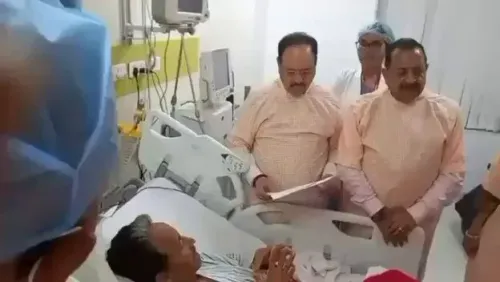
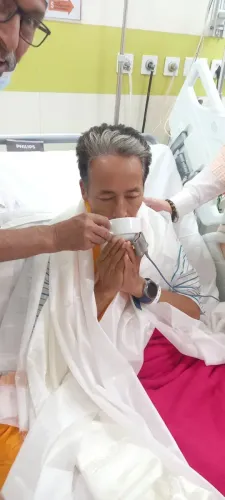
Sonam Wangchuk ended his fast following a meeting with BJP President J P Nadda and Union Minister Dr Jitendra Singh , as confirmed by BJP MP Anurag Thakur on 24 July 2026 .
Thakur described the meeting as 'prolonged' and 'fruitful,' calling the end of the fast 'a welcome move in the larger interest of the students and the nation.' The government has committed to fast-track courts for speedy trials in paper-leak cases and a range of reforms to make examinations 'foolproof and transparent.' The Public Examinations (Prevention of Unfair Means) Act, 2024 already provides a legislative framework for penalising those involved in organised cheating and paper leaks.
Thakur warned that 'criminal syndicates involved in paper leaks will have no refuge to hide,' signalling continued enforcement intent.
The resolution underscores the political salience of exam integrity for millions of youth aspirants across India.
BJP MP Anurag Thakur on Friday, 24 July 2026 welcomed the decision by Ladakhi activist Sonam Wangchuk to end his fast following what Thakur described as a 'prolonged fruitful meeting' with BJP National President J P Nadda and Union Minister of State Dr Jitendra Singh. Thakur said the development reflected the nation's trust in Prime Minister Narendra Modi's commitment to protecting the interests of India's youth.
Context
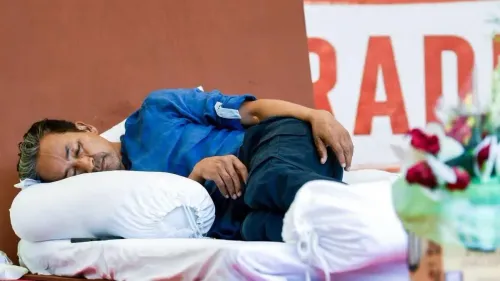
Sonam Wangchuk, the Ladakhi engineer and education activist known for founding the Students' Educational and Cultural Movement of Ladakh (SECMOL), had undertaken a fast centred on concerns affecting students and youth aspirants. His fast concluded after a meeting with senior BJP leadership, including J P Nadda and Dr Jitendra Singh, who handles personnel and administrative reforms in the Prime Minister's Office. Thakur called the end of the fast 'a welcome move in the larger interest of the students and the nation.'
In his post, Thakur framed the resolution as evidence of public confidence in Prime Minister Modi's leadership, stating that 'the future and interests of the youth of the nation are above all and will always remain protected.'
Policy Backdrop
The fast and its resolution come against the backdrop of sustained public anger over paper leaks in high-stakes national examinations. Incidents involving exams such as NEET and several state-level recruitment tests exposed systemic vulnerabilities, eroding trust in merit-based selection processes and triggering protests by lakhs of student aspirants across the country.
In response, Parliament enacted the Public Examinations (Prevention of Unfair Means) Act, 2024, which introduced stringent penalties and institutional mechanisms to deter cheating, impersonation, and the organised leaking of question papers. Thakur on Friday reiterated the government's intent to pursue those responsible, saying 'the criminal syndicates involved in paper leaks will have no refuge to hide.'
He also warned against what he termed 'petty politics' being used to 'compromise the larger goals and interests of our youth,' a signal that the ruling party intends to keep exam integrity as a political and policy priority heading into the next phase of governance.
Stakeholders and Impact
The primary stakeholders in this standoff have been millions of student aspirants preparing for government recruitment and entrance examinations — a cohort that cuts across states, languages, and economic backgrounds. For many, a single leaked paper can derail years of preparation and delay career entry by a full examination cycle.
Sonam Wangchuk's credibility as a non-partisan voice — he is widely associated with sustainable development and education in Ladakh rather than mainstream party politics — gave his fast unusual moral weight. His willingness to end the fast after engaging with BJP leadership suggests at least a preliminary understanding was reached, though the specific terms of that engagement have not been independently confirmed.
Thakur specifically cited two mechanisms the government is pursuing: fast-track courts for speedy trials in paper-leak cases, and 'a slew of reforms to make the examination system foolproof and transparent.' The operationalisation of these courts and the scope of the reforms will determine how substantive the government's response ultimately proves to be.
What's Next
Attention will now shift to whether the government translates its stated commitments into concrete administrative action. The key markers to watch include the formal establishment and activation of fast-track courts to prosecute those accused in paper-leak cases, and any new technology mandates or procedural rules imposed on exam-conducting bodies such as the National Testing Agency (NTA).
The Modi government's handling of examination integrity is increasingly seen as a test of its broader promise of transparent, merit-based governance — and any further leaks or institutional failures would carry significant political cost ahead of future electoral cycles. As Thakur put it, the government's message is clear: 'Modi with Yuva Shakti' — Modi with the power of youth.
Point of View
The BJP is signalling that it views exam reform not merely as administrative housekeeping but as a core youth-outreach narrative. Wangchuk's decision to engage with party leadership — rather than escalate — gives the government a political off-ramp without a formal policy concession being announced publicly. The real test will be whether fast-track courts are operationalised and whether the 2024 Act's penalties are visibly enforced before the next major examination cycle.
NationPress
23 Oct 2026
Frequently Asked Questions
Why did Sonam Wangchuk end his fast?
Sonam Wangchuk ended his fast after a meeting with BJP National President J P Nadda and Union Minister Dr Jitendra Singh, which BJP MP Anurag Thakur described as 'prolonged' and 'fruitful.' The specific terms of the understanding reached have not been publicly disclosed.
What is the Public Examinations (Prevention of Unfair Means) Act, 2024?
It is a central law enacted in 2024 that introduces strict penalties and institutional mechanisms to deter paper leaks, impersonation, and other unfair practices in government recruitment and entrance examinations across India.
What are fast-track courts for paper leak cases?
Fast-track courts are dedicated judicial forums designed to deliver speedy verdicts in specific categories of cases. The Modi government has indicated it will use such courts to try those accused in examination paper-leak cases, aiming to deter future offences through swift justice.
Who is Sonam Wangchuk?
Sonam Wangchuk is a Ladakhi engineer, innovator, and education activist best known for founding the Students' Educational and Cultural Movement of Ladakh (SECMOL). He has led multiple public campaigns on issues ranging from Ladakh's political status to student welfare and sustainable development.
What is the Modi government doing to stop exam paper leaks in India?
The government has enacted the Public Examinations (Prevention of Unfair Means) Act, 2024, and has signalled plans to establish fast-track courts for speedy trials in leak cases, alongside broader reforms to make examination systems more transparent and technology-driven.